

Last updated October 15, 2026
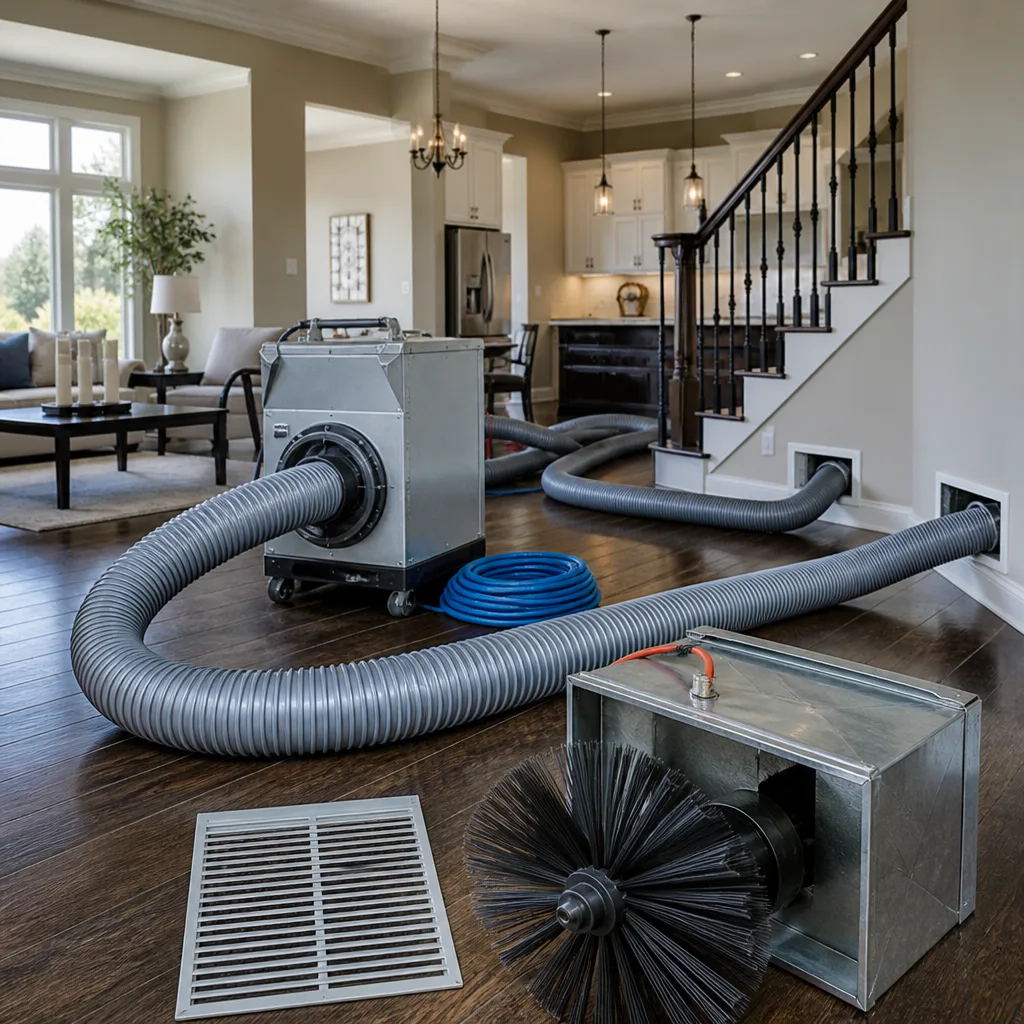 Whole-home duct cleaning
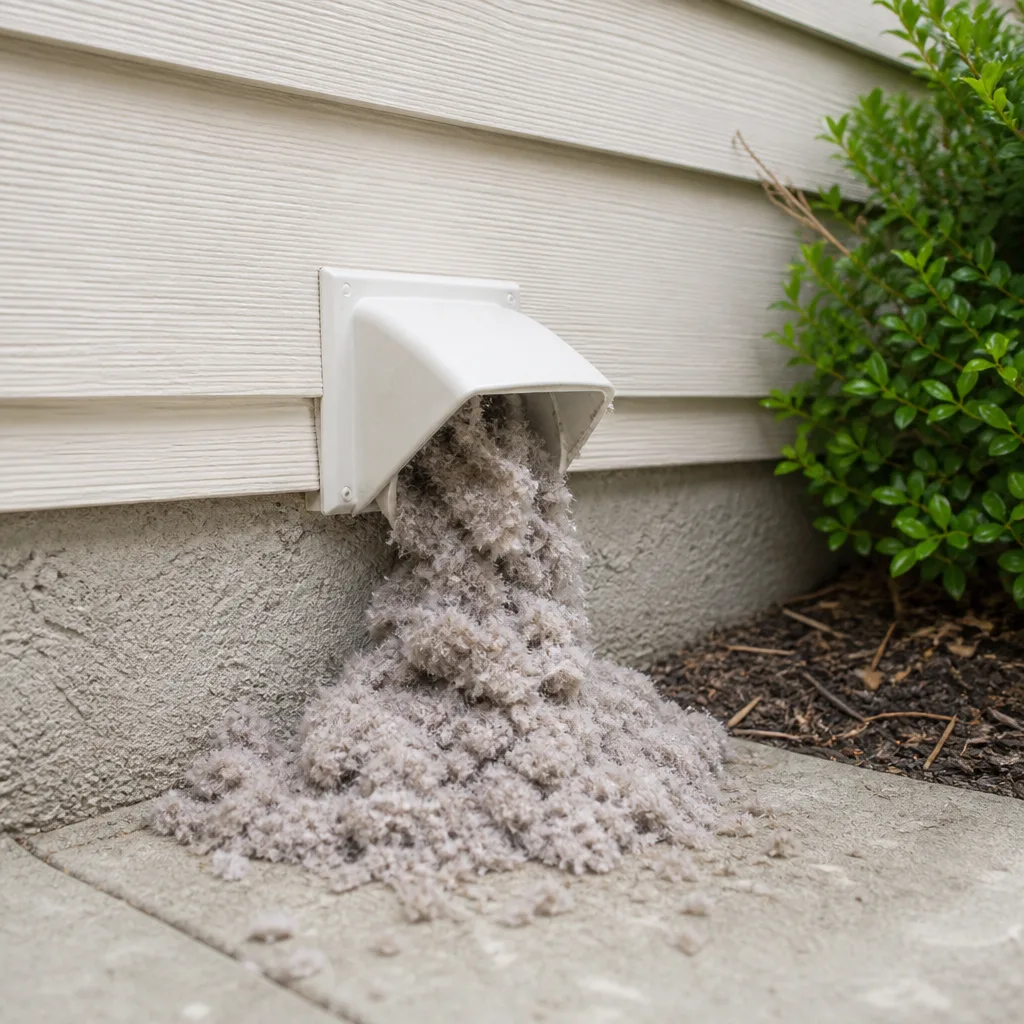 Dryer vent cleaning
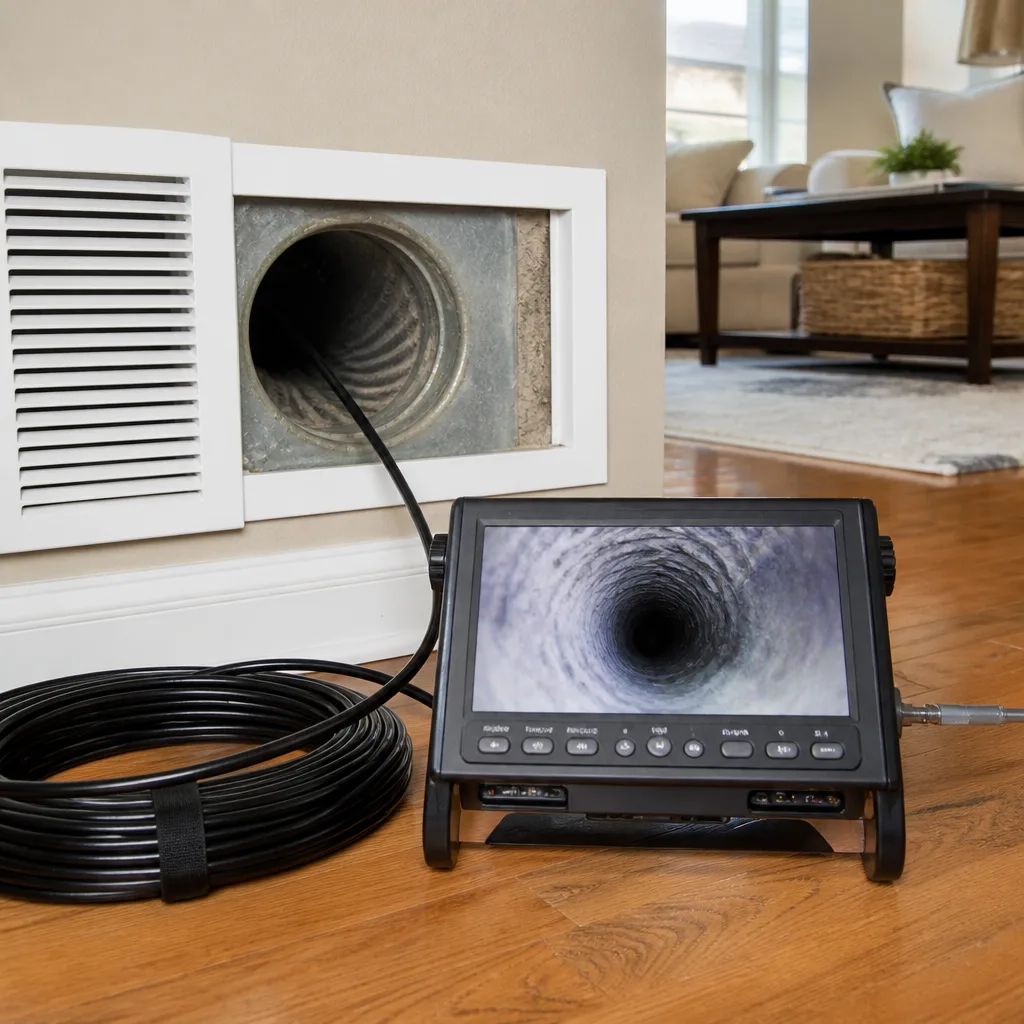 Camera inspection
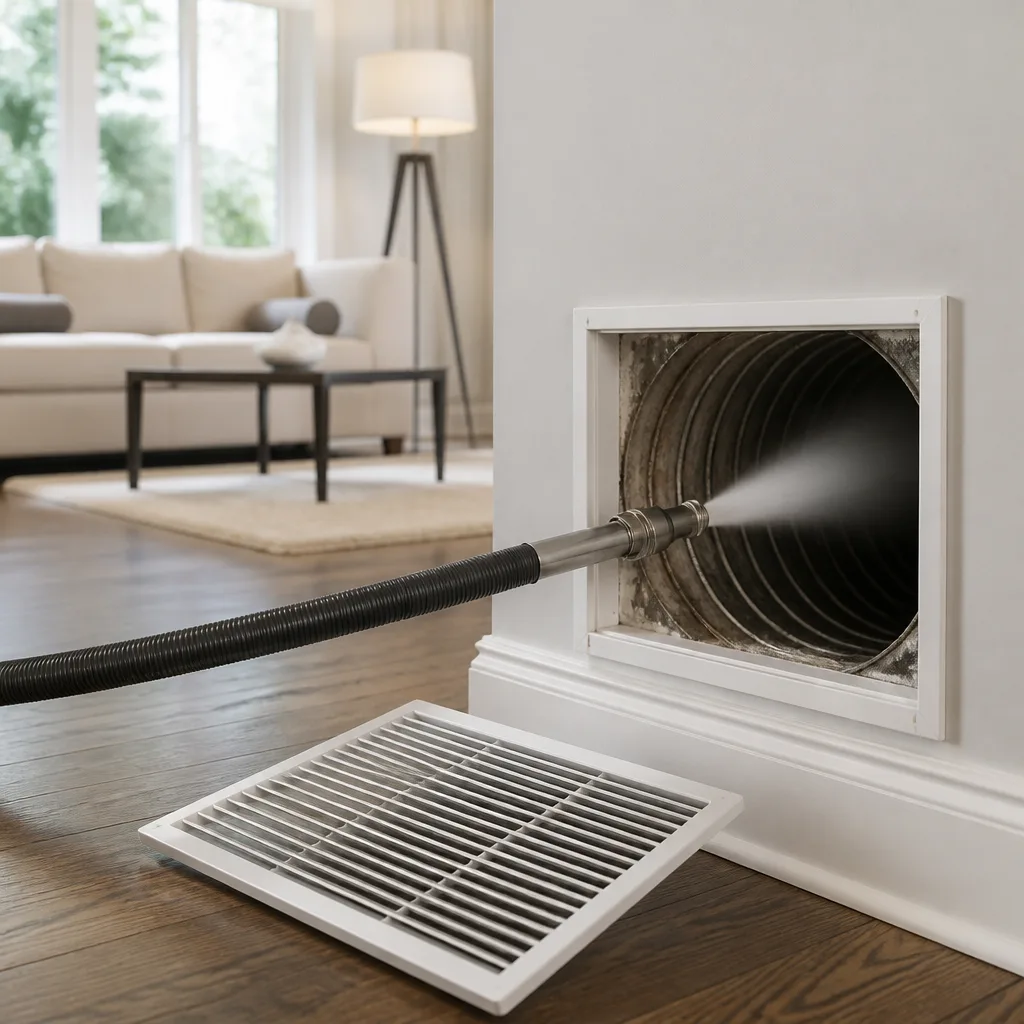 Sanitizing & deodorizing
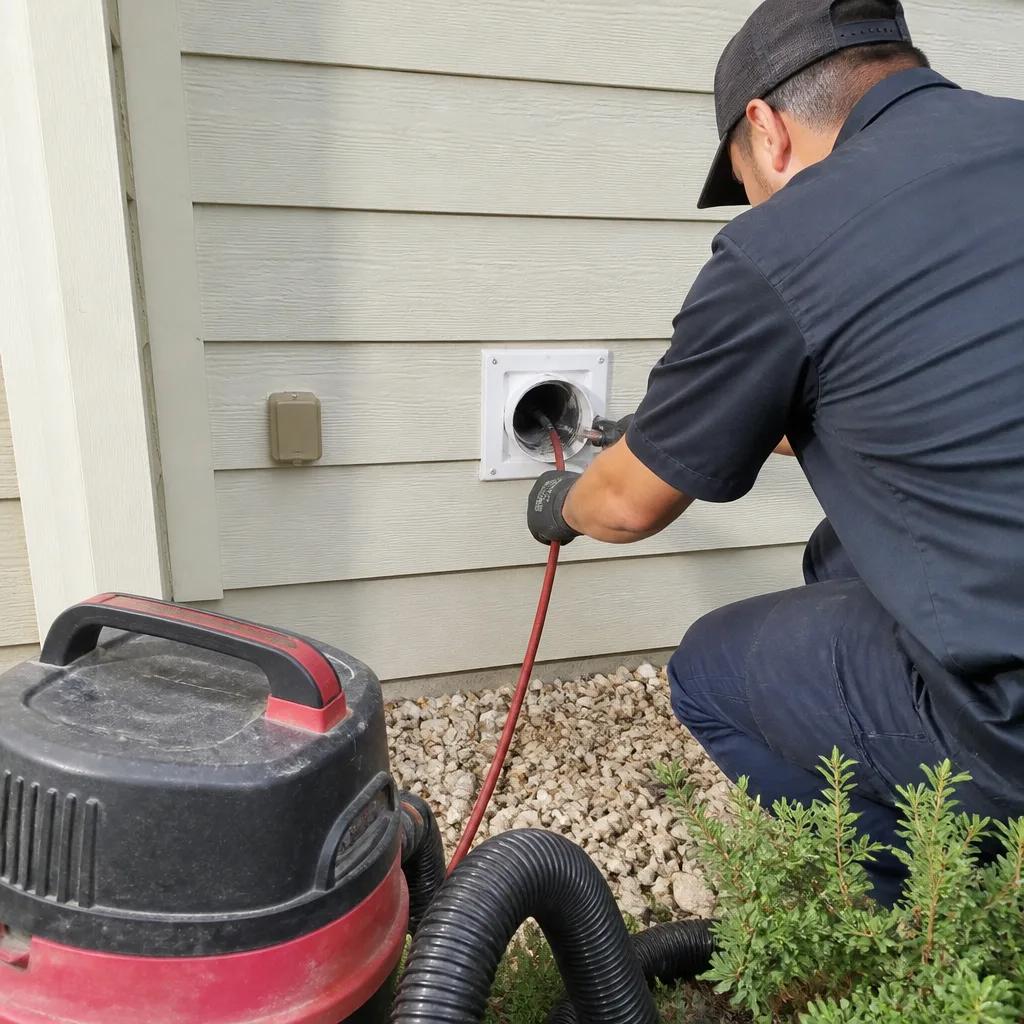
Whole-system duct and dryer vent check with before-and-after photos - you see exactly what came out of your vents
That "$99 whole-house special" is a bait ad - the real number appears once they are in your hallway, or the "clean" is a shop-vac at the register. We photograph the inside of your ducts before and after instead.
The Complete Guide to Air Duct Cleaning in Austin
Austin ranks in the top 10 U.S. cities for seasonal allergy severity, yet most air duct cleaning guides are written for climates where the system rests half the year. In Austin, your HVAC runs hard from March through November, sometimes longer, pulling cedar pollen, construction dust, and clay-heavy soil through your return ducts every single day. This Air Duct Cleaning guide explains what actually needs cleaning in a Central Texas home, what it should cost, and how to tell the difference between a real cleaning and a surface-level wipe-down that will leave you with the same allergies and the same dust on your baseboards in six weeks.
Styles & brands we work with
Quick Answer
Air duct cleaning in Austin typically costs between $350 and $650 for a whole-home system, and it involves dislodging debris with mechanical brush agitation, then pulling it out with negative-air extraction while HEPA filtration keeps the loosened particles from re-entering your living space. What gets removed is not simply “dust” – in Austin, it’s the specific mix of cedar pollen, clay silt from construction, and biofilm that forms when those organics sit against cool, damp duct surfaces during our long cooling season. A proper cleaning takes 3 to 6 hours and should include both the supply and return sides, not just what a technician can reach from a single vent.
Table of Contents
- Why Austin Is Different: Climate, Pollen, and Your Ducts
- What Negative-Air Extraction Actually Does (and Why It Matters)
- Flex Duct vs. Hard Metal: Austin’s Split Personality
- How Much Does Air Duct Cleaning Cost in Austin?
- How Often Should Austin Homeowners Clean Their Ducts?
- What a Written Pre-Job Scope Should Include
- Common Mistakes to Avoid
- When to Call a Professional
- Frequently Asked Questions
- The Bottom Line
Why Austin Is Different: Climate, Pollen, and Your Ducts
Most national guides assume your furnace runs for five months and your air conditioner for another four, with a few shoulder seasons in between. That is not how Austin works. Our cooling season stretches from late March through early November, and plenty of homes in Travis, Williamson, and Hays counties run their AC into December. That means your ductwork is actively moving conditioned air for roughly 2,500 to 3,000 hours per year – nearly double the runtime of a comparable home in Minneapolis or Chicago.
That runtime matters because it changes what accumulates inside the ducts. Air moving through a cool duct creates condensation at the duct wall, especially where the flex duct sags slightly between joists. That condensation traps whatever is in the air: cedar pollen from December through February, oak pollen in March and April, and the fine clay silt that rises from Austin’s limestone-heavy construction sites every time a new subdivision goes in east of I-35 or up toward Leander. The result is not just loose dust. It’s a damp, organic layer pressed against the duct wall – the starting point for what becomes biofilm.
We see this pattern in nearly every tract home built in the last 20 years in Austin and its surrounding suburbs. The return ducts in particular collect a grayish, slightly tacky film that smells faintly musty when the system first kicks on. That film is not removed by a shop vac. It requires mechanical agitation to break it loose, followed by negative pressure to pull it out of the system entirely. This is the single biggest difference between a cleaning that works in this climate and one that does not.
Cedar Fever’s Favorite Hiding Place: The Return Duct
Austin’s cedar fever season runs from December through February, and mountain cedar pollen is uniquely small – roughly 20 microns, light enough to stay airborne for hours and slip through most residential filter media. Here is what most homeowners don’t realize: that pollen does not settle evenly through the house. It concentrates inside the return ducts, where air is being pulled back toward the air handler. The return side sees the highest air velocity in the system, and the pollen that enters through your home’s pickup grilles gets pressed against the interior duct walls by that constant pull.
If you only clean the supply side – the vents that blow air out – you’re leaving the majority of the pollen load untouched. A proper Austin duct cleaning treats both sides, but the return is where we spend the most time, because that’s where cedar season does its damage.
What Negative-Air Extraction Actually Does (and Why It Matters)
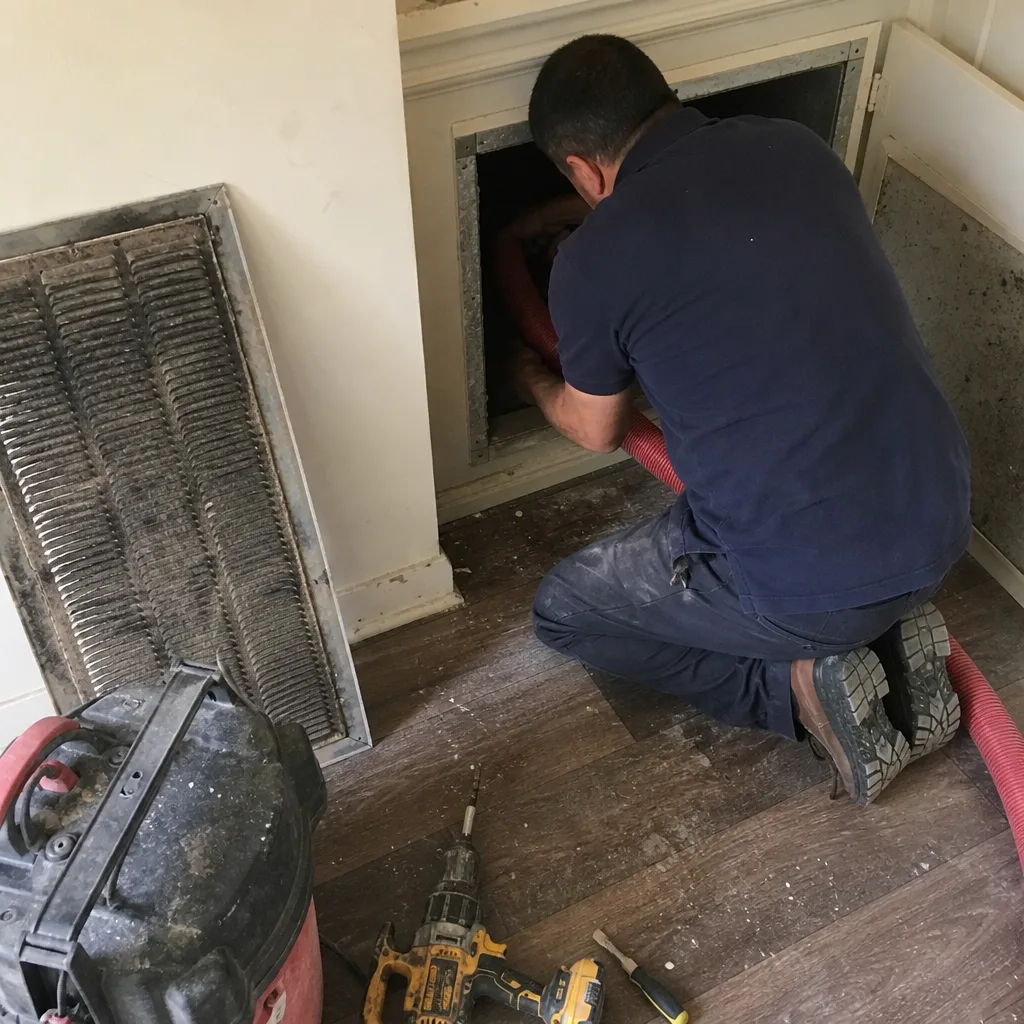
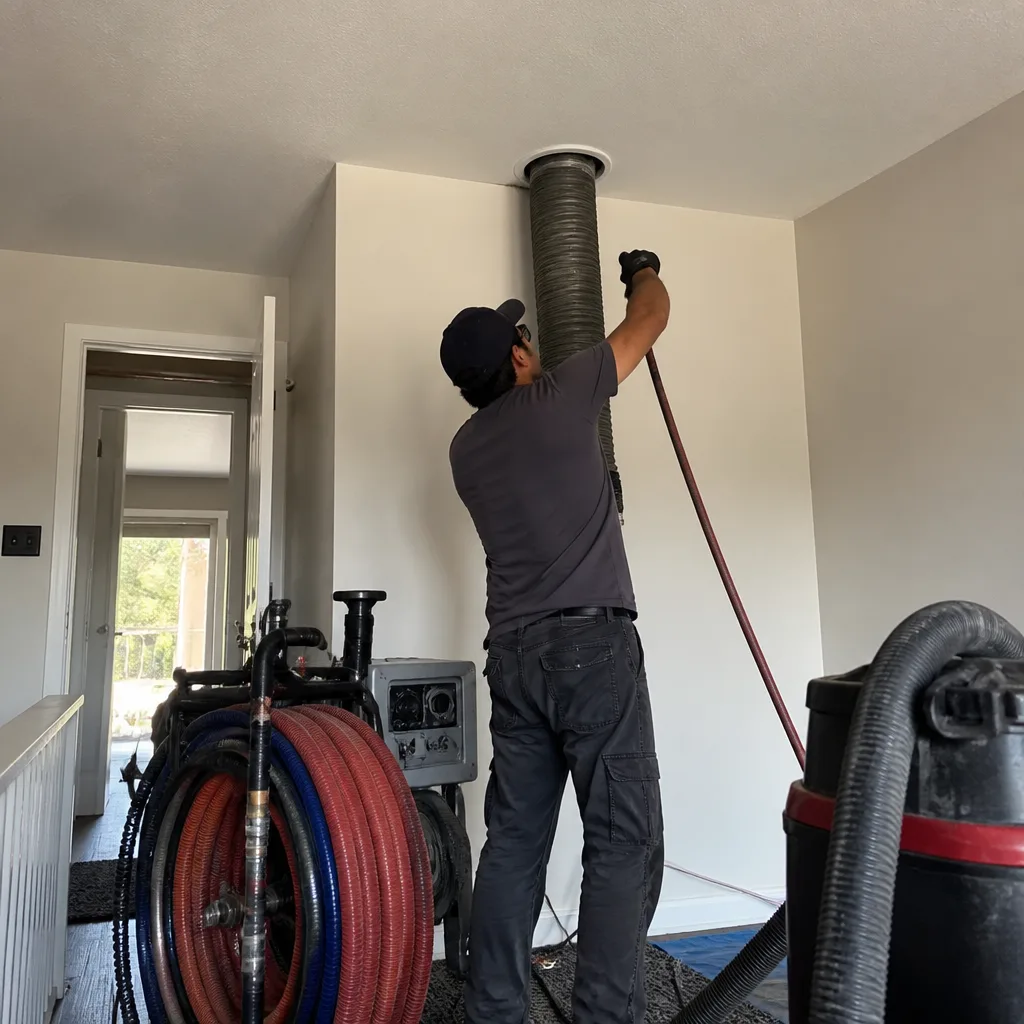
The phrase gets thrown around a lot in this industry, so let’s be plain about what it means. Negative-air extraction means the technician creates a vacuum within the duct system itself: a powerful extraction unit is connected to the main trunk, and the system is sealed so that the only air entering is the air being pulled through the cleaning tools. The ductwork is under negative pressure the entire time, so anything dislodged gets sucked into the extraction unit rather than drifting out into your hallway.
This is the opposite of how a basic cleaning works. A technician with a shop vac attached to a hose is pushing air around inside the duct and hoping debris happens to get caught at the vent opening. What’s not caught gets blown deeper into the system or released into the room. We use Nikro negative-pressure units on every job for exactly this reason: they move enough air to pull contaminants from 40 feet of duct at a time, not just from the first two feet past the register.
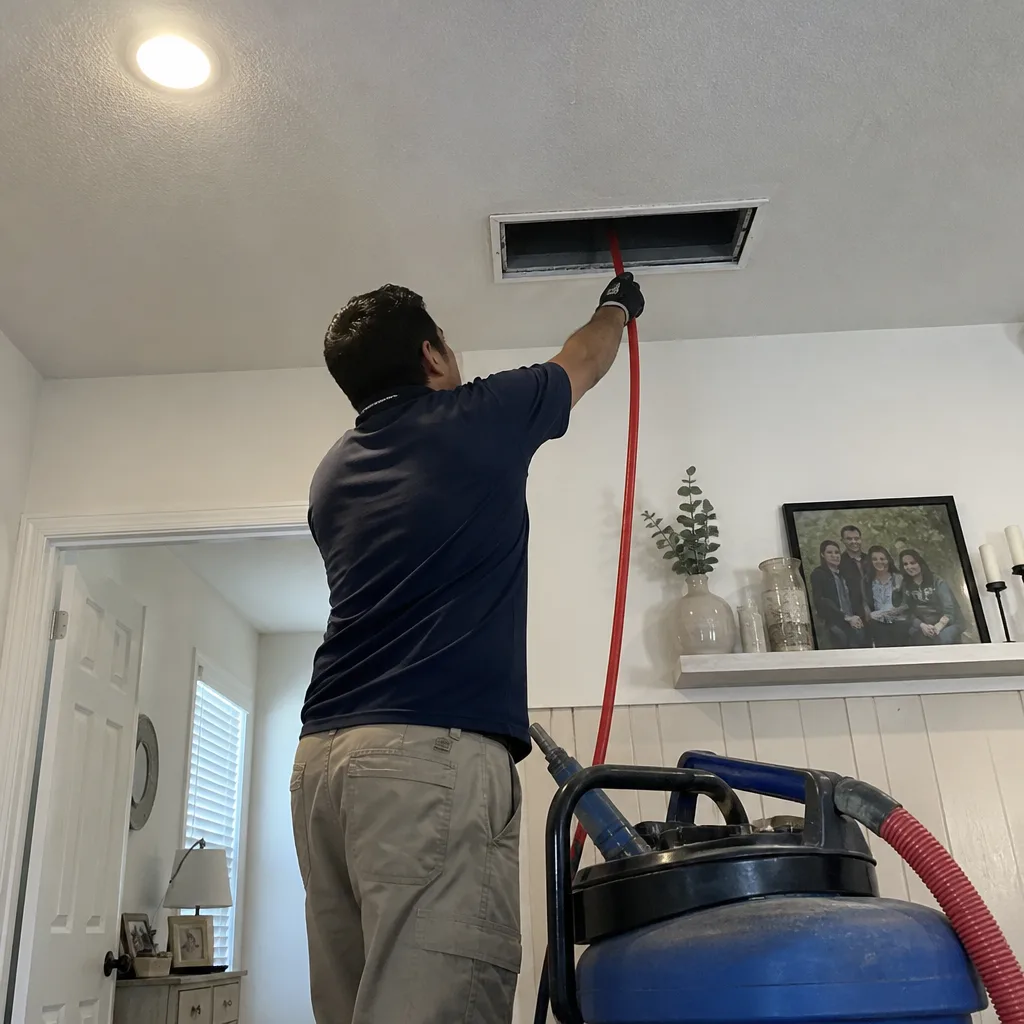
Alongside the extraction, we run a Rotobrush rotary brush system that physically scrapes the duct walls. The brush rotates against the interior surface to dislodge the tacky pollen-and-clay film described above – the stuff that will not come loose with air pressure alone. While that’s happening, an Abatement Technologies HEPA filtration system runs in the living space to capture any particles that escape through imperfect seals. Three pieces of equipment, three different jobs: loosen, extract, contain.
Flex Duct vs. Hard Metal: Austin’s Split Personality
If your Austin home was built after about 1990, there’s a very good chance the ductwork is flex duct: flexible, insulated tubing with a corrugated plastic interior wrapped in a fiberglass jacket. If your home predates that era – think Hyde Park, Rosedale, Allandale, or the older neighborhoods east of 35 – you may have hard metal duct: galvanized steel rectangular trunks and round branches. The two materials behave completely differently, and any cleaning method that treats them the same is going to miss something.
Flex Duct: The Central Texas Standard
Flex duct is the standard in newer Austin construction because it’s fast to install and forgiving of Texas attic geometry, where 140-degree summer attic temperatures leave almost no room for error. But flex duct has a problem: its corrugated interior creates thousands of tiny ridges that trap debris. The tacky pollen-and-condensation film described above settles into those ridges and hardens over time. Cleaning flex duct requires lower brush pressure so the inner liner isn’t torn, but it also requires more passes. A quick in-and-out cleaning leaves debris in the corrugations.
Hard Metal Duct: More Durable, More Access Points
Hard metal duct is more forgiving to clean. It tolerates higher brush pressure, and debris tends to fall to the bottom of the duct where extraction can pull it out efficiently. But hard metal systems in older Austin homes often have a separate problem: decades of accumulated renovation debris. We have found drywall chunks, paint cans, children’s toys, and once a dead squirrel, in older metal ducts around central Austin. Metal duct also tends to have more joints that can have separated over time, which means the technician needs to check that the system is intact before cleaning begins, or the negative pressure simply pulls attic air through the gaps.
The Takeaway
Before you hire anyone to clean your Austin ductwork, know which type you have. A pre-job inspection should tell you this in the first ten minutes. If a company quotes a price over the phone without asking about your home’s age or duct type, that’s a flag that they’re not planning to adjust their method to what’s actually in your attic.
How Much Does Air Duct Cleaning Cost in Austin?
We quote whole-system pricing, not per-vent pricing, because the work being done is a function of the system, not the number of openings. A three-bedroom, two-bath home in Austin typically runs between $380 and $520 for a complete cleaning of both supply and return sides, including all main trunks and branch lines. Larger homes with two systems, which are common in the 78730, 78746, and 78613 areas, run between $600 and $850.
These numbers are for a full negative-air cleaning with brush agitation and HEPA containment, not a vent blow-out. A vent blow-out is a 45-minute service where a technician pops a register and points a vacuum hose at it. It often costs $99 to $150 and leaves most of the system untouched. We don’t offer a vent blow-out because it doesn’t solve the problem that motivated you to search for duct cleaning in the first place.
What Shapes the Price
- Number of systems: A home with two AC units has two sets of ductwork, two air handlers, two returns, and roughly double the labor.
- Duct accessibility: Austin attics in summer are brutal work environments. An attic with good headroom and a flat deck is faster to work in than a low-pitch, blown-in-insulation attic near the lake. Accessibility affects labor time.
- Condition of the system: Severely neglected ducts take more passes, more brush time, and occasionally a second extraction pass to clear. If the system has been untouched for 20 years, it will take longer.
- Remediation beyond cleaning: If the inspection reveals mold growth, a rusted-out plenum, or separated duct runs, those are repairs beyond the scope of a cleaning and should be quoted separately and in writing.
Why Some Austin Quotes Are So Much Cheaper
The honest answer: because they’re not doing the same work. A $99 whole-house duct cleaning is either bait meant to be upsold at the door, or it’s a 45-minute vent blow-out that leaves 85% of your duct surfaces untouched. A $299 quote is almost always a per-vent teaser that balloons once the technician arrives and “discovers” that your system has more vents than the coupon covered. A legitimate whole-home cleaning in this market, with real equipment and real time on the job, cannot be done profitably for under $300. If the quote seems too good to be true, ask what exactly is included, in writing, before work begins. Then compare that to what the next company is offering. This is the exact comparison most homeowners never make, and it’s why this industry has the reputation it does.
Our Air Duct Cleaning in Austin service page goes into more detail on what’s included in every cleaning, and what our written pricing covers.
How Often Should Austin Homeowners Clean Their Ducts?
For most Austin homes, every 3 to 5 years is the honest answer. That’s shorter than the 5 to 7 year interval you’ll see in national guides, and the reason is simple: our runtime is longer, and our pollen load is heavier. A home with pets, children, or a homeowner with significant allergies should lean closer to 3 years. A home with no pets, good filtration, and a homeowner who replaces filters diligently might stretch to 5 years without meaningful buildup.
These markers suggest you’re due sooner than the interval suggests:
- Visible dust on register grilles within 48 hours of dusting: the system is actively depositing debris into the living space.
- Musty smell when the AC first kicks on: this is the biofilm layer warming and off-gassing from the coil and nearby duct surfaces.
- Return grille loaded with gray film: pull a return grille off and run a finger along the inside surface. If it comes back coated, that film extends into the duct.
- Post-renovation dust: Austin’s renovation market never slows down. If you’ve had flooring, drywall, or kitchen work done, construction dust has been pulled through the system.
What a Written Pre-Job Scope Should Include
The single best tool you have as a homeowner is a written pre-job scope, and you should demand one before any technician touches a vent. It’s the only way to compare two Austin quotes on equal terms. Here’s what a real scope should spell out, in writing:
- The total price, in dollars, for the entire system. Not a “starting at” price, not a per-vent multiplier. One number for the whole home.
- Which sides are included. Supply ducts, return ducts, main trunks, branch lines. If the scope doesn’t say “both supply and return,” assume only one side is being cleaned.
- The method. “Negative-air extraction with rotary brush agitation and HEPA containment” is a specific method. “We clean your vents” is not.
- The equipment being used. Ask for brand names. A company using box-store equipment will not put it in writing.
- Access points. Will the technician cut access holes? Where? Who seals them afterward? This matters in Austin attics where cutting into a flex run mid-trunk is standard practice.
- Time on the job. A legitimate whole-home cleaning is 3 to 6 hours. If the scope says 90 minutes, ask what method takes that little time.
- The guarantee, in writing. What happens if the work falls short? What’s the time window for reporting it? What does the company commit to doing about it?
We call this document the written price-before-work commitment, and under the Kingswell Guarantee it’s not optional. It’s the same standard applied to every job since 2004, and it exists because the alternative – a handshake and a “we’ll take care of you” – is exactly how Austin homeowners end up paying twice for the same job.
Common Mistakes to Avoid
- Hiring on price alone. The cheapest quote in Austin is almost always a vent blow-out wearing the clothes of a duct cleaning. If the price is under $300 for a whole home, ask what method is being used and read the scope with a skeptical eye.
- Skipping the return side. Some companies clean the supply vents and call it a day. The return ducts carry the pollen you’re actually allergic to. Insist that both sides are included in writing.
- Not asking about containment. If the answer to “how do you keep the loosened dust out of my living room?” is “we use plastic sheets over the vents,” that’s not containment. That’s a tarp. HEPA filtration in the living space is a different animal, and it matters if anyone in the house has asthma or allergies.
- Using the cheapest fiberglass filters. A $1 filter does not catch cedar pollen. It catches gravel. A MERV 8 pleated filter, changed every 60 to 90 days during the cooling season, is the minimum for Austin pollen conditions.
- Cleaning before a major renovation rather than after. We’ve had homeowners pay for a duct cleaning, then have flooring tear-out the following week. The construction dust re-contaminates the system. Clean after the drywall dust settles, not before.
- Ignoring the dryer vent. It’s adjacent work, and in Austin’s dry, lint-rich households, a clogged dryer vent is a fire risk and a lint reservoir that feeds back into the laundry room. We wrote a full Dryer Vent Cleaning in Austin guide for that specific problem.
When to Call a Professional
Some home maintenance tasks are genuinely DIY territory. Replacing an air filter, cleaning a register grille, and vacuuming the first two inches of visible duct from a vent opening are all things you can do on a Saturday morning. But anything deeper than that crosses into professional territory quickly, as our DIY vs Professional Air Duct Cleaning: The Austin Homeowner’s Decision Guide explains in detail. The moment you need agitation to dislodge bonded film, negative pressure to extract it, or sealed access points to reach the middle of a trunk run, you’re beyond the reach of any consumer-grade tool.
The DIY temptation also carries a risk: shoving a vacuum hose or a brush into a flex duct can tear the inner liner, and a torn liner pulls attic insulation fibers into your airflow. If you’ve pulled a return grille and seen gray film, or if the system smells when it kicks on, or if there’s a visible dust plume from the nearest register when the AC starts, the time for surface-level fixes is over. Kestrel Air Duct Austin offers free estimates throughout the Austin area – call (254) 848-6913 and we’ll walk you through what’s actually in your system before any work begins.
You can also start with our Kestrel Air Duct Austin home page for a quick overview of who we are and how we work.
Frequently Asked Questions
Most Austin homes fall between $380 and $850, depending on system size, number of AC units, and accessibility. The lower end covers a typical three-bedroom, two-bath single-system home; the upper end covers larger homes with two separate HVAC systems. This is for a full negative-air cleaning with brush agitation and HEPA containment, not a vent blow-out. For an exact quote on your system, call (254) 848-6913 – estimates are free and the price is put in writing before any work begins.
Because they’re not doing the same work. A $99 or $149 quote is typically a vent blow-out: a technician with a vacuum hose at each register for a few minutes, while the rest of the duct surface stays coated. A $299 per-vent quote is often a door-step upsell strategy. A legitimate whole-home cleaning in the Austin market involves 3 to 6 hours of labor, professional extraction equipment, and two-sided service – which cannot be done sustainably under $300. When comparing quotes, read the written scope line by line.
It can meaningfully reduce the amount of cedar pollen circulating in your home, because the return ducts act as a pollen reservoir during December through February. Cleaning removes that reservoir. However, duct cleaning is not a substitute for high-MERV filtration throughout the cedar season, or for keeping windows closed on high-pollen-count days. We recommend seeing duct cleaning as one layer of an allergy-reduction strategy, not a cure. Homes where the homeowner also upgrades to a MERV 11 or MERV 13 filter during cedar season see the biggest improvement.
Ask for before-and-after photos of the interior of your ducts, taken from the same access points. Any company using professional inspection equipment can provide these. You should also inspect the return grille and the first few visible feet of any accessible duct after the job: the surface should be clean metal or clean plastic, not film-coated. If the grille still shows gray film an hour after the job, call the company and invoke the guarantee. Under our 365-Day Done Right Promise, if the work falls short within the guarantee period, we return at no charge.
New construction in Austin is often the worst-case scenario for duct contamination. During the buildout, drywall dust, sawdust, paint overspray, and fiberglass insulation particles are pulled into open duct runs before the registers are installed. Most builders do not clean the ducts before closing. If you bought a newly built home in the last two years, there’s a good chance the ducts still carry construction debris. We’ve pulled drywall chunks and insulation scraps from ducts in newly delivered homes in Cedar Park, Pflugerville, and Round Rock.
Every 3 to 5 years for most Austin homes, with homes that have pets, allergy-sensitive occupants, or recent renovations leaning closer to 3 years. The national 5-to-7-year guidance doesn’t hold here because our cooling season is longer and our pollen season is heavier. If you’re seeing dust accumulate on furniture within days of cleaning, or smelling a musty note when the system starts, you’re due regardless of the calendar. For a professional assessment of your system’s condition, call (254) 848-6913.
The Bottom Line
Air duct cleaning in Austin is not a generic service, and it shouldn’t be priced or performed like one. The combination of a nine-month cooling season, cedar pollen that concentrates in return ducts, and the flex-duct construction common to Central Texas homes means the cleaning method matters more here than it does in most of the country. A real cleaning dislodges the bonded film with mechanical brush agitation, extracts it under negative pressure, and contains the loosened particles with HEPA filtration. A fake one moves dust around for 90 minutes and leaves you with the same allergies and the same smell in the spring. Ask for the written scope. Compare quotes on equal terms. And if it’s not done right, hold the company to their guarantee – that’s what it’s for. For more guides & resources on keeping your home’s air clean, see our blog.
Written by Dale Whitmore, Owner at Kestrel Air Duct Austin, serving Austin since 2004.
Call (254) 848-6913 for a free estimate, or browse our Air Duct Cleaning in Austin page for a closer look at our process, pricing, and the 365-Day Done Right Promise that backs every job.
See the difference
 Before
 After
After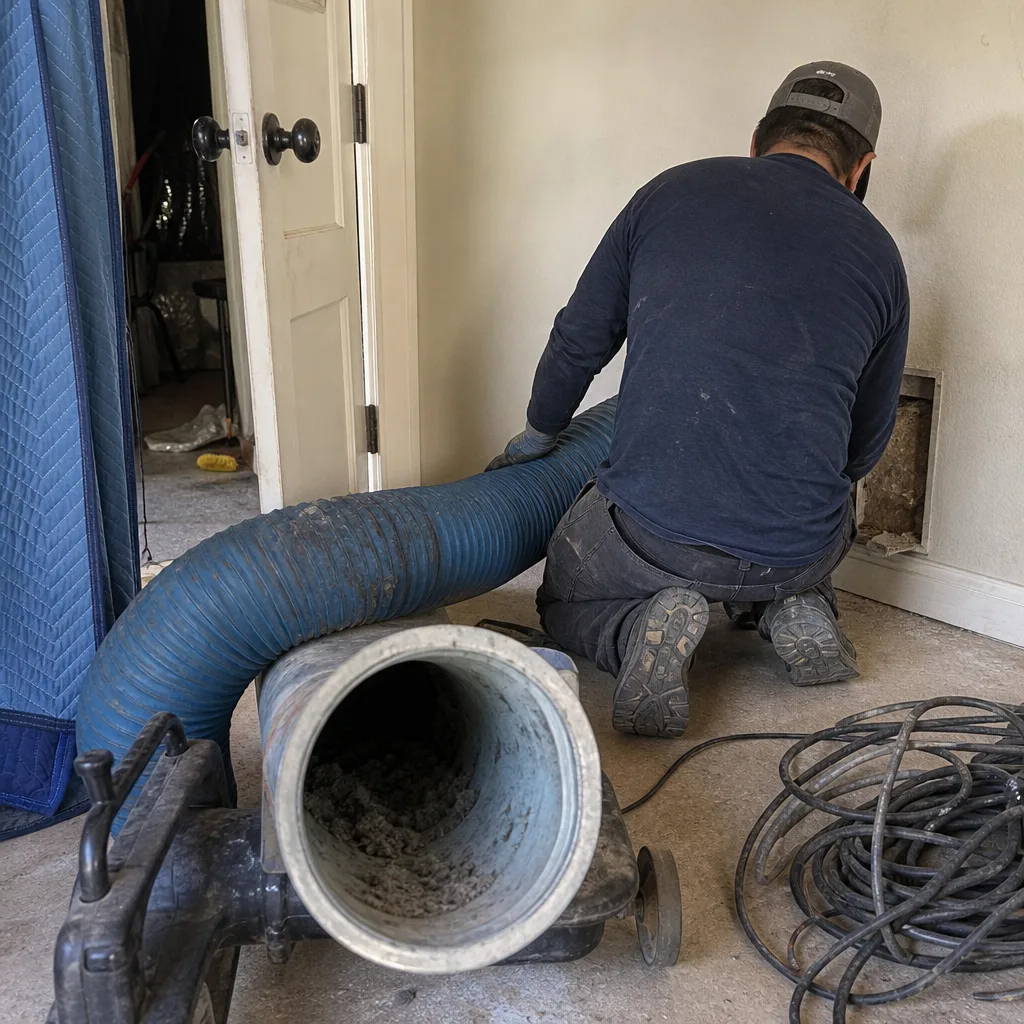 Before
 After
After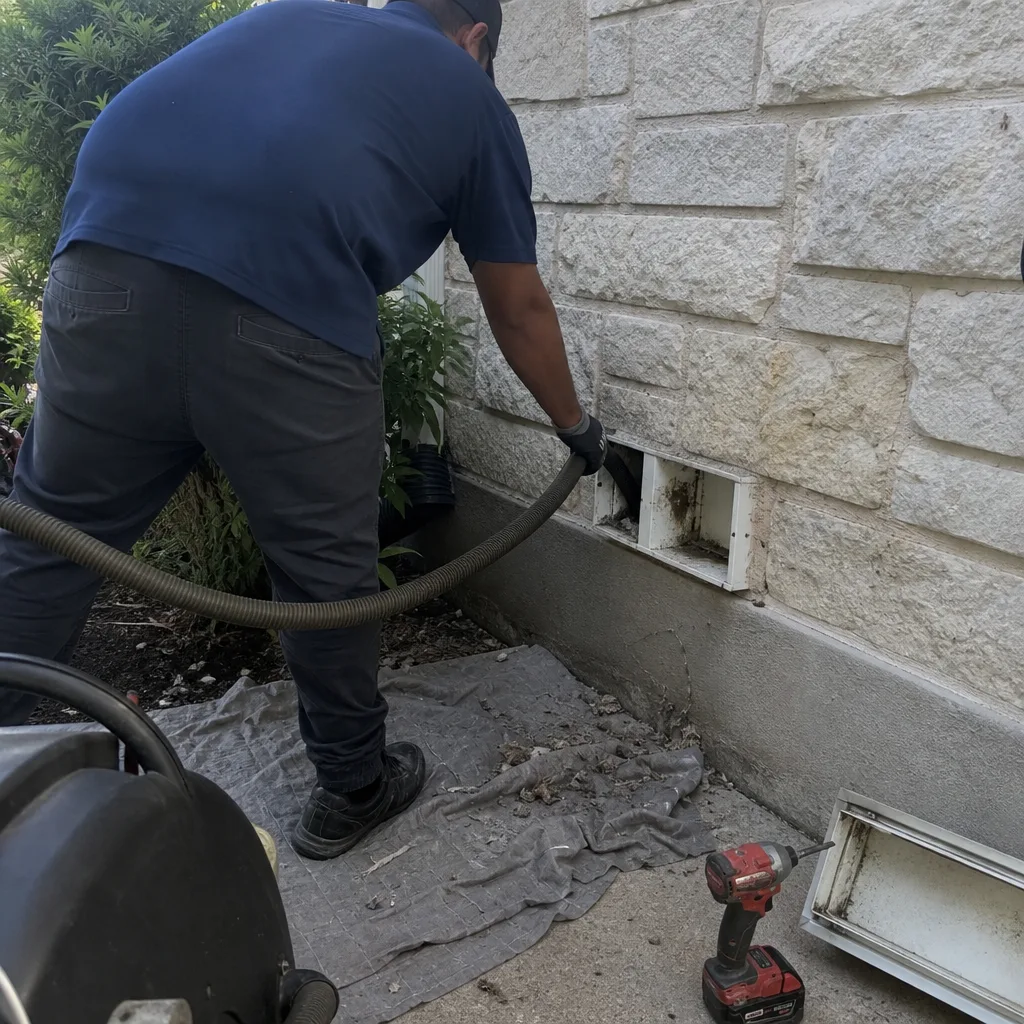 Before
 After
After