

Last updated October 15, 2026
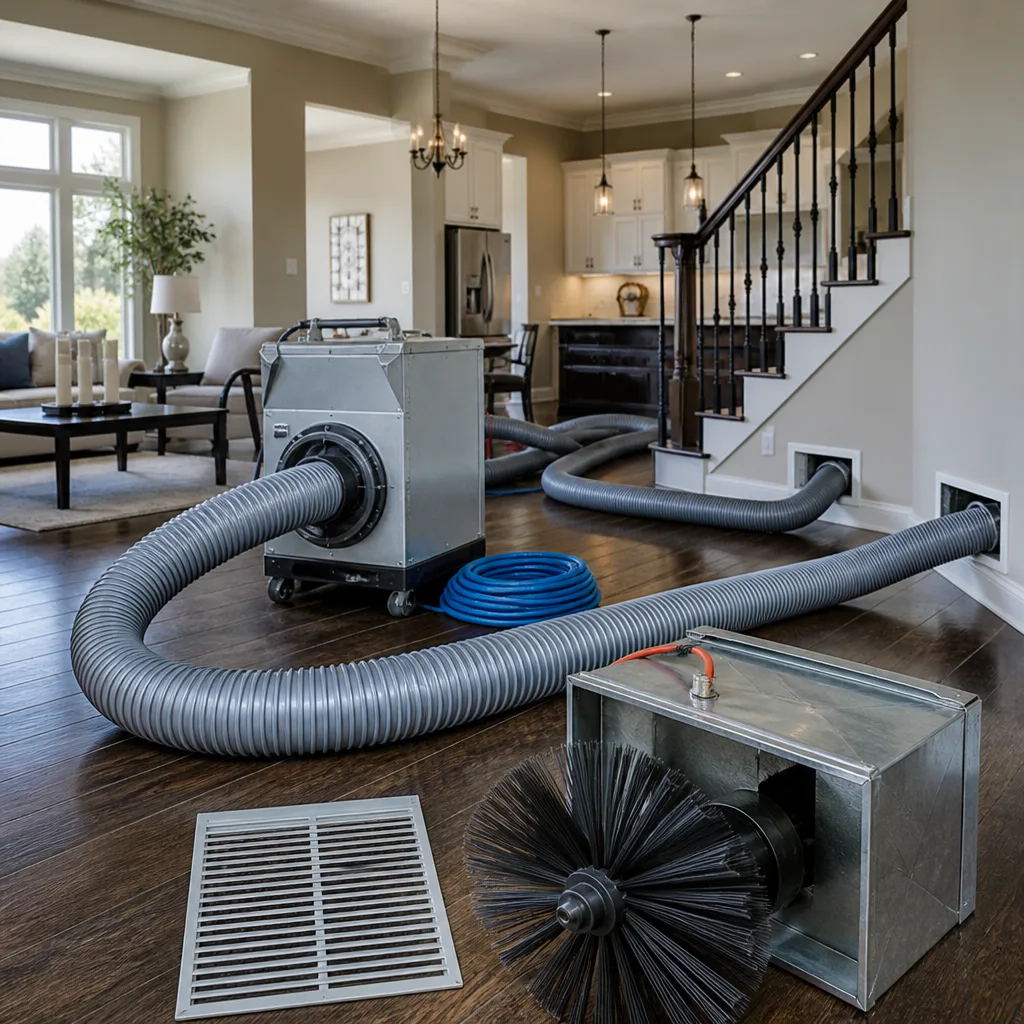 Whole-home duct cleaning
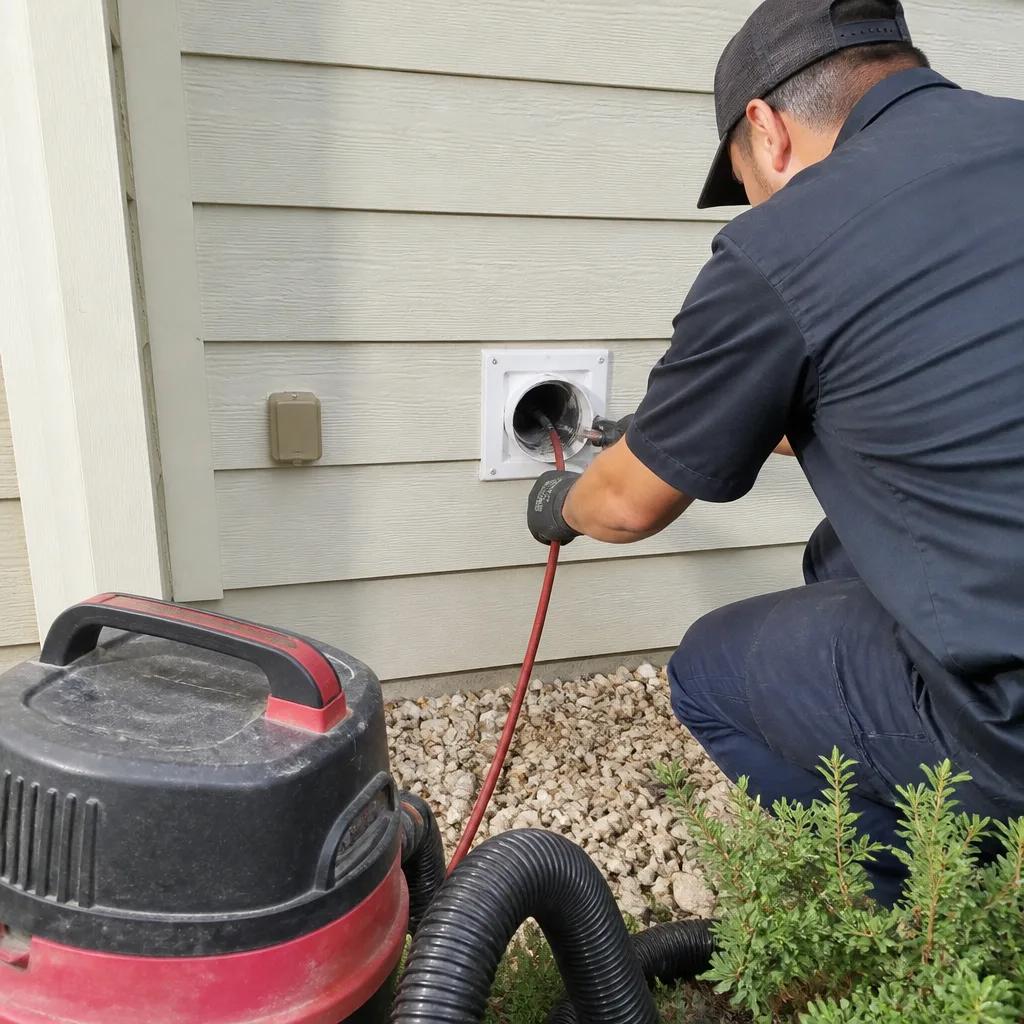
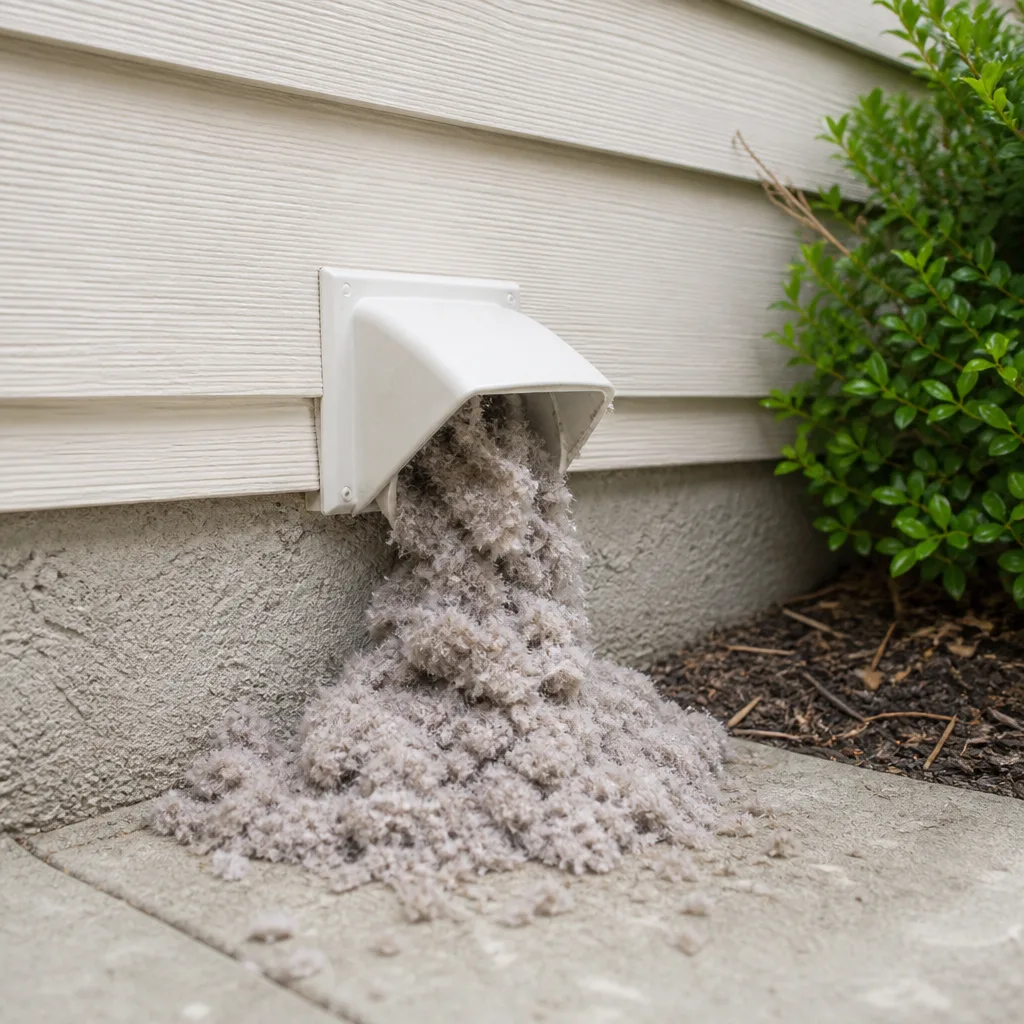 Dryer vent cleaning
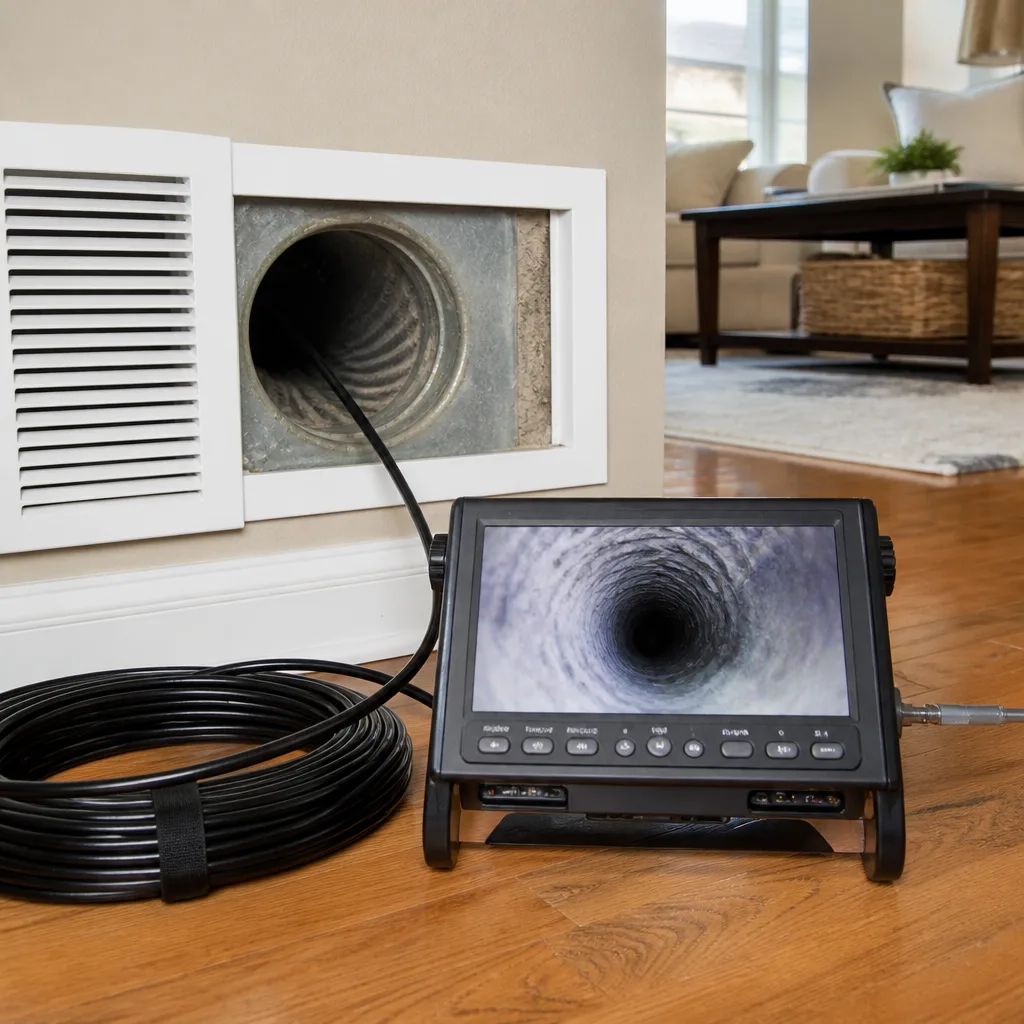 Camera inspection
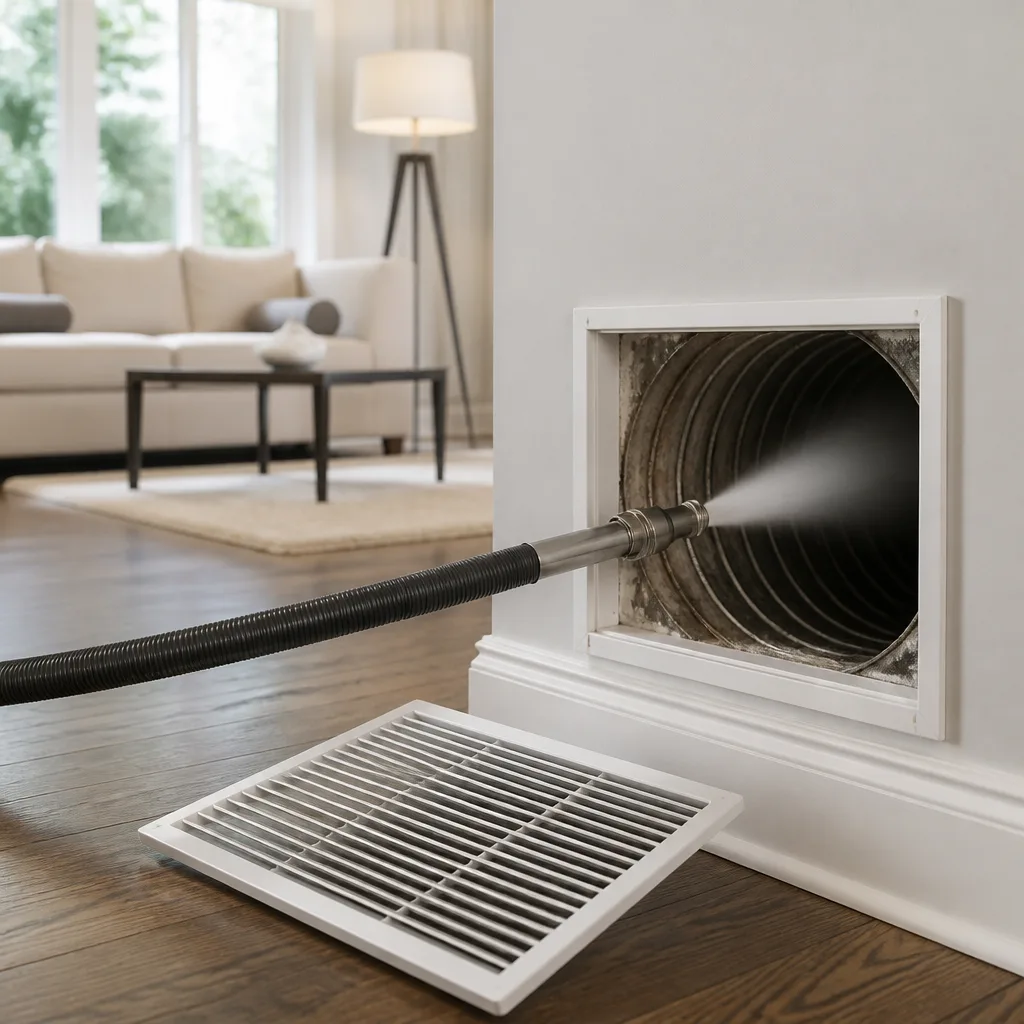 Sanitizing & deodorizing
Whole-system duct and dryer vent check with before-and-after photos - you see exactly what came out of your vents
That "$99 whole-house special" is a bait ad - the real number appears once they are in your hallway, or the "clean" is a shop-vac at the register. We photograph the inside of your ducts before and after instead.
How to Hire a Air Duct Cleaning Contractor in Austin: A Step-by-Step Guide
Here’s the number that should make every Austin homeowner stop flipping through coupon mailers: the Texas Attorney General’s office catalogs low-ball duct cleaning coupons as a recurring consumer complaint category. We’re not talking about a few isolated bad actors. Austin, with its cedar-heavy air, long cooling season, and thousands of post-2010 homes, has become a target-rich market for crews that advertise a $79 whole-house special and then present a $600 to $900 invoice once they’re standing in your hallway. This guide gives you a phone-script and a written-quote checklist so you can disqualify the bait-and-switch operators before you ever schedule an Air Duct Cleaning visit. By the time you finish reading, you’ll know exactly what to ask, what a legitimate quote must include, and how to verify credentials without an industry insider’s help.
Quick Answer
Hiring an air duct cleaning contractor in Austin comes down to three verifiable steps: ask five specific phone questions that bait-and-switch crews can’t answer cleanly, demand a written quote that itemizes linear feet, vent count, and equipment type before any work starts, and confirm both Texas registration and NADCA membership in under ten minutes. A reputable Austin duct cleaner will put the price in writing before the van shows up, name the equipment they use, and back the work with a documented guarantee period longer than thirty days.
Styles & brands we work with
Table of Contents
- The Five Phone Questions That Disqualify Bait-and-Switch Operators
- What a Legitimate Written Quote Must Itemize
- How to Verify Texas Registration and NADCA Membership Without Insider Knowledge
- Austin-Specific Red Flags: Door-Hangers, Sub-$99 Offers, and Missing Equipment
- The 365-Day Written Workmanship Promise vs. the Standard 30-Day Clause
- What a Real Duct Cleaning Actually Involves in an Austin Home
- Questions to Ask When the Crew Arrives
The Five Phone Questions That Disqualify Bait-and-Switch Operators
Most Austin homeowners never think to interview a duct cleaning contractor over the phone. They call a number from a door-hanger, ask for the special, and book the first available slot. That’s backwards. The phone call is where you sort the professionals from the crews that will inflate the price on-site. Here’s the script we recommend, based on patterns we’ve seen consistently across the Austin market.
- “What’s your exact price for my size home before I schedule?” A legitimate contractor will ask you several questions first: square footage, number of vents, number of returns, whether you have a two-story layout, whether you’ve had recent renovations. They’ll then give you a dollar figure or a tight range on that call. A bait-and-switch operator will avoid the number entirely, or quote a suspiciously low figure and refuse to commit to the details. If they won’t name a price on the phone, assume the price will be named at your door, after they’ve brought equipment into the house.
- “What equipment do you use, and is it truck-mounted or portable?” Professional duct cleaning requires negative-air extraction with a high-powered vacuum unit, paired with brush agitation at the duct wall. Listen for specific equipment names. A crew that shows up with a shop vac and a drill attachment cannot clean a duct system. They can move dust around. Ask this question on the phone and the answer tells you a great deal. Any hesitation, any vague “we use commercial equipment” without specifics, and you hang up.
- “Does your quote include the main trunk line and returns, or just the supply vents?” This is the question that separates honest pricing from the classic upsell. Some Austin operations advertise a price that covers only the supply registers. Once they’re in the house, the main trunk line, returns, and plenums become “add-ons” that triple the bill. A reputable contractor prices the whole system from the start. If the phone rep can’t clearly state whether the main trunk line is included, that’s a disqualifier.
- “Do you sanitize or fog, and is that included or extra?” Sanitizer application is a legitimate service when it’s disclosed. It’s not legitimate when it’s sprung on you after the cleaning as a mandatory “health and safety” add-on at $150 to $300. Ask the phone rep directly: is sanitizer part of your quoted price, optional, or not offered? Their answer should be immediate. If they get vague or start talking about “depending on what we find,” you’ve found another upsell operation.
- “Can you email me the price in writing before I agree to the appointment?” This one question eliminates nearly every bait-and-switch operator in Austin. A company that stands behind its pricing will send you a written quote before you commit to anything. A company that won’t is planning to revise the number once the technician has assessed your home in person. There’s no legitimate reason to refuse a written, pre-appointment price. If they won’t send it, don’t book.
These five questions take about four minutes on the phone. They will disqualify roughly 80% of the operators advertising in Austin, including the door-hanger crews and the coupon-mailer operations. The 20% that pass are the contractors you should actually consider.
What a Legitimate Written Quote Must Itemize
A real quote from an air duct cleaning contractor is not a one-line email that says “Whole-house cleaning: $299.” That’s a vague invitation to renegotiate. A legitimate written quote in the Austin market should itemize, at minimum, the following elements. Pull out a red pen when you receive a quote and check each one. Missing items are red flags. Vague items are red flags. A contractor who can’t itemize the work is a contractor who plans to redefine the work after they start.
- Linear feet of ductwork. Duct cleaning is priced, in honest operations, on the physical scale of the job: the linear feet of supply and return ducting in your home. A 1,800-square-foot single-story home in Austin typically has between 90 and 140 linear feet of ductwork. A 3,000-square-foot two-story home can have 200 feet or more. The quote should state the estimated linear feet and the price per foot or the system total based on that measurement.
- Number of supply vents and return vents. The quote should list how many supply registers and how many return grilles the contractor will clean. This matters because it confirms the contractor is cleaning the entire system, not just the easy-to-reach supply vents on the main floor. Compare the vent count on the quote to the vents you can physically count in your house. A mismatch means the quote hasn’t been priced for your actual home.
- The main trunk line, branch lines, and plenums. This is the part dishonest quotes leave out. The main trunk line is the large duct that runs from your air handler and distributes air to the branch lines. The plenums are the metal boxes where the ductwork meets your HVAC unit. These areas collect the most debris over time in Austin homes, especially if your air handler is in a hot attic where dust gets pulled in through gaps. Your quote should state, in writing, that the trunk line, branch lines, and supply and return plenums are all included in the price.
- Equipment type and cleaning method. The quote should name the method: negative-air extraction, rotary brush agitation, or both. Negative-air extraction means a powerful vacuum unit creates suction at the duct opening while the system is cleaned, pulling loosened debris out of the house. Rotary brush agitation means a spinning brush on the end of a flexible shaft scrubs the interior duct walls to dislodge caked-on dust. A quote that says only “professional equipment” without naming the method is not a real quote.
- Sanitizer or deodorizer pricing, disclosed explicitly. If the contractor offers sanitizer fogging after cleaning, the quote should list it as a separate, clearly priced line item. It should be labeled optional unless state law or your specific circumstances require it. The classic Austin upsell move is to perform a cleaning for the quoted price, then tell the homeowner the ducts “need” sanitizing for “health reasons” at an additional $200 to $400. A quote that discloses sanitizer pricing up front, and lets you choose, is the honest approach.
- Dryer vent status. Since lint-clogged dryer vents are a fire hazard, a legitimate duct cleaning quote in Austin often includes a line stating whether dryer vent cleaning is included, offered as a separate service, or not part of the job. This isn’t a upsell tactic when disclosed on the quote. It’s a transparent statement of what the price covers. Dryer Vent Cleaning in Austin is a separate service, and a quote that clearly distinguishes it from air duct cleaning tells you the contractor understands the difference.
Ask the contractor to walk you through each line item before you sign anything. In our experience, the companies that resist this walk-through are the ones that planned to add a line item later. The companies that welcome it have nothing to hide.
How to Verify Texas Registration and NADCA Membership Without Insider Knowledge
Anyone can print business cards. In Texas, though, most home improvement contractors that touch HVAC systems and their ductwork operate within a regulatory structure you can check from your kitchen table. Here’s the step-by-step process, no industry connections required.
- Check the Texas Department of Licensing and Regulation (TDLR). Air duct cleaning contractors that also service HVAC systems are generally required to hold an Air Conditioning and Refrigeration Contractor license through TDLR. Visit the TDLR license search portal online, enter the company name or the owner’s name, and verify the license is active. If the duct cleaner you’re considering also performs HVAC work and their TDLR license is expired, suspended, or non-existent, that’s a hard stop. Note that a company that only cleans ducts, and performs no HVAC service work, may not be required to hold a TDLR HVAC license. But most Austin duct cleaning companies either hold the license themselves or work under a licensed HVAC sponsor. Ask them which applies.
- Check the NADCA membership directory. NADCA, the National Air Duct Cleaners Association, maintains a publicly searchable membership directory on its website. NADCA members must adhere to the association’s ACR Standard (Assessment, Cleaning, and Restoration of HVAC Systems), which defines what constitutes an adequate cleaning. Membership isn’t a license, but it’s a meaningful signal that the company follows a documented national standard rather than making up their own. Enter the company name into the NADCA find-a-member tool. If they claim NADCA membership and don’t appear, ask why.
- Ask for proof of insurance directly. Texas law doesn’t require air duct cleaners to carry liability insurance in all cases, but any legitimate contractor will. Ask for a Certificate of Insurance (COI) naming the company and confirming general liability coverage. A professional operation will email this to you in minutes. A fly-by-night crew will stall. If a technician is working in your attic and knocks a hole through your ceiling, their insurance is what covers the repair. Don’t let anyone into your house without it.
- Search the company’s name with the Texas Attorney General’s Consumer Protection Division. The Texas AG’s office maintains searchable consumer complaint records. A quick search tells you if the company has a pattern of complaints. One or two old complaints might mean nothing. A dozen unresolved complaints about price-switching at the door means everything.
This verification process takes about ten minutes. It’s ten minutes that prevents a $200 surprise, a day off work wasted on a no-show, and a duct system that’s actually dirtier than when the crew arrived.
Austin-Specific Red Flags: Door-Hangers, Sub-$99 Offers, and Missing Equipment
The Austin market has its own specific warning signs. Some of these are national patterns. Several are amplified by Austin’s housing stock, climate, and the pace of construction in surrounding communities like Round Rock, Pflugerville, Cedar Park, and Georgetown. Here’s what to watch for.
- Door-hangers advertising whole-house cleaning under $99. In Austin, these appear on front doors in waves, typically in newer subdivisions where homes are three to six years old. Here’s the math problem: a proper whole-house duct cleaning requires two technicians, 90 minutes to four hours of work depending on home size, and $20,000 to $60,000 worth of truck-mounted or professional portable equipment. The labor and equipment cost for a legitimate company exceeds $99 before the van leaves the shop. When the price is that low, the company is planning to make up the difference after they’re inside the house. The $99 gets them the appointment. The $500 to $800 “additional services” get them the profit.
- Crews who arrive without extraction equipment. In Austin’s climate, with long stretches of heat pushing dust and pollen through duct systems daily, a real cleaning requires vacuum extraction, not just agitation. If a crew arrives with brushes, a drill, and no negative-air machine or vacuum system, they’re prepared to loosen debris, not remove it. Loosened debris falls into the system, becomes airborne when your AC kicks on, and tends to make indoor air quality worse than before the cleaning. Legitimate Austin duct cleaners show up with equipment you can see and name. Air Duct Cleaning in Austin done properly uses negative-pressure extraction so loosened dust leaves the house, not your living room.
- Cedar pollen, dust, and the “we cleaned it but it came back” cycle. Austin’s cedar season, which runs from December through February, dumps huge quantities of allergen-laden dust into duct systems. Combined with the region’s generally dry, dusty conditions and long cooling season, this means Austin duct systems accumulate debris faster than homes in wetter, cooler climates. A low-effort clean that only vacuums the visible supply vents will leave the main trunk line loaded with cedar dust. Within weeks, that dust migrates back through the registers, and the homeowner is convinced duct cleaning doesn’t work. It does work, when the entire system is cleaned to the standard Austin’s climate requires. The red flag here isn’t a door-hanger. It’s a technician who does the whole job in under an hour on a home that needs a proper cleaning.
- Arrival-window promises that evaporate. Austin traffic is part of the issue. But professionals build the traffic into their schedule. A contractor who gives you a four-hour arrival window and then calls twice to reschedule is not treating your appointment as a commitment. The Kingswell Way operating standard, which our technicians work under, includes a defined arrival window and the expectation that it’s honored. If a company can’t manage that, move on.
The single biggest red flag in the Austin market is the combination of a low teaser price and a refusal to put detail in writing. The door-hanger companies rely on homeowners who don’t ask questions. You’re reading this guide, which means you’re no longer their target customer.
The 365-Day Written Workmanship Promise vs. the Standard 30-Day Clause
Most Austin duct cleaning companies either offer no written guarantee at all or a vague “30-day satisfaction” clause buried in the fine print. Here’s the legally meaningful difference between that and a 365-day written workmanship promise.
A 30-day satisfaction clause typically means: if you notice a problem within thirty days of the cleaning, the company will return and address it. After thirty days, the company’s obligation evaporates. In Austin’s seasonal cycles, this matters more than in many cities. Here’s why. If your ducts are cleaned in September, you may not discover the problem until December, when cedar season forces your system to move massive amounts of allergen-laden air. If the cleaning was superficial, the cedar dust will find the residue the cleaning left behind, and by January your supply vents will show visible dust again. With a 30-day clause, you’re on your own. With a 365-day written promise, the company is still on the hook.
A written workmanship promise should state, in plain language, what triggers the obligation. The 365-Day Done Right Promise that Kestrel Air Duct Austin provides means: if the work falls short within the guarantee period, we return and make it right at no charge. It’s not a courtesy. It’s not a “we’ll take a look and decide.” It’s documented on every job. If the work fails, we fix it. No charge. That’s the distinction between a real guarantee and a marketing paragraph.
When you’re comparing contractors in Austin, ask one question: “Will you put that guarantee in writing?” If the answer is anything other than a direct yes, the guarantee isn’t a guarantee. It’s a tone of voice. And a tone of voice doesn’t compel a company to return your call in February when the cedar dust is back.
The Kingswell family of companies, which Kestrel Air Duct Austin is part of, has operated under this standard since 2004. The written guarantee isn’t a recent addition or a marketing response to competition. It’s the operating standard the company was built on, and it applies to every job, every time.
What a Real Duct Cleaning Actually Involves in an Austin Home
You can’t evaluate a contractor’s quote unless you understand what the Air Duct Cleaning Cost Breakdown: The Austin Homeowner’s Reference for 2026 actually entails. Here’s the process a proper air duct cleaning follows in an Austin home, in plain language, step by step.
- Inspection. The technician should begin by inspecting your system: the air handler, the main trunk line, the branch lines, the supply and return plenums, and a sample of supply and return vents. In Austin attics, this inspection commonly reveals construction debris (drywall dust and scraps from the home’s original build), pest droppings, and layers of cedar pollen and dust. The inspection tells the technician what the cleaning will require, and it should be done before any cleaning begins.
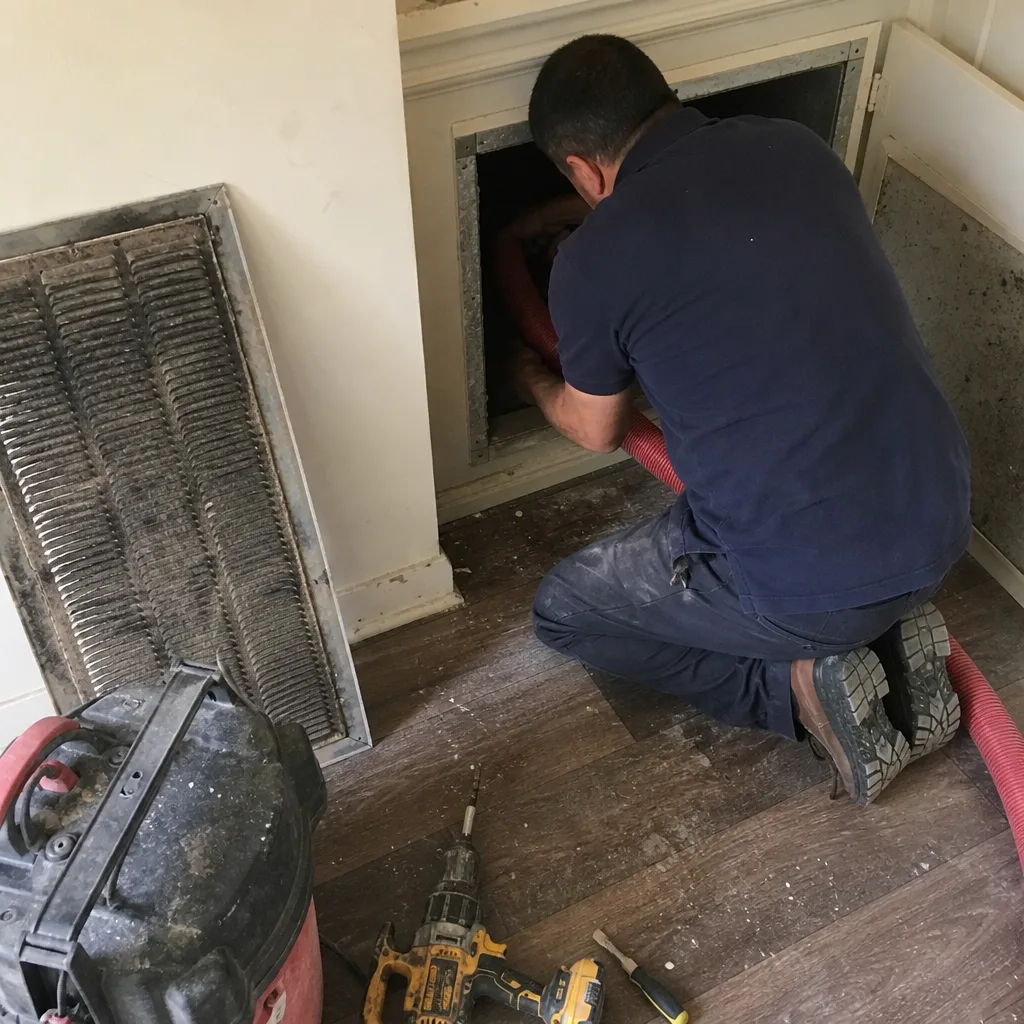
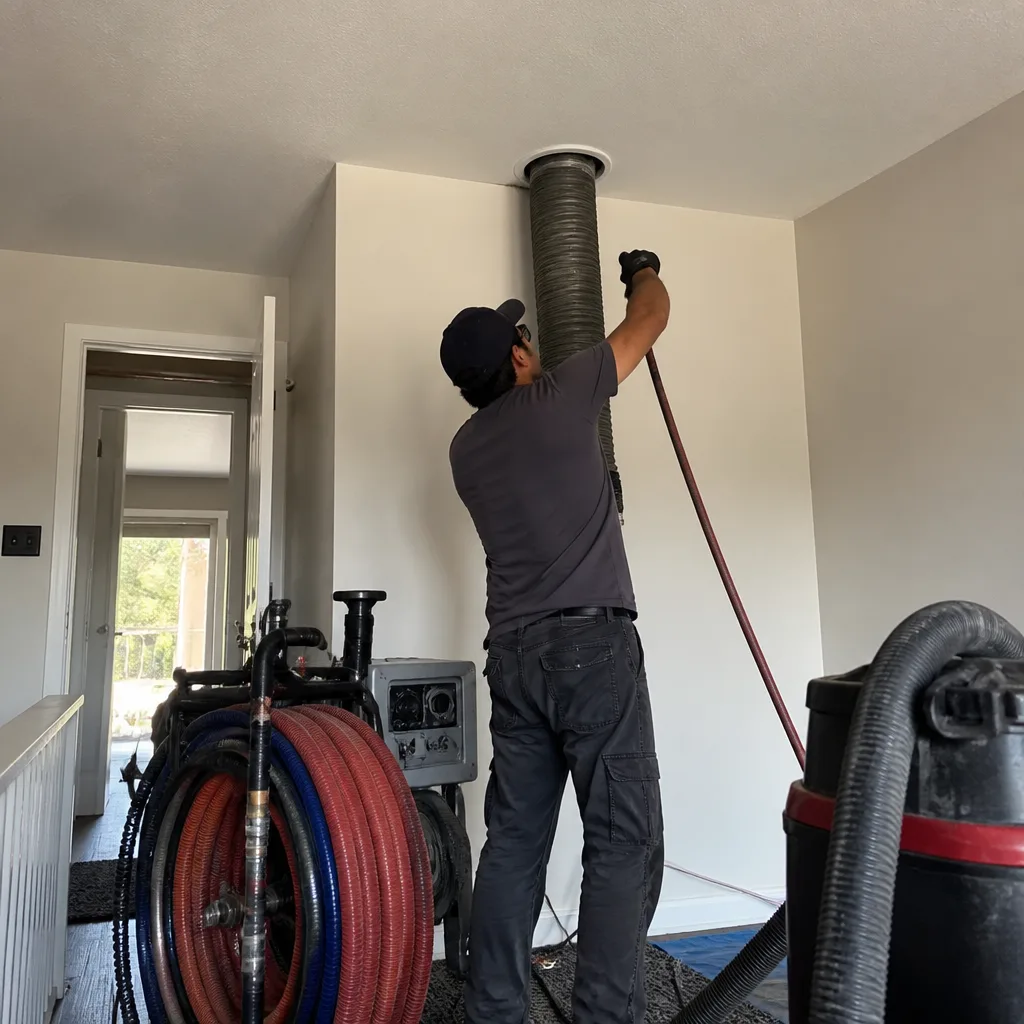
- System isolation and negative-air setup. The technician seals off the system so debris doesn’t recirculate into your living space. A negative-air machine, often a Nikro or Abatement Technologies unit, is connected to the duct system. This machine creates suction that pulls air and loosened debris out of the ducts into a contained filtration system, typically a HEPA filter. Negative-air extraction is the industry standard for a reason: it removes debris rather than redistributing it.
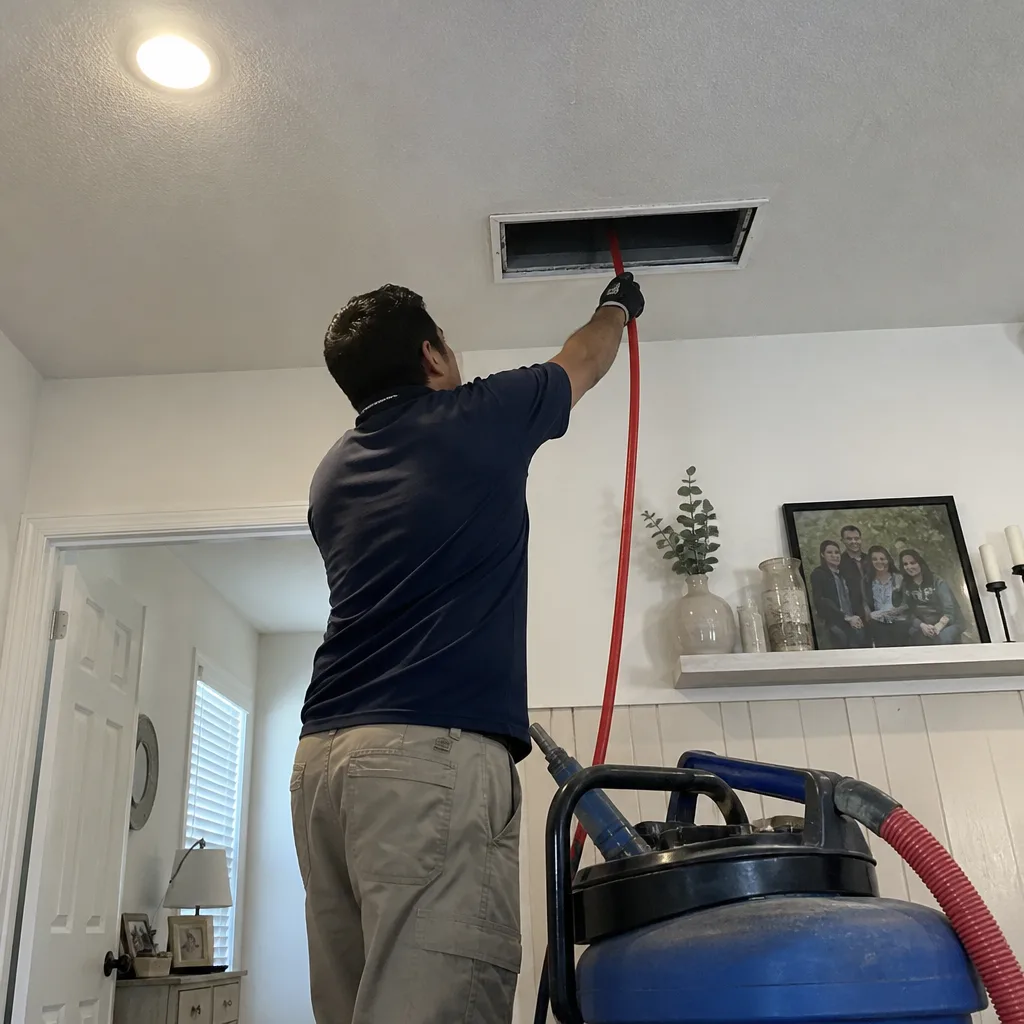
- Brush agitation. While negative pressure is applied, the technician runs a rotary brush through the supply and return ducts. Rotobrush systems use a spinning brush head on a flexible shaft to dislodge debris caked onto the duct walls. The brush loosens, the negative-air removes. Without agitation, extraction alone can’t remove debris that’s adhered to the duct surface. Without extraction, agitation alone just kicks dust back into your air. The two methods work together.
- Register and grille cleaning. Supply registers and return grilles are removed, cleaned, and reinstalled. In Austin homes with pets, these registers collect hair, dander, and dust at a surprising rate. A proper cleaning includes them, not just the ductwork behind them.
- Final walkthrough. The technician should show you what came out of your ducts – the collection canister, the filter, or at minimum before-and-after photos of the duct interior. In our experience, Austin homeowners are consistently surprised by the volume of debris removed from ducts that looked “clean” from the outside.
For homes in Austin, where the long hot season means your AC runs continuously from April through October, ducts function as the lungs of your HVAC system. A proper cleaning is a thorough, methodical process that takes time. If a crew finishes in under 45 minutes on a 2,000-square-foot home, the process was skipped, not optimized.
Some Austin homeowners choose to follow a duct cleaning with upgraded filtration. Honeywell and Aprilaire both make media filters and whole-home air cleaners that maintain cleaner air between service visits. These are worth considering in Austin’s pollen-heavy climate, but they’re a maintenance choice, not a substitute for cleaning.
Questions to Ask When the Crew Arrives
The hiring decision should be made before anyone sets foot in your house. But a final set of questions at the door protects you even after you’ve done the phone vetting. Ask these before the crew unloads equipment.
- “Can I see the written quote again before you start?” The technician should have it on hand. If they can’t produce it, if they claim they didn’t see it, or if they suggest the price might need to change “once we take a look,” stop the visit. The price you approved is the price you pay. If the scope has genuinely changed – a pest infestation discovered during inspection, asbestos-containing materials, or duct damage – that’s a new conversation with a new written agreement. It’s not an on-the-spot price revision.
- “What equipment are you using today?” You should see a negative-air extraction unit (a substantial machine, often truck-mounted or a large portable unit) and a rotary brush system. If the crew arrived with a shop vac, a drill, and a few brushes, send them home. You hired duct cleaning, not a dust redistribution service.
- “How long should this take?” For a typical 2,000 to 2,500-square-foot Austin home, expect a cleaning to take between two and four hours. Larger homes take longer. An honest technician will give you a realistic estimate. If they say 45 minutes, the job they’re about to do is not the job you paid for.
- “Will you show me before-and-after photos of my ducts?” Modern inspection cameras make this straightforward. A technician who can show you the inside of your ducts before cleaning and after cleaning is a technician who has nothing to hide. In our experience, the before-and-after photos are the single most convincing piece of evidence that the work was real. It also protects you from the “they didn’t actually clean anything” doubt that plagues this industry.
If a crew passes these four questions, they’re almost certainly legitimate. If they stumble on any of them, you’re still in control. You can decline the service before they start and owe nothing. The hiring decision happens at the door, yes. But it’s the phone call and the written quote that got you there.
Common Mistakes to Avoid
- Hiring on price alone. In the Austin duct cleaning market, the cheapest quote is almost never the cheapest final invoice. Operators that advertise $79 whole-house specials depend on the upsell at the door. A $350 to $600 quote from a company that itemizes the work is often cheaper by the time the job is done than the $79 special that becomes $800 once the “add-ons” appear.
- Skipping the written quote step. Any contractor who won’t put a price in writing before the visit is planning to change it during the visit. There is no legitimate reason to refuse a written pre-appointment quote. In Austin, with a documented pattern of door-step price revisions, this one step eliminates most of the risk.
- Not checking TDLR and NADCA. It takes ten minutes. It’s the difference between hiring a licensed, insured professional and hiring someone who bought a van and printed some magnets. Austin’s market is large enough to attract both. Don’t let the cheap door-hanger be the deciding factor.
- Accepting a vague guarantee. “We stand behind our work” is not a guarantee. A written promise with a specific time period, specific triggers, and a specific remedy is. If the contractor won’t put the guarantee in writing, assume there’s no guarantee.
- Falling for “mandatory” sanitizer upsells. If a crew tells you after the cleaning that your ducts “require” sanitizing for health reasons, at a cost of two to three hundred dollars, that’s a sales tactic, not a cleaning necessity. Sanitizer is a legitimate optional service in some situations, but it should be offered, priced, and agreed to before the work starts.
- Choosing a cleaner who doesn’t do dryer vents. Air ducts and dryer vents are different systems, but a contractor who doesn’t offer or understand dryer vent cleaning may not have the full picture of your home’s air movement. Lint-clogged dryer vents are a fire hazard, and Austin homes with long dryer vent runs are especially prone to lint buildup. Dryer vent cleaning in Austin is part of responsible home maintenance, whether you bundle it with duct cleaning or schedule it separately.
See the difference
 Before
 After
After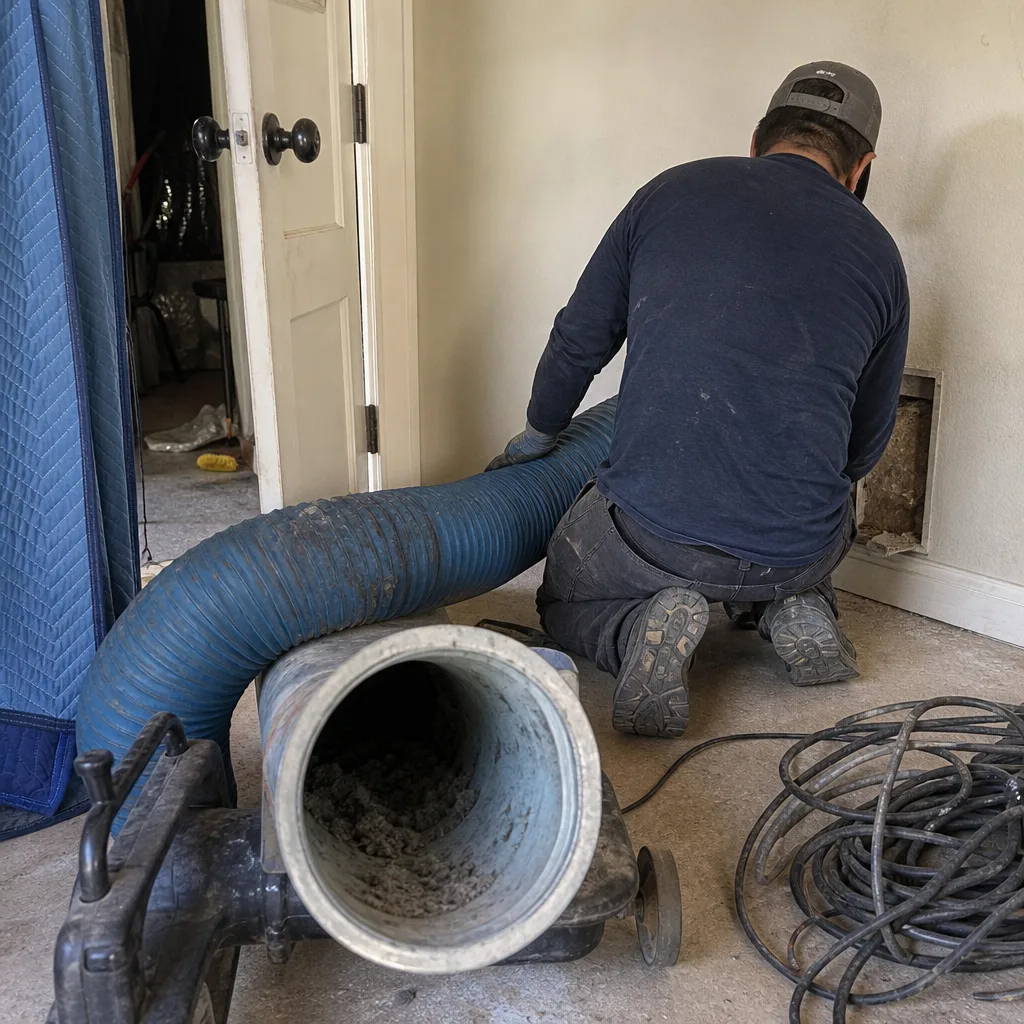 Before
 After
After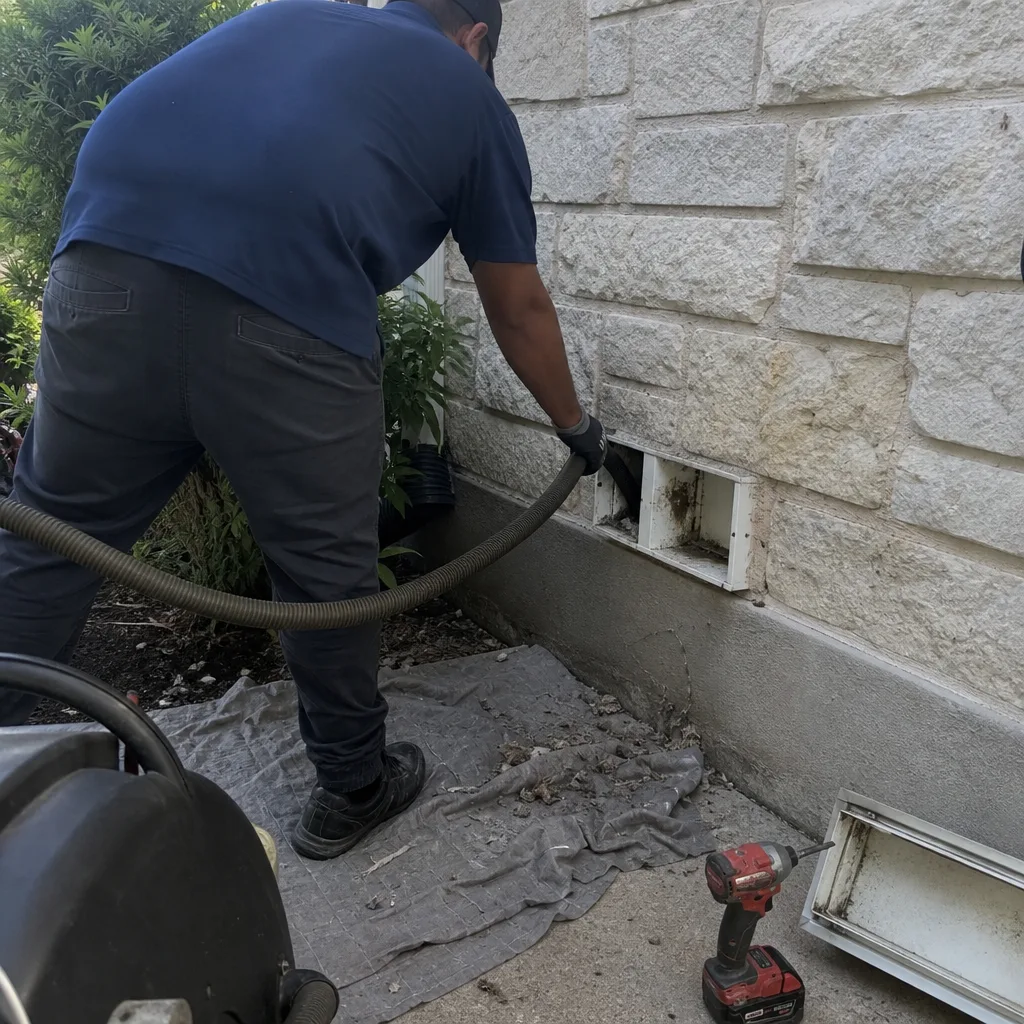 Before
 After
AfterWhen to Call a Professional
You should call an air duct cleaning professional in Austin after recent construction or renovation, when you can see visible dust accumulating on supply registers within days of cleaning, when your HVAC system is running but airflow from the vents feels weak, or when occupants in the home have unexplained allergy symptoms that worsen when the AC runs. Cedar season is a common trigger – if December and January bring indoor sneezing fits that ease when you leave the house, your duct system may be circulating cedar pollen long after the outdoor counts have dropped. You should also schedule a cleaning if you’ve never had your home’s ducts cleaned and the house is more than five years old. Most Austin homes benefit from Seasonal Air Duct Cleaning Care for Austin: Year-Round Homeowner’s Guide cleaning every three to five years, more often with pets or during active renovation periods. Kestrel Air Duct Austin offers free estimates in Austin. Call (254) 848-6913 and a live person will answer, any time of day. We’ll give you a written price before any work begins, and that price won’t change at your door.
Frequently Asked Questions
In Austin, a legitimate whole-home air duct cleaning typically runs between $350 and $650 for a standard two-to-three-bedroom house, depending on square footage, linear feet of ductwork, the number of vents and returns, and whether the system includes multiple units or a two-story layout. Prices above $800 usually include additional services like sanitizer application or dryer vent cleaning. Prices below $150 are almost always teaser rates that will increase significantly once the crew arrives.
Cheap Austin duct cleaning quotes are cheap because they don’t cover the whole job. The advertised price typically includes only the supply vents, not the main trunk line, return vents, or plenums, which are then presented as “necessary add-ons” at the door. A legitimate quote covers the entire system from the start, which is why it appears more expensive on paper and is usually cheaper in reality. Call (254) 848-6913 for an exact quote, and we’ll explain what’s included up front.
Ask for before-and-after photos of the interior of your ducts, taken with an inspection camera. A professional Austin duct cleaner will show you the duct walls before cleaning and after, and the difference should be visible. You can also check the collection canister or filter on the extraction unit before the crew leaves. If the company refuses photos or can’t show you what was removed, the work may not have been done thoroughly.
Most Austin homes need air duct cleaning every three to five years. Homes with pets, recent construction or renovation, or occupants with allergies may need more frequent cleaning, sometimes every two to three years. Austin’s cedar season and long cooling season mean systems here accumulate debris faster than in many other climates, so three to five years is a realistic benchmark for most homes.
No. At $79, the company cannot cover the labor, equipment, and insurance required to clean a whole house properly. The door-hanger price gets the crew into your house, where the real price emerges as “unexpected findings” and “necessary add-ons.” The Texas Attorney General’s office tracks these bait-and-switch operations as a recurring complaint category precisely because the pattern is so common.
A 30-day clause means the company’s obligation to you expires after one month. If problems emerge later – which happens often in Austin, where seasonal pollen loads change throughout the year – you’re on your own. A 365-day written promise means the company is accountable for a full year, and it’s stated in writing on every job. Kestrel Air Duct Austin operates under a 365-Day Done Right Promise: if the work falls short, we return and make it right at no charge.
The Bottom Line
Hiring an air duct cleaning contractor in Austin doesn’t require industry expertise. It requires five phone questions, a written quote you can verify line by line, and ten minutes of credential checking before the appointment. Austin’s market has a documented pattern of bait-and-switch pricing, which means homeowners who skip these steps are gambling with the final invoice. The contractors that pass the vetting process – the ones that name their equipment, itemize their quotes, and put a 365-day guarantee in writing – are the ones worth hiring. The rest are trying to turn a cheap coupon into a big bill. Now you know the difference.
When you’re ready, call Kestrel Air Duct Austin at (254) 848-6913. We’ll answer by the second ring, give you a written price on the phone, and send a background-checked technician who arrives in the window we promised. The Kestrel Air Duct Austin home page has more on how we work, and our Air Duct Cleaning in Austin service page explains the cleaning process in detail. Written price. Defined arrival window. Clean job site. 365-Day Done Right Promise in writing. That’s the standard, and you should accept nothing less from anyone you let into your attic.
Written by Dale Whitmore, Owner at Kestrel Air Duct Austin, serving Austin since 2004.