
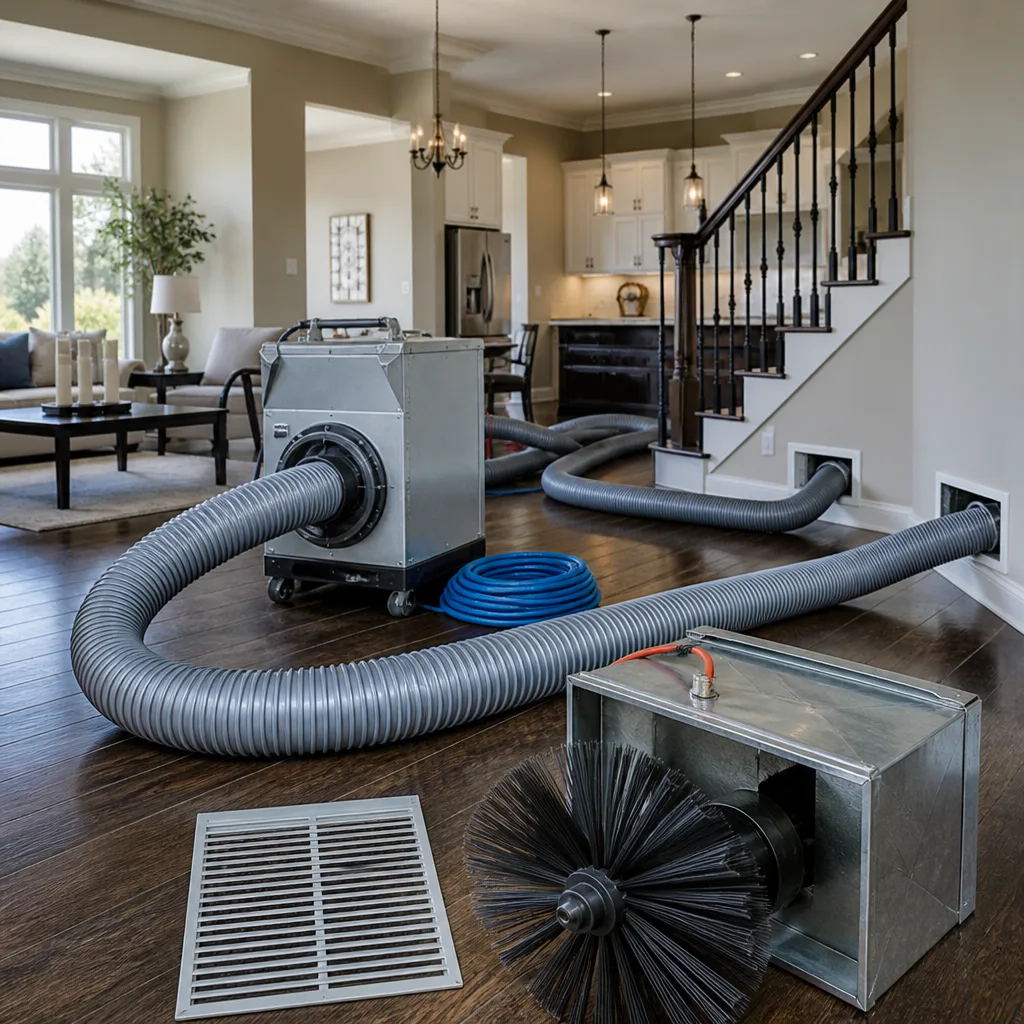
 Whole-home duct cleaning
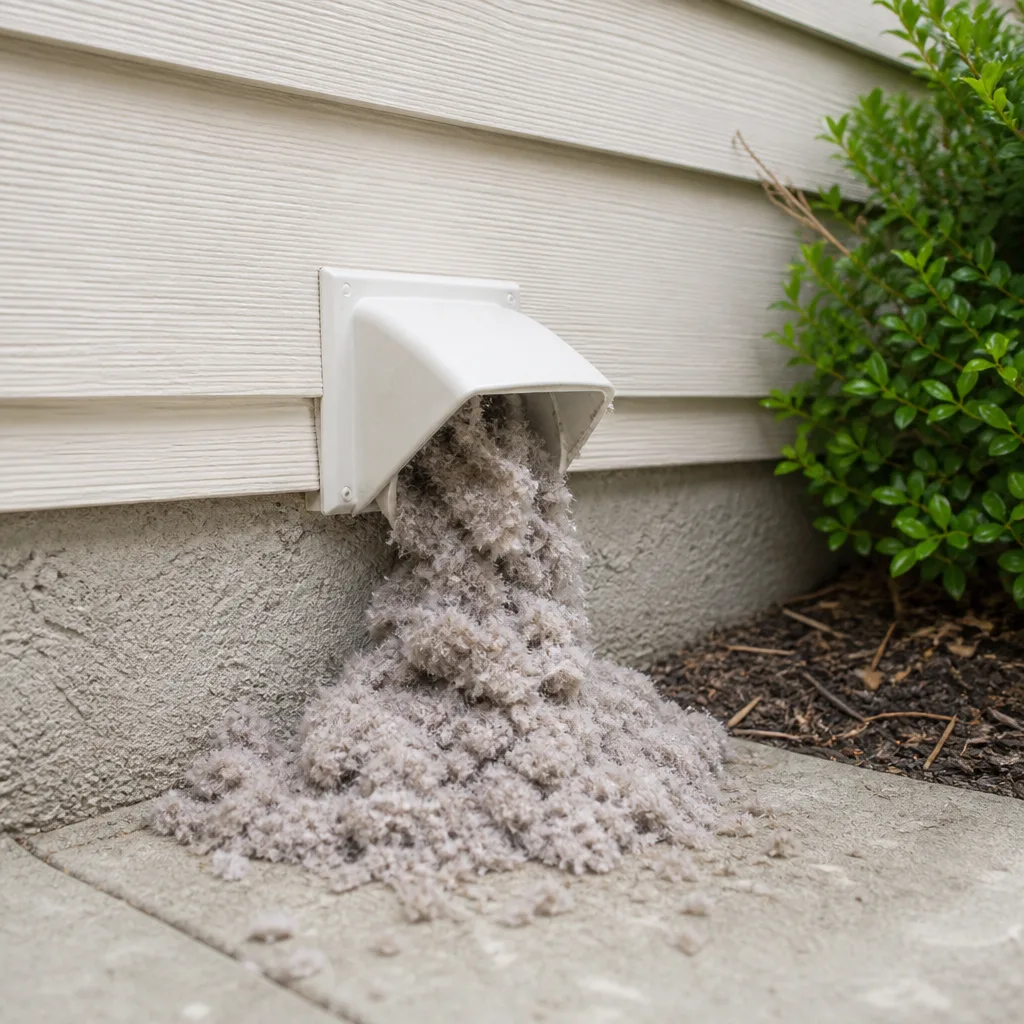 Dryer vent cleaning
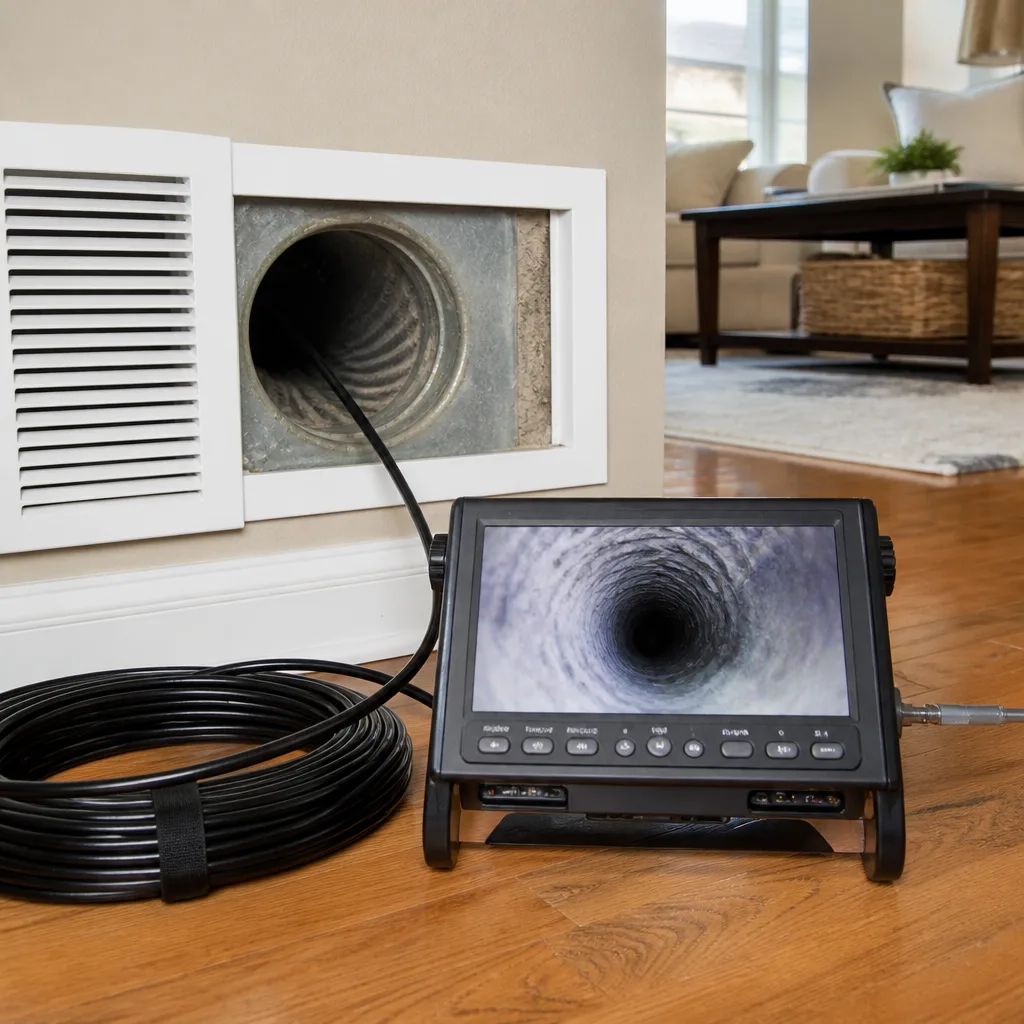 Camera inspection
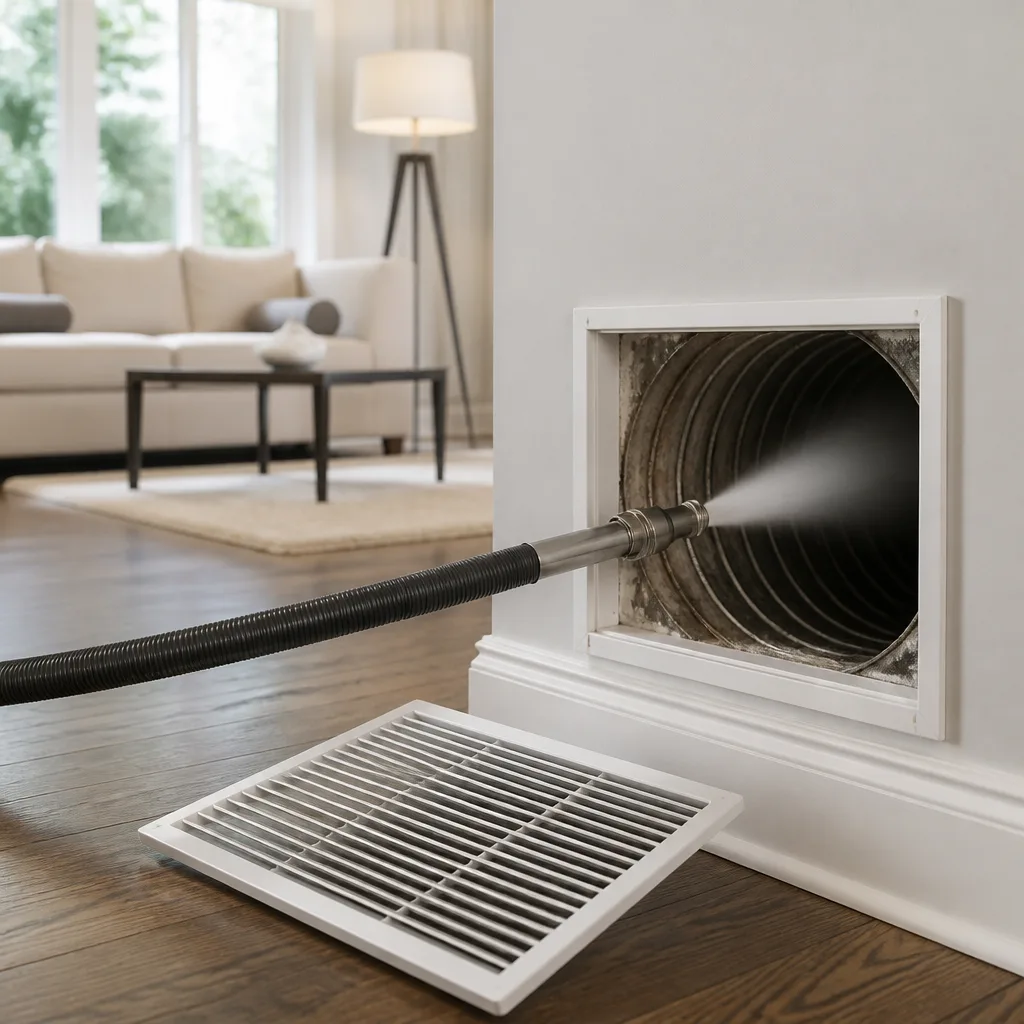 Sanitizing & deodorizing
Whole-system duct and dryer vent check with before-and-after photos - you see exactly what came out of your vents
That "$99 whole-house special" is a bait ad - the real number appears once they are in your hallway, or the "clean" is a shop-vac at the register. We photograph the inside of your ducts before and after instead.
Honeywell Duct Sealing & Repair: The Austin Owner’s Guide
We stock and install Honeywell-compatible duct sealing components and repair kits across Austin, with most sealing and repair jobs running between $325 and $680 installed, depending on how much of the duct run needs attention. Our techs carry sealing tape, mastic, collar replacements, and Honeywell-compatible filter-housing seals on the truck, so most Austin homes are handled in one visit. The way owners usually discover a sealing problem is the smell: hot attic air or musty crawlspace odor bleeding out of a vent where it shouldn’t be, or a room that never quite reaches the thermostat setting no matter how long the system runs.
Duct sealing isn’t a glamorous fix, but it’s the one that quietly pays for itself. Austin’s summer heat pushes air-conditioned air through duct runs at full load for five or six months a year, and every gap, crack, or separated joint is a dollar leaking into your attic. In older Austin neighborhoods like Crestview or Allandale, we regularly pull back insulation and find flex-duct connections that have been loose since the day the house was built.
Which Honeywell Models This Applies To
Honeywell makes a wide range of residential IAQ and filtration components, and the sealing needs differ by product line. If you have a Honeywell electronic air cleaner (the F300 series), a media air cleaner cabinet (F100 or F200 series), or a Honeywell UV treatment system, the sealing points are the cabinet door gasket, the filter-housing collar, and the transition where the cabinet meets the duct plenum. These are the areas that fail first because they’re exposed to temperature cycling every time the blower kicks on and off.
The important compatibility point: Honeywell air cleaner cabinets use a specific cabinet-to-duct transition size that doesn’t always match the aftermarket equivalents. An F300 electronic air cleaner cabinet is cut to a 20×25 filter opening but the collar depth runs about 1-1/4 inches, which is shallower than most generic filter bases. If a previous tech installed a generic replacement collar, the cabinet sits proud of the duct and the seal never seats. We’ve fixed that exact misalignment more times than I can count on homes in Round Rock and Pflugerville. Our techs carry both the OEM-style Honeywell gaskets and dense-foam aftermarket equivalents that seal better in Austin’s dry heat, where rubber gaskets dry out and crack within three or four years.
Kestrel Air Duct Austin is an independent service provider. We’re not affiliated with Honeywell, but we know their equipment well enough to know which seals fit which cabinets the first time. We also stock parts for Lennox, Trane, and Carrier systems for the same reason: most Austin homes have a mix of brands, and the last thing you want is two service calls for one repair.
Styles & brands we work with
Signs Your Honeywell Duct Sealing & Repair Is Failing
- Air blowing from around the filter cabinet door instead of through it. The door gasket has compressed or cracked. You’ll feel a steady stream of air escaping when the system runs, and you’ll hear a faint whistle at the cabinet.
- Dust accumulating on the outside of the filter housing. The seal between the cabinet and the duct plenum has separated, so unfiltered air is being pulled around the filter instead of through it. Your filter stays clean while your ducts get dirty.
- One or two rooms run noticeably warmer than the rest of the house. A separated duct joint or torn flex connection downstream of the plenum is bleeding conditioned air into the attic or crawlspace. The system runs longer to compensate.
- Musty or attic-like odor from certain vents. A gap in the return-side ductwork is pulling untreated attic air into the system. In Austin, that means cedar pollen in spring and hot, dust-laden air all summer long.
- Visible separation at duct joints in the attic. If you’ve been up there lately and seen a connection that’s pulled apart or hanging at an angle, that’s a sealing failure, not just an alignment issue. Flex duct collars backed by dried-out tape are the most common culprit we see.
See the difference
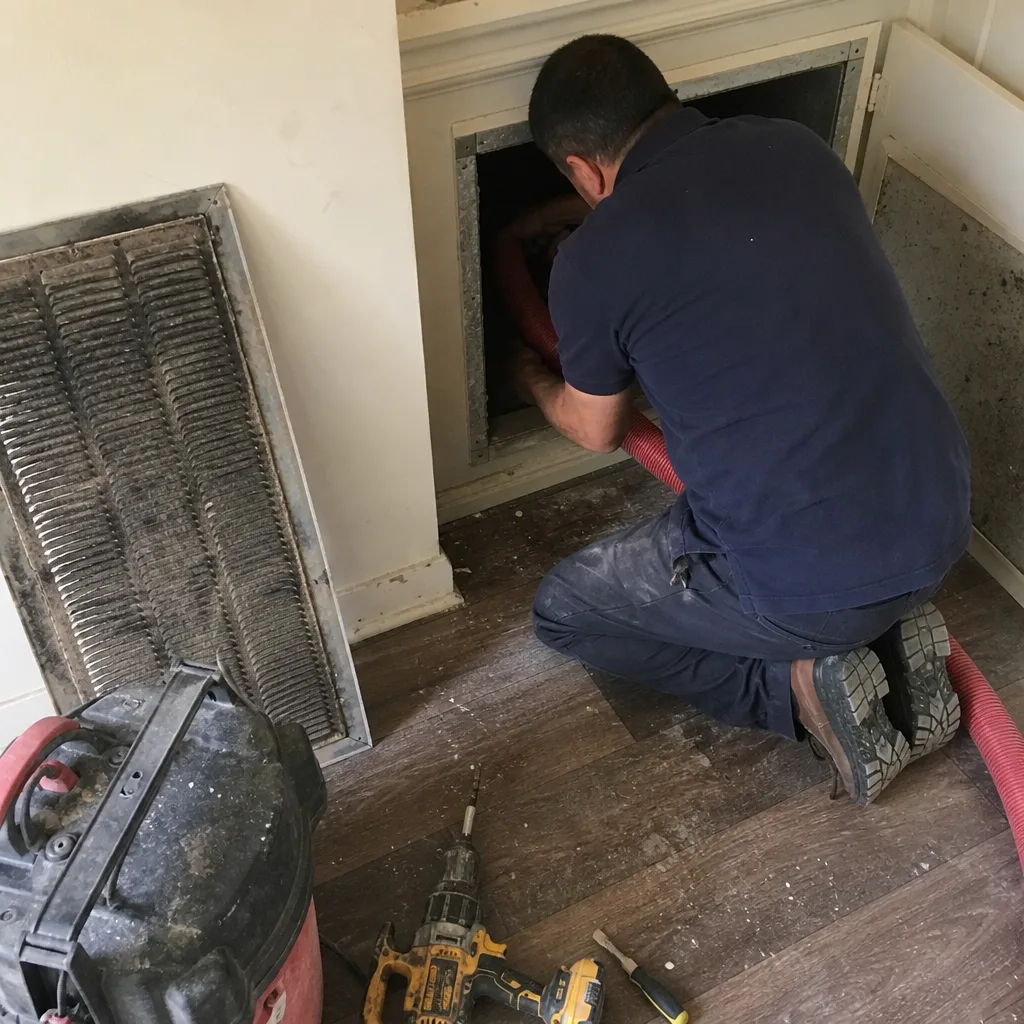 Before
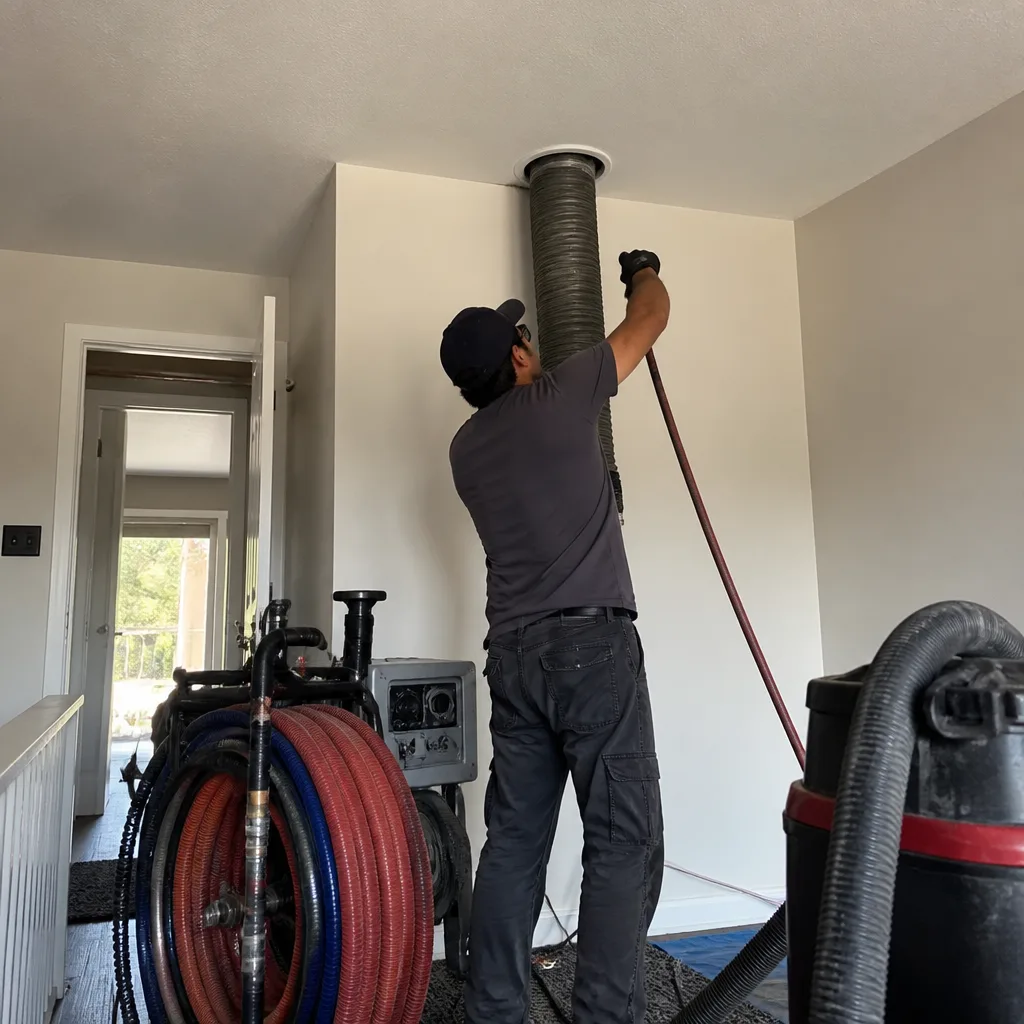 After
After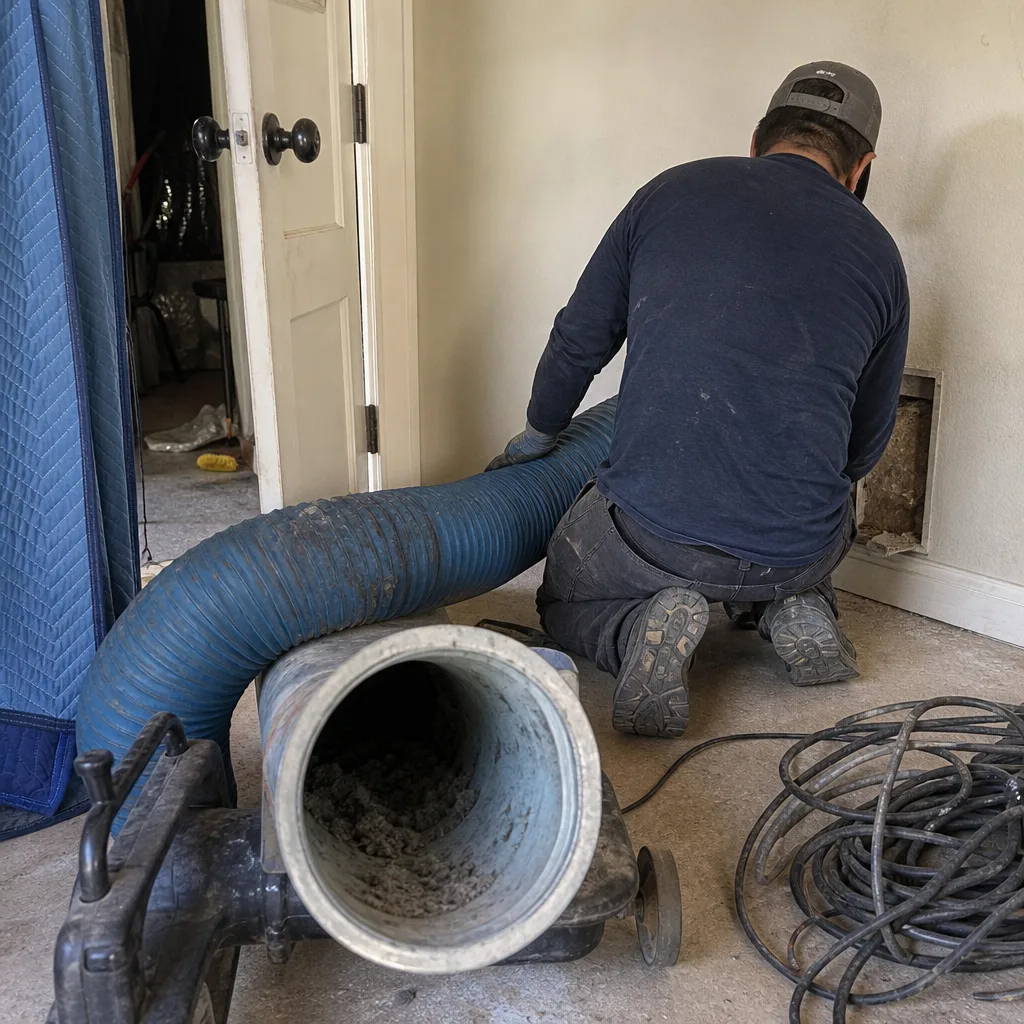 Before
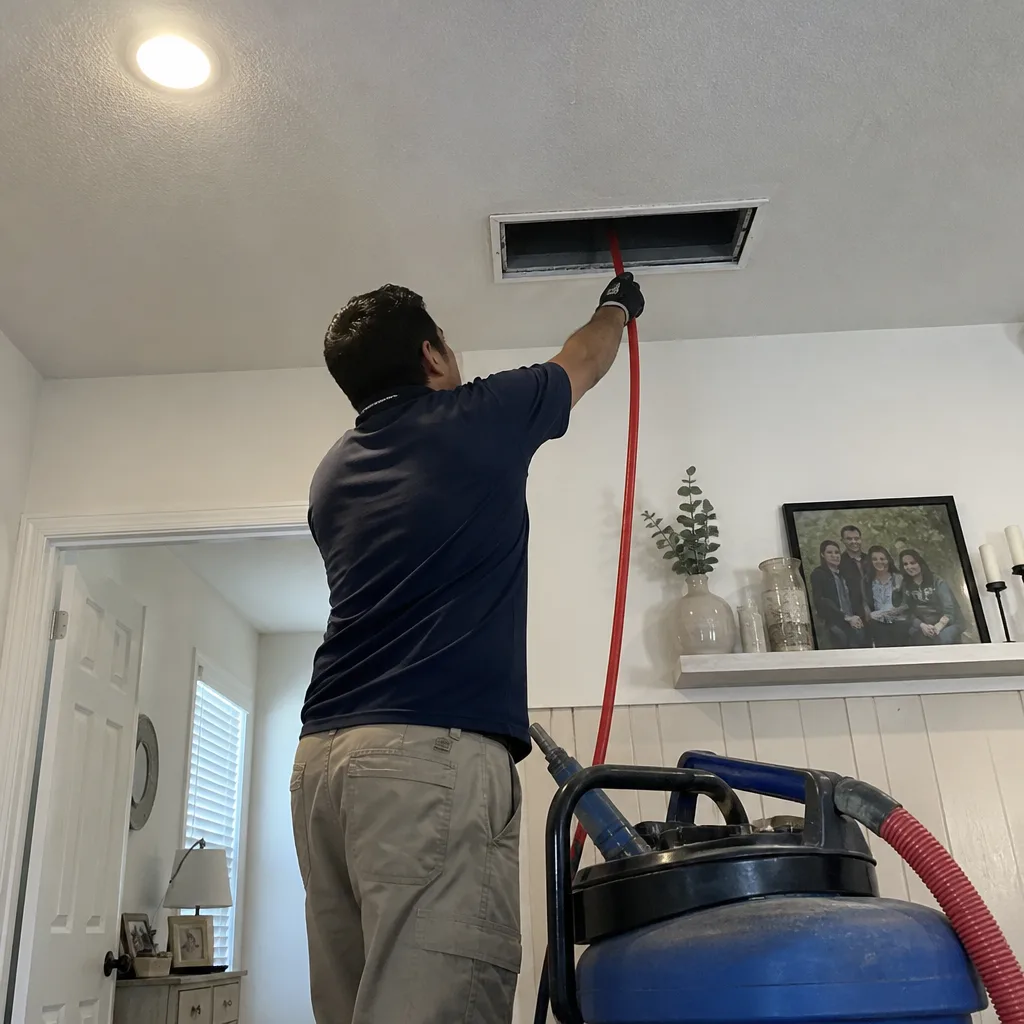 After
After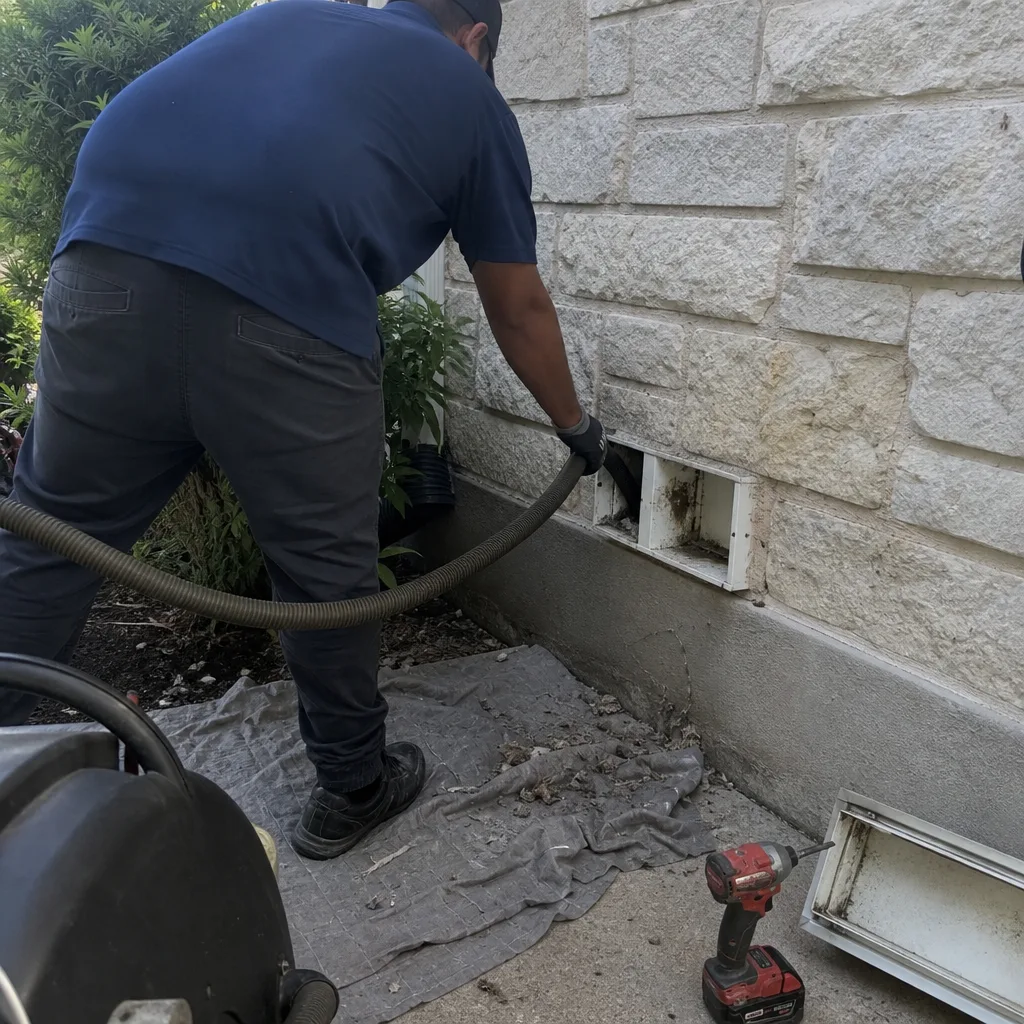 Before
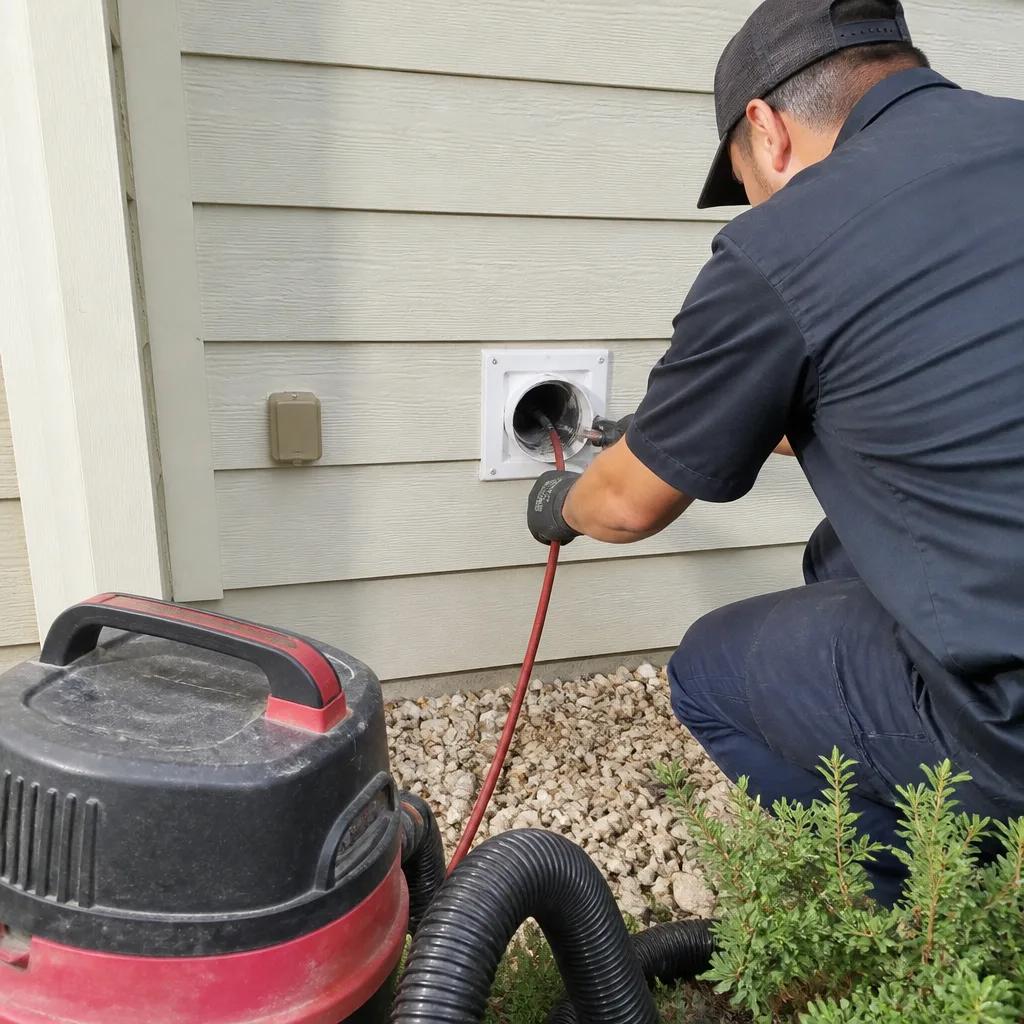 After
AfterReplacement Cost & What’s Included
The honest price range for Honeywell duct sealing and repair in Austin runs from $325 for a single filter-cabinet reseal or one bad collar, up to $680 when multiple sections of flex duct need reconnecting, sealing, and re-insulating. The spread comes down to accessibility (standing-height attic versus a tight crawlspace), how many joints have failed, and whether we’re repairing or replacing the collar hardware itself.
Every quote includes the parts and the labor in one written number before any work starts. You know exactly what you’re paying before we touch a screwdriver. The work is covered under the Kingswell Guarantee: if a seal fails within 365 days, we come back and fix it at no charge. That’s in writing on every job, not a promise we hope you’ll forget. We also leave the work area cleaner than we found it, which matters when the work happens in an attic full of blown insulation.
DIY or Call Us?
Here’s the honest split. If you’re comfortable in an attic and can see the problem, you can sometimes reseal a loose collar with foil tape and mastic as a temporary fix. But here’s what usually goes wrong: homeowners use cloth duct tape (the wrong product, it fails within months in attic heat), they seal the outside of a joint while the inside is still separated, or they crank a zip tie down on a flex duct collar and tear the liner. We’ve been called to plenty of Austin homes where a previous homeowner’s repair made the leak worse. This work is not dangerous like electrical or gas work, so there’s no safety warning here, but it’s precise. The difference between a sealed duct and a duct that just looks sealed is about a year of Austin summer air loss.
If you want the repair done right the first time, you want a tech who can diagnose why the seal failed in the first place. Dale Whitmore and our crew have been sealing ductwork in Austin long enough to know that a loose collar is usually a symptom of poor initial installation, not a one-time failure. That’s the thing we fix. Clean ducts move air. Everything else is just noise.
Frequently Asked Questions
A properly installed duct seal using mastic and quality tape should last 10 to 15 years in Austin’s climate, while filter-cabinet gaskets typically last 5 to 7 years before the heat dries them out. The original factory seals on Honeywell cabinets often fail sooner because they’re foam rubber that hardens with repeated temperature cycles in the attic. Call us at (254) 848-6913 and we’ll tell you honestly whether your seal is salvageable or needs replacement. Estimates are free.
Most separated joints and loose collars can be repaired by cleaning the old mastic off, reseating the connection, and applying fresh sealant, without replacing any hardware. The only time full replacement is needed is when the collar itself is bent, cracked, or the male end of a flex duct is torn. Call us at (254) 848-6913 and we’ll tell you which situation you’re in before we start.
A single collar reseal usually takes 30 to 45 minutes, while a full-system sealing across multiple joints runs 2 to 3 hours depending on attic access and how many connections need attention. We’ll give you a defined arrival window and stick to it. Call us at (254) 848-6913 to get a time estimate for your specific job.
Yes, our trucks carry Honeywell-style cabinet gaskets, foil mastic tape, water-based mastic, flex duct collars, and zip ties in common sizes, so most Austin repairs are completed the same visit. For uncommon Honeywell filter cabinet sizes, we can source the OEM gasket within a day or two and come back without an extra trip charge. Call us at (254) 848-6913 and we’ll confirm the part before we head out.
Written by Dale Whitmore, Owner, Kestrel Air Duct Austin, serving Austin and nearby areas.