
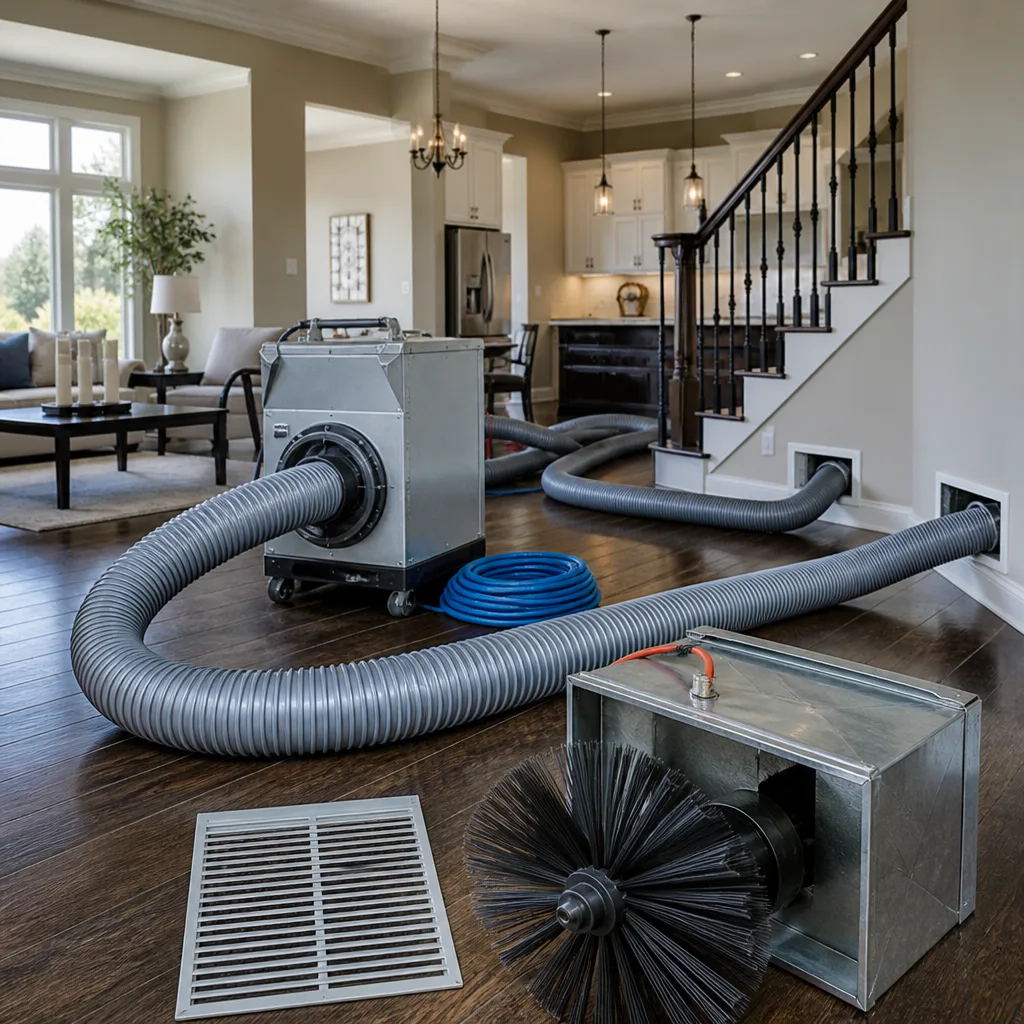
 Whole-home duct cleaning
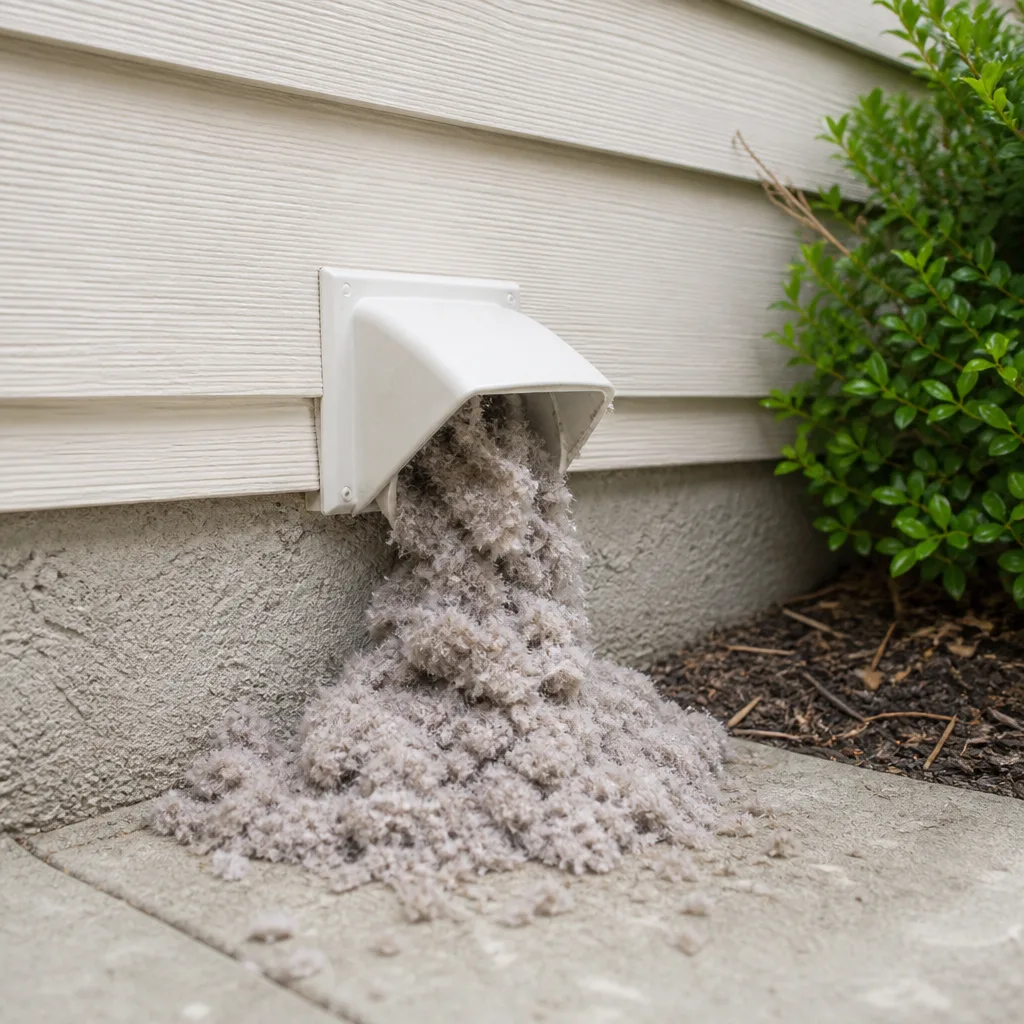 Dryer vent cleaning
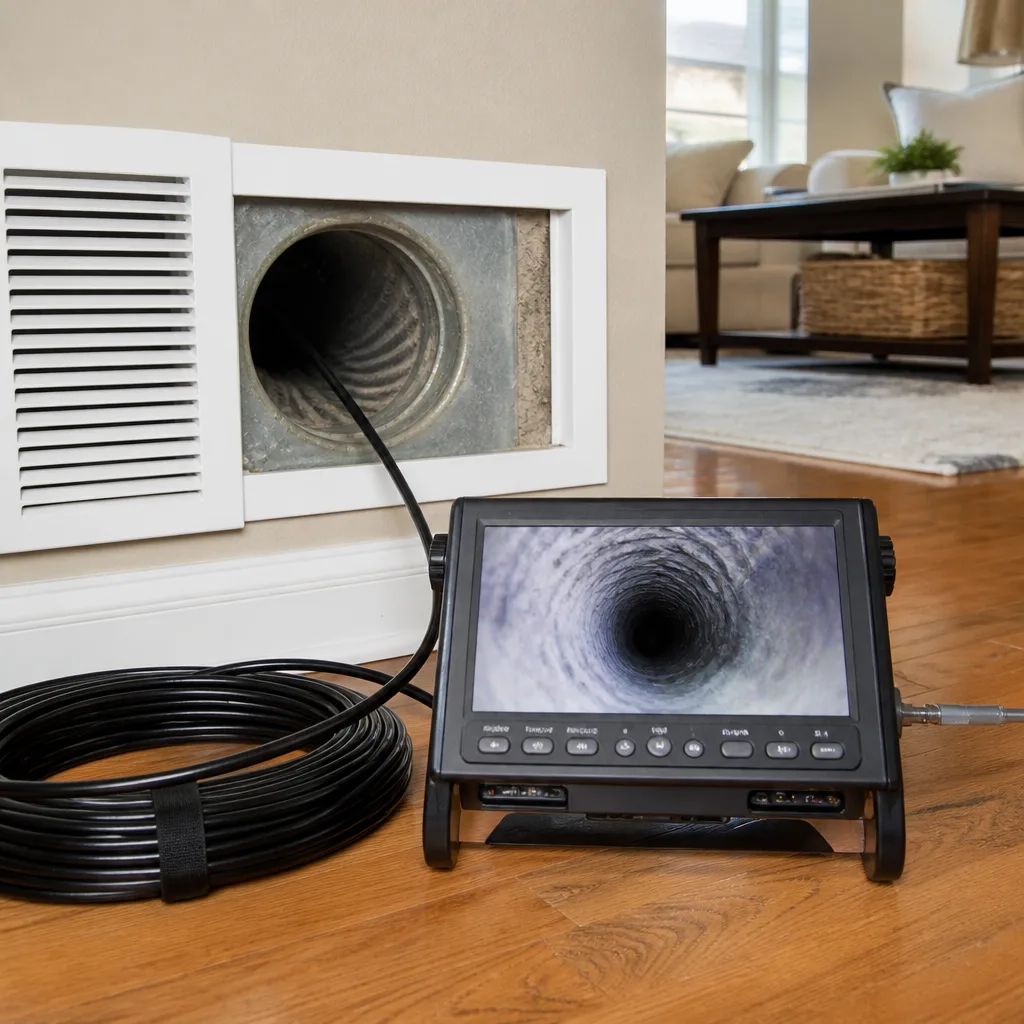 Camera inspection
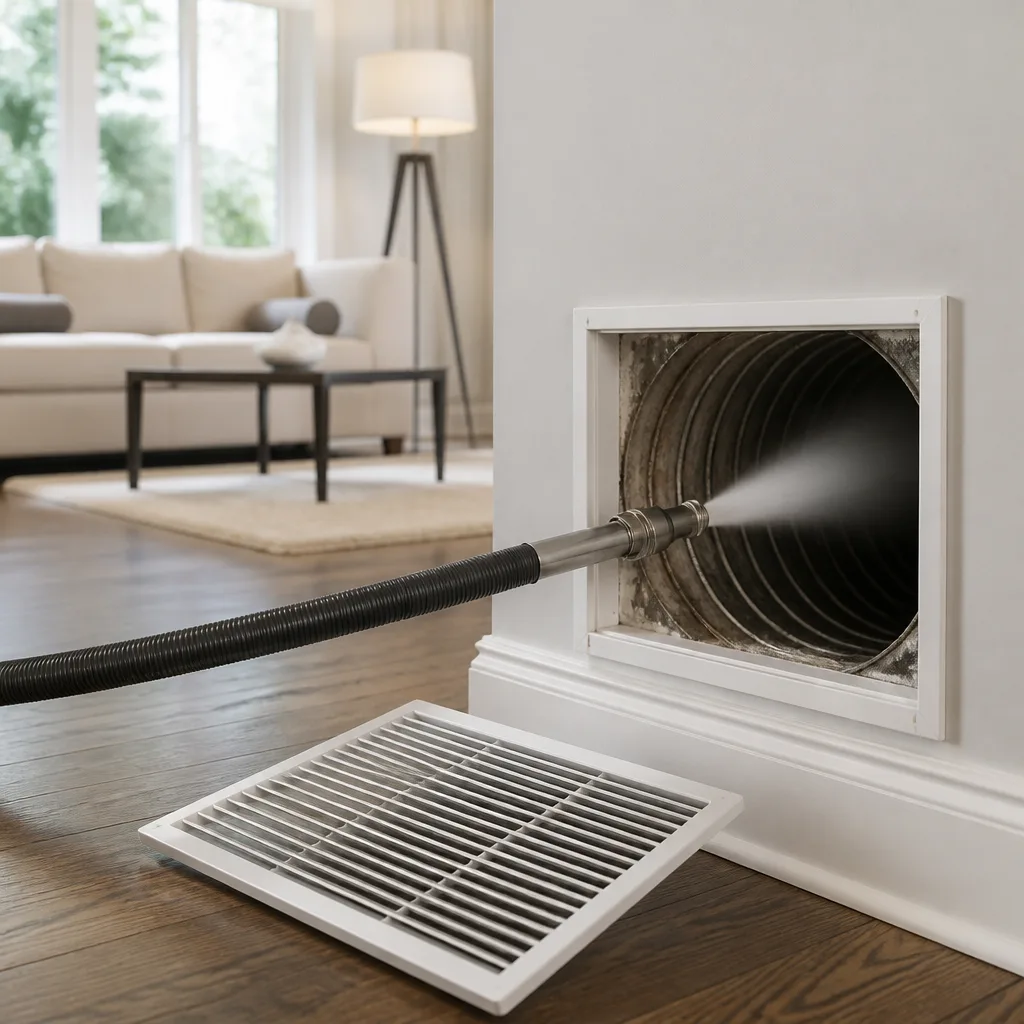 Sanitizing & deodorizing
Whole-system duct and dryer vent check with before-and-after photos - you see exactly what came out of your vents
That "$99 whole-house special" is a bait ad - the real number appears once they are in your hallway, or the "clean" is a shop-vac at the register. We photograph the inside of your ducts before and after instead.
Abatement Technologies Duct Sealing & Repair: The Austin Owner’s Guide
We stock and install Abatement Technologies-compatible duct sealing and repair components across Austin, with most residential jobs running between $220 and $480 including parts and labor. We carry the seals, gaskets, access-door replacements, and collar repairs that Abatement Technologies HEPA filtration units and negative-air machines depend on, and we can usually get the right part matched to your unit within one business day.
The way most Austin homeowners discover a failed seal is unglamorous: a whistling sound at a duct joint, a filter that loads up in weeks instead of months, or dust settling back onto surfaces within days of a cleaning. If you’re running an Abatement Technologies unit in a garage, attic, or dedicated mechanical closet and the suction doesn’t hold like it used to, the fix is usually a specific seal or collar rather than a whole new machine.
Key Takeaways
- Installed duct sealing and repair for Abatement Technologies units in Austin typically runs $220 – $480.
- Failed seals and cracked collars are the most common repair points; full unit replacement is rarely needed.
- We match OEM Abatement Technologies parts or install quality aftermarket equivalents where they genuinely save money.
- We’re an independent service provider, not affiliated with Abatement Technologies.
Which Abatement Technologies Models This Applies To
Abatement Technologies builds two product lines that show up in Austin homes: the HEPA-AIRE portable negative-air machines and the Predator and Turbo series air scrubbers. Each uses specific gaskets, filter-frame seals, and duct-collar diameters. The portability means every bump and move puts stress on the plastic collars and latch seals, which is exactly where we see failures.
Before ordering anything, check the data plate on the back or side of your unit. You’ll find the model number and, usually, a manufacturing date. That date matters because Abatement Technologies changed filter-retention designs on some HEPA-AIRE units around 2018. A pre-2018 unit often uses a different inlet gasket than the current production run, and the two are not interchangeable. Measure the inlet diameter too. Most residential units we see in Austin are 8, 10, or 12 inches, and guessing wrong means a second trip.
For the decision between OEM and aftermarket: Abatement Technologies OEM seals and gaskets are worth the extra cost on the HEPA filter frame itself because tolerances are tight and an aftermarket gasket that doesn’t seat fully defeats the HEPA filtration you paid for. On intake collars and flex-duct adapters, a quality aftermarket part often does the job for 20 – 30% less. We’ll show you the price difference before we install anything. We also stock parts for Lennox, Trane, and Carrier units, so if your Abatement Technologies machine shares space with another system, we can handle both.
Styles & brands we work with
Signs Your Abatement Technologies Duct Sealing & Repair Is Failing
- A whistling or hissing at a duct joint or collar. This means air is being pulled in through a gap rather than through the intake. The seal is compromised and the machine is working against itself.
- Dust reappears on surfaces within days of running the unit. If the post-filter air is bypassing the seal, you’re circulating unfiltered air. Austin’s cedar pollen makes this failure pretty obvious in January and February.
- The HEPA filter loads up much faster than it used to. A breach in the pre-filter seal lets larger debris hit the HEPA media directly, shortening filter life and raising replacement cost over time.
- The unit rattles or vibrates more than it used to. Loose collars and worn latch seals let the housing flex. What starts as noise becomes structural cracking at the collar mounts if left alone.
- You can feel air moving around the filter frame, not through it. Set a strip of tissue paper near the filter access door while the unit runs. If it flutters, the door gasket isn’t seating and unfiltered air is slipping past.
See the difference
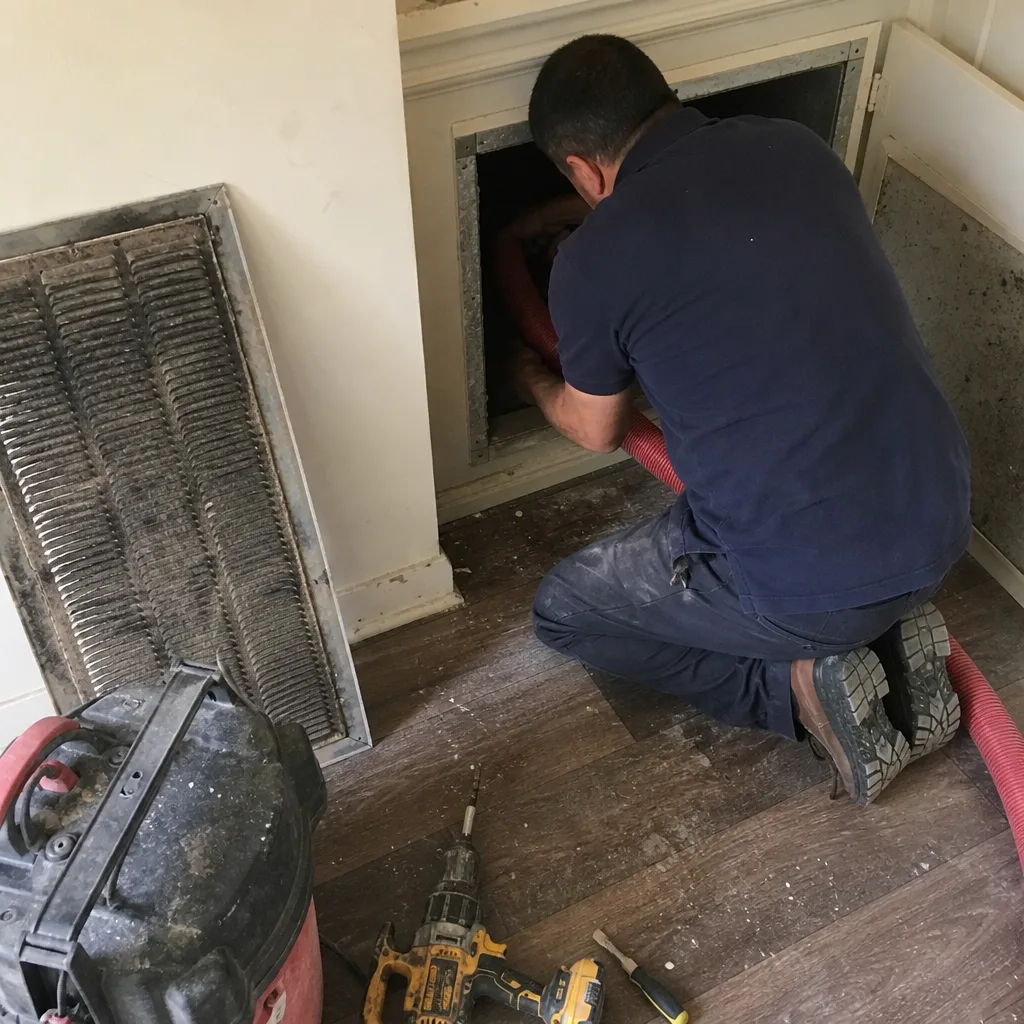 Before
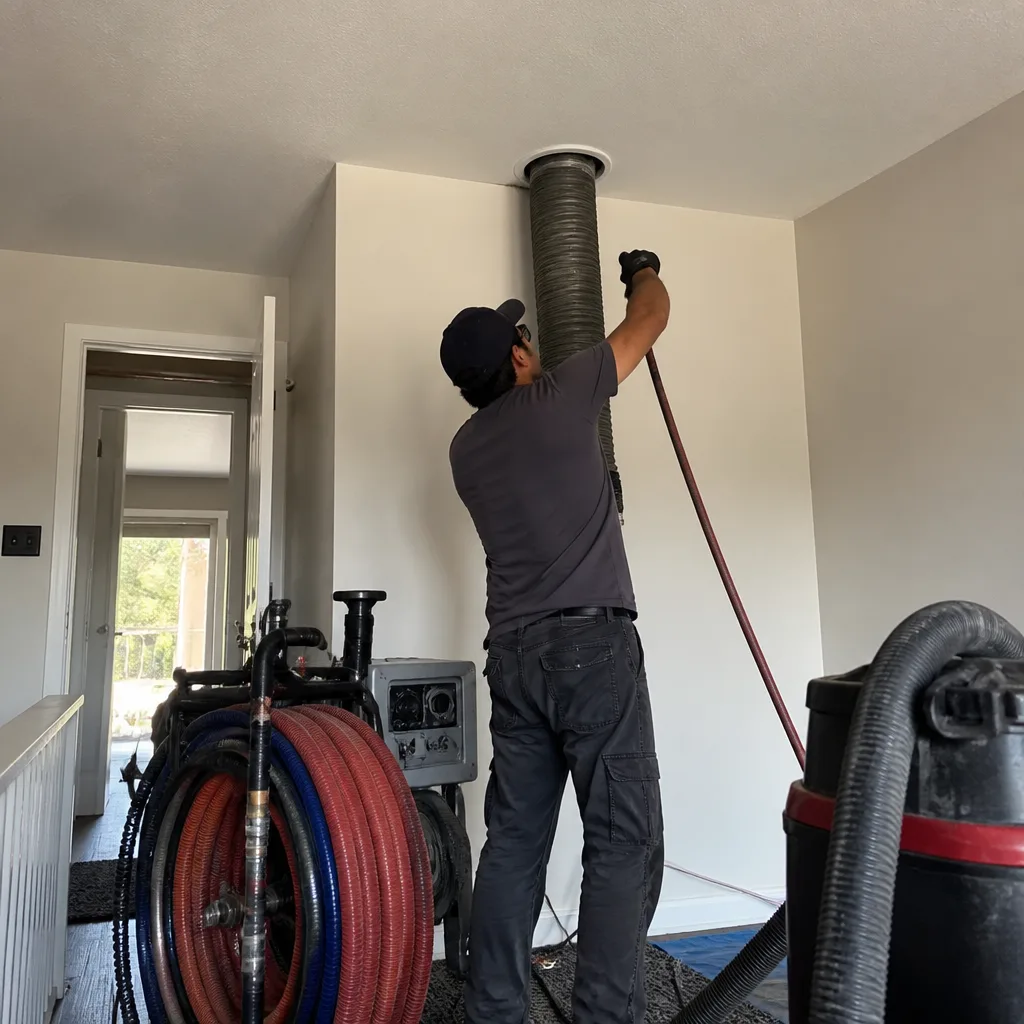 After
After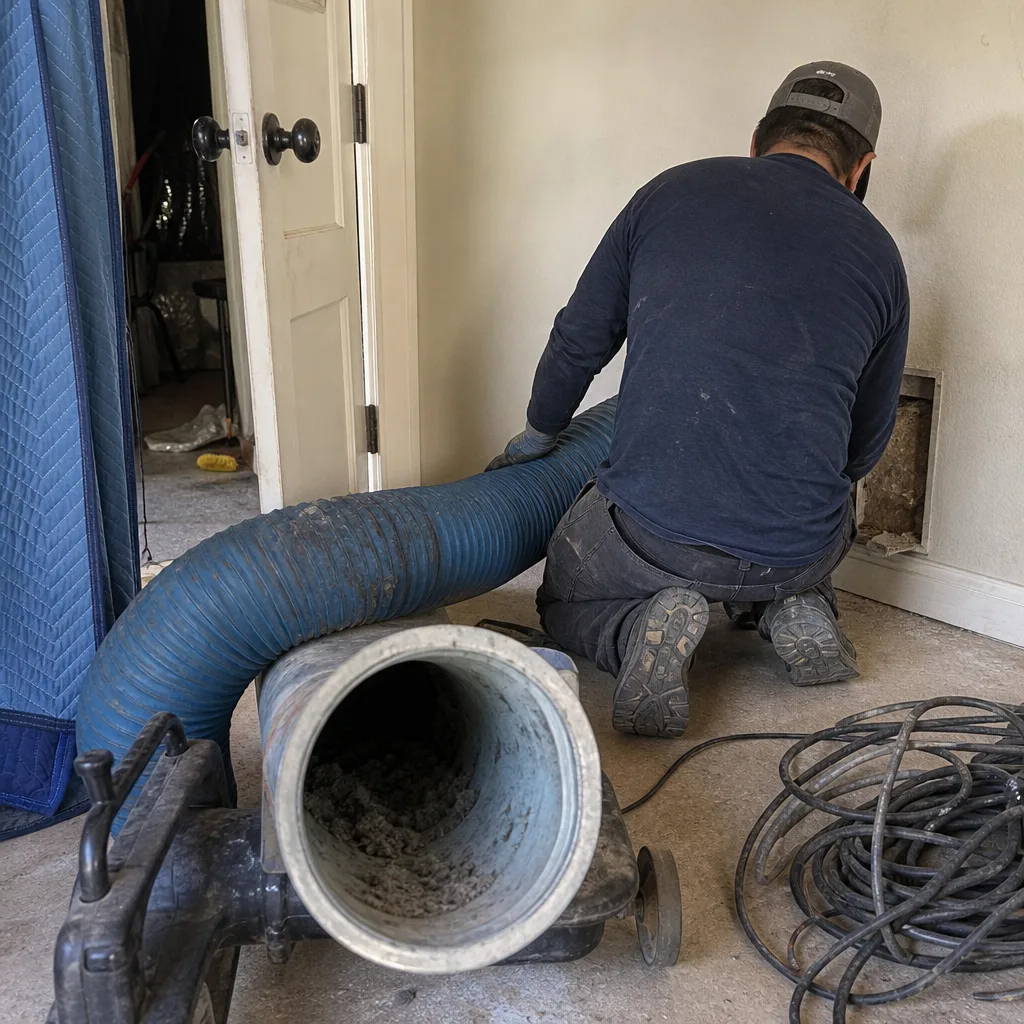 Before
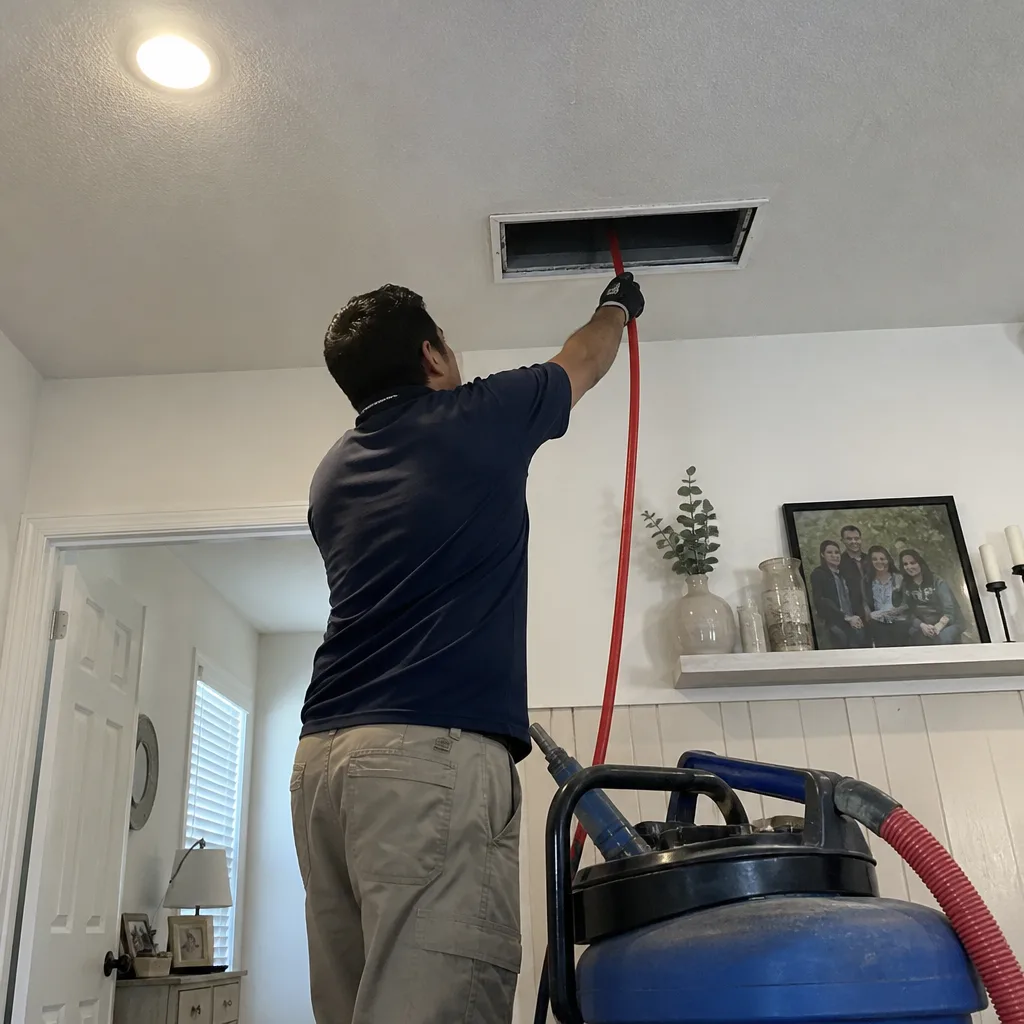 After
After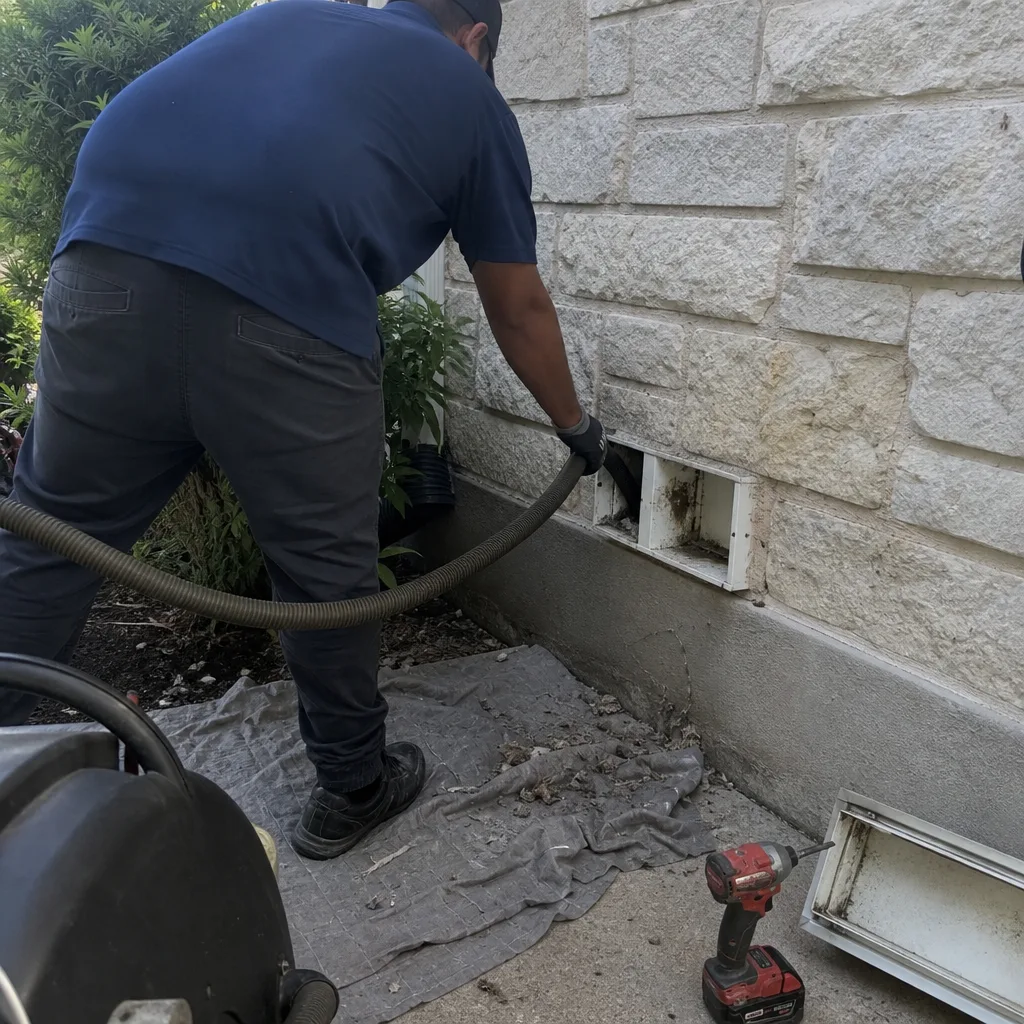 Before
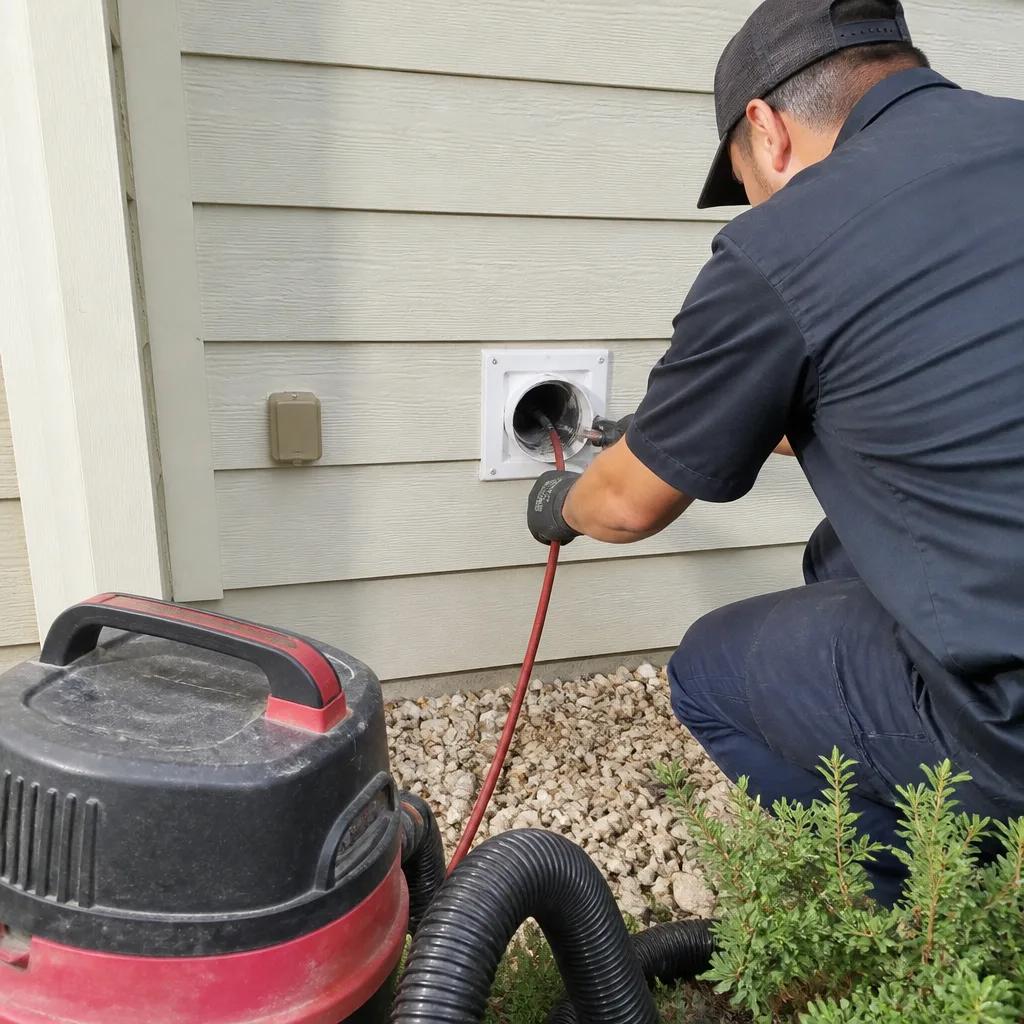 After
AfterReplacement Cost & What’s Included
Most Abatement Technologies duct sealing and repair jobs in Austin fall between $220 and $480 installed. As a point of reference, Dale Whitmore and our crew have replaced inlet gaskets on HEPA-AIRE 2000 units for right at $260, while a full collar replacement on a cracked Predator housing ran closer to $430 because it required removing the old collar, prepping the surface, and installing a reinforced aftermarket part.
The range is driven by three things: which part failed, whether it’s an OEM or aftermarket replacement, and how accessible the unit is. A machine sitting on a garage floor is a faster job than one tucked into an attic corner in a Hyde Park bungalow. Every quote includes the part, the labor, and a written price before we touch anything. Our 365-Day Done Right Promise covers the repair in writing. If the seal fails again within a year, we return and fix it at no charge.
Typical Installed Pricing
- Inlet gasket replacement: $180 – $280
- Filter-frame seal replacement: $220 – $320
- Access-door latch and gasket: $150 – $250
- Duct collar replacement (cracked or stripped): $280 – $480
- Full seal kit (all wear items): $380 – $520
DIY or Call Us?
You can safely check a few things yourself: look at the gaskets with a flashlight for visible cracks or flattening, feel around the collars while the unit runs for air movement, and note whether the access door latches firmly. Those are diagnostic steps, and they help you describe the problem when you call.
What we’d caution against is sourcing a generic gasket online and hoping it seats. These units move a lot of air and the seals sit under constant negative pressure. A poorly fitted gasket gives you the illusion of filtration while unfiltered air moves through the gap. That’s a health issue in Austin during cedar season and a false sense of what your machine is actually doing. If you want it sealed right and covered in writing, call us at (254) 848-6913 and we’ll get it done.
FAQs
In Austin’s heat and humidity, these seals typically last three to six years before they harden or take a compression set. Units stored in unconditioned garages or attics, where summer temperatures push past 110°F, tend to fail on the shorter end of that range. The heat accelerates the rubber and foam breakdown. Call (254) 848-6913 and we’ll help you assess whether your seals are due.
If the gasket is only slightly compressed and still pliable, re-seating it and adjusting the latch pressure can buy you time. But once a gasket is cracked, flattened, or brittle, patching it doesn’t restore a reliable seal under negative pressure. Replacement is the honest fix, and it’s usually the cheaper option over another year of shortened filter life.
Most single-part repairs on Abatement Technologies units take 45 to 90 minutes once we’re on site. A full seal kit across all wear points on a portable unit runs closer to two hours because every door, collar, and filter frame gets replaced and tested under running conditions.
We keep the most common inlet gaskets, filter-frame seals, and latch components on hand for the HEPA-AIRE and Predator series units we see most often around Austin. Less common parts, including some older pre-2018 HEPA-AIRE components, we order in and typically have within one business day. If you can send us a photo of the data plate, we’ll confirm the exact part before we arrive.
Written by Dale Whitmore, Owner, Kestrel Air Duct Austin at Kestrel Air Duct Austin, serving Austin and nearby areas.