
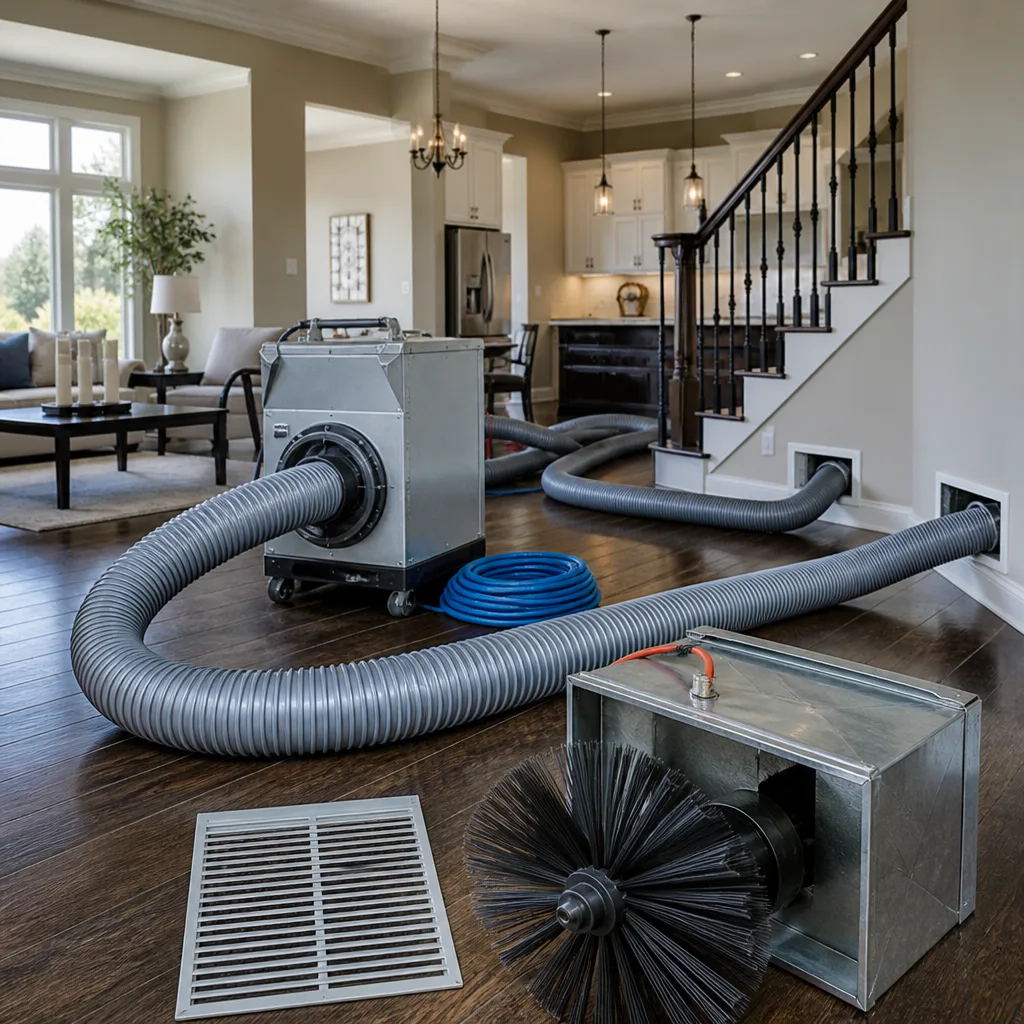
 Whole-home duct cleaning
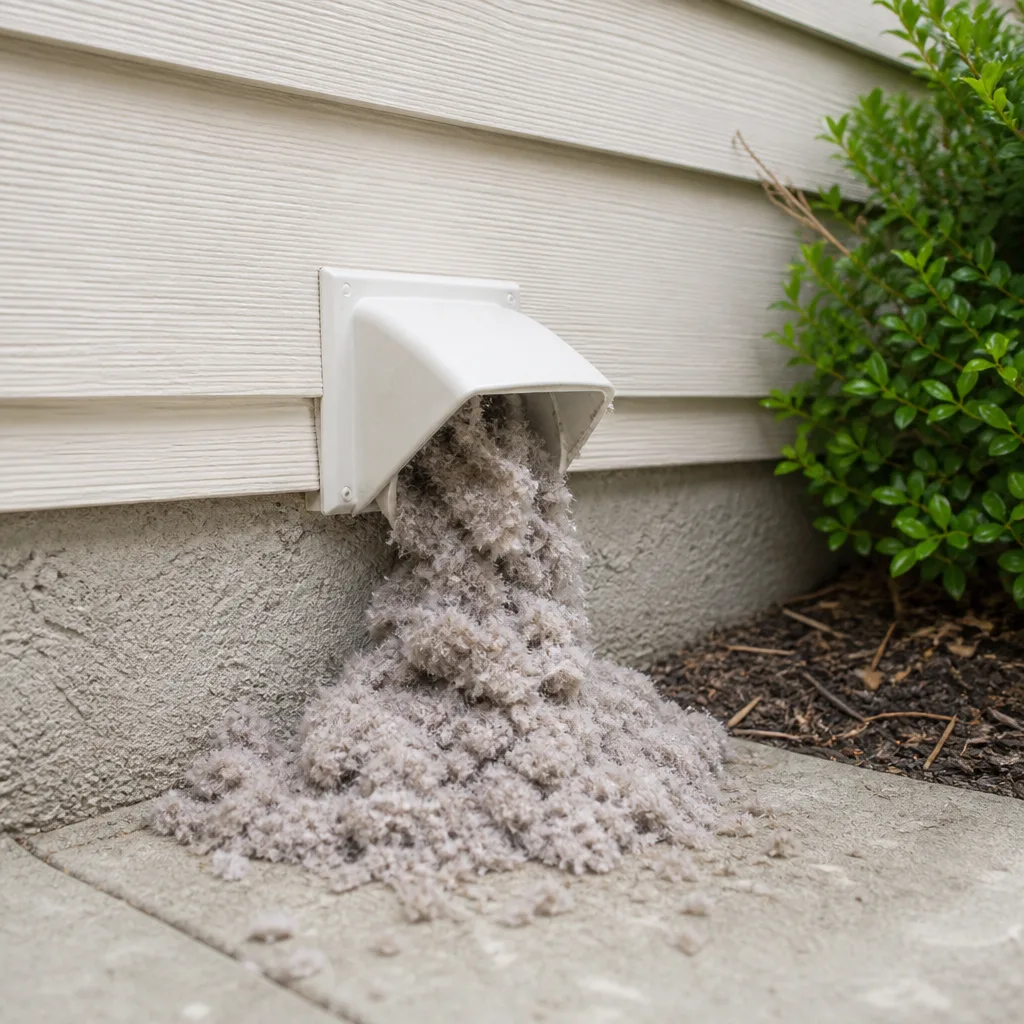 Dryer vent cleaning
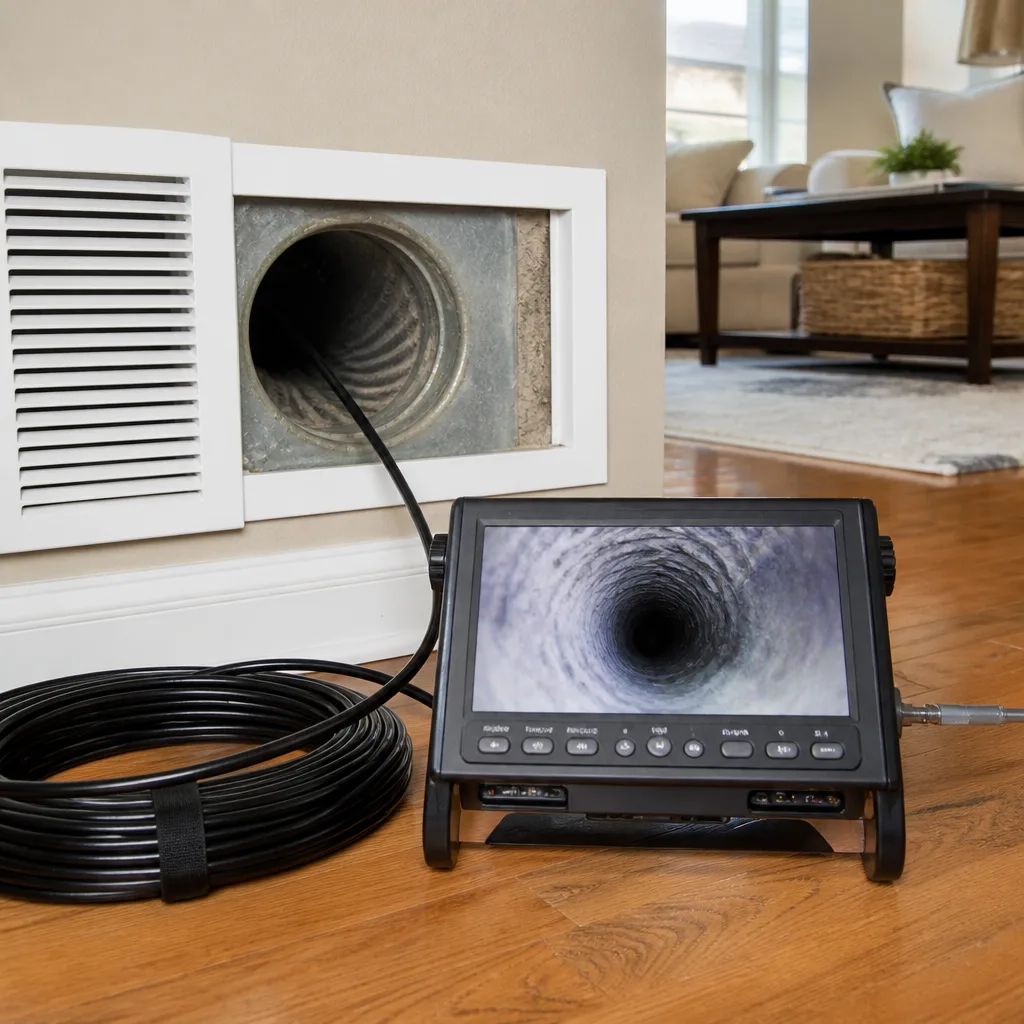 Camera inspection
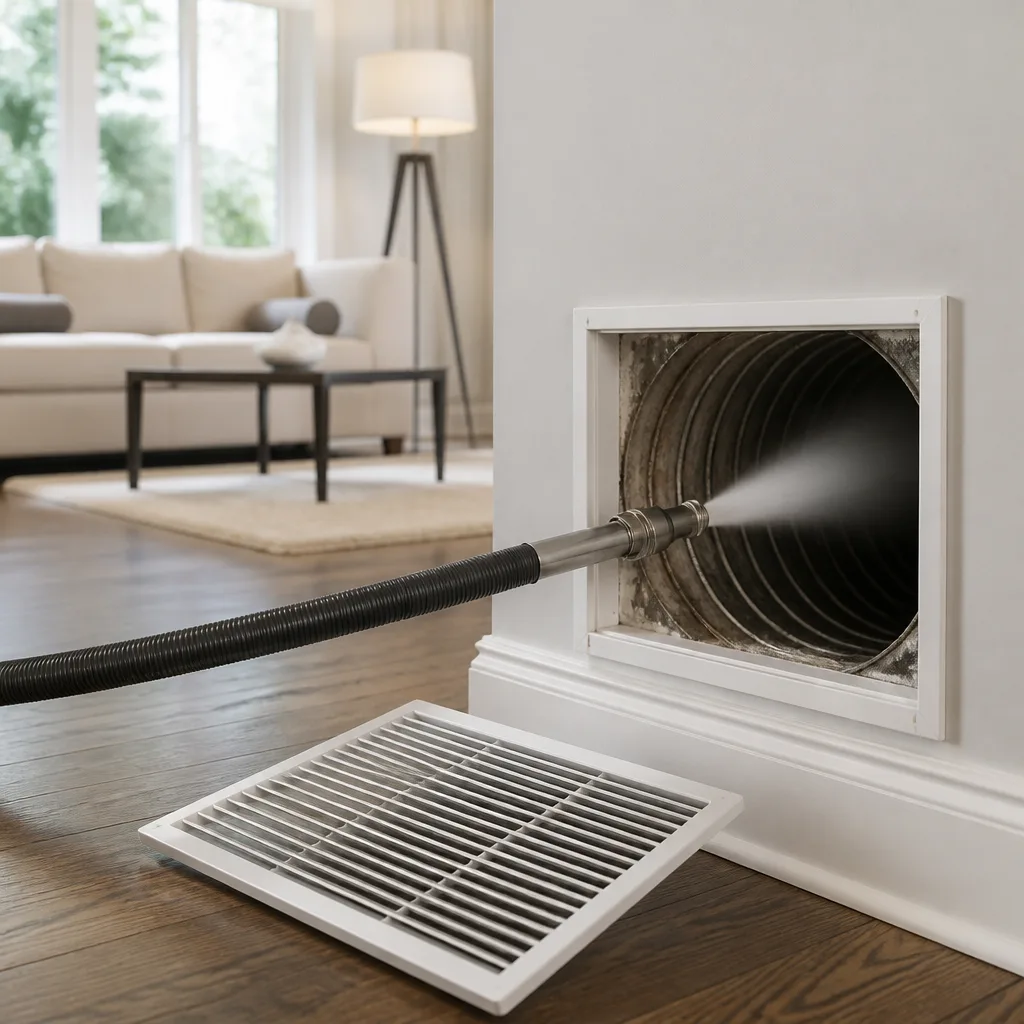 Sanitizing & deodorizing
Whole-system duct and dryer vent check with before-and-after photos - you see exactly what came out of your vents
That "$99 whole-house special" is a bait ad - the real number appears once they are in your hallway, or the "clean" is a shop-vac at the register. We photograph the inside of your ducts before and after instead.
Rotobrush Vent Sanitizing: The Austin Owner’s Guide
We stock and install Rotobrush-compatible vent sanitizing parts for most residential systems across Austin, with installed pricing typically running between $45 and $145 depending on your system’s layout and how many sanitizing cartridges or applicator tips you’re replacing. Most jobs are completed the same day we arrive, and we keep the common failure parts on the truck so a second visit usually isn’t necessary. Owners typically discover a failure when the sanitizing mist stops atomizing properly, the cartridge seats loosely, or the system throws a low-flow warning mid-cycle.
In Austin’s climate, the sanitizing components see more abuse than the rest of the Rotobrush setup. Cedar pollen fines, limestone dust, and the general humidity swing between May and September mean the delivery nozzles and cartridge seals work harder here than they do in drier markets. Dale Whitmore and our crew have been running Rotobrush-compatible jobs in Austin for years, from older homes near Hyde Park to newer builds south of the river, and we’ve learned which parts fail first in this specific environment.
Which Rotobrush Models This Applies To
Rotobrush vent sanitizing parts are designed around the company’s air wash and fogging systems, which integrate with most Rotobrush brush-and-vacuum platforms from the last decade. The key compatibility point is the delivery assembly: Rotobrush sanitizing systems use a specific atomizing tip and pickup tube that seat into the main vacuum head’s accessory port. We stock replacements that match the Rotobrush AiR+ and the earlier RotoSweep carriage lines, and the practical difference between the two is the tip thread pitch and the cartridge neck diameter.
Here’s the gotcha we see often in Austin: the cartridge itself is largely universal, but the o-ring seat that holds it in place wears differently depending on whether your machine is a 120V or 220V configuration. A cartridge that seats snugly in one will wobble in the other after a few months of use, and that wobble kills the atomization consistency. Rotobrush genuine parts are well made, but the price premium is meaningful. We stock both OEM and a quality aftermarket equivalent line, and we’ll tell you honestly which one makes sense for your machine’s age and how often you actually use the sanitizing function. If it’s a weekly tool in a commercial setting, we lean OEM. If it’s a twice-a-year residential machine, the aftermarket equivalent has served our Austin customers well. Kestrel Air Duct Austin is an independent service provider, not affiliated with Rotobrush.
Styles & brands we work with
Signs Your Rotobrush Vent Sanitizing Is Failing
- Mist sputters or stops entirely. The atomizing tip is partially clogged or the o-ring has worn enough to break the vacuum seal. This is the most common failure we see in Austin, where fine airborne dust works its way into the tip bore between jobs.
- Cartridge seats loosely or wobbles in the port. The neck o-ring has compressed beyond spec from repeated heat exposure in Texas truck beds and garages. A loose seat means uneven draw and uneven sanitizer delivery.
- Low-flow warning chirps mid-cycle. The pickup tube is cracked or the internal check valve has failed. Rotobrush systems monitor draw pressure, and a cracked tube reads as a restriction.
- Sanitizer pools at the bottom of the access port. The return spring on the delivery valve is weakened, so the system isn’t fully retracting after each pulse. You’ll see residue that should have been atomized.
- Audible hiss from the accessory port during operation. The port gasket has deformed, usually from a combination of ozone exposure and heat cycling. Air is bypassing the cartridge entirely.
See the difference
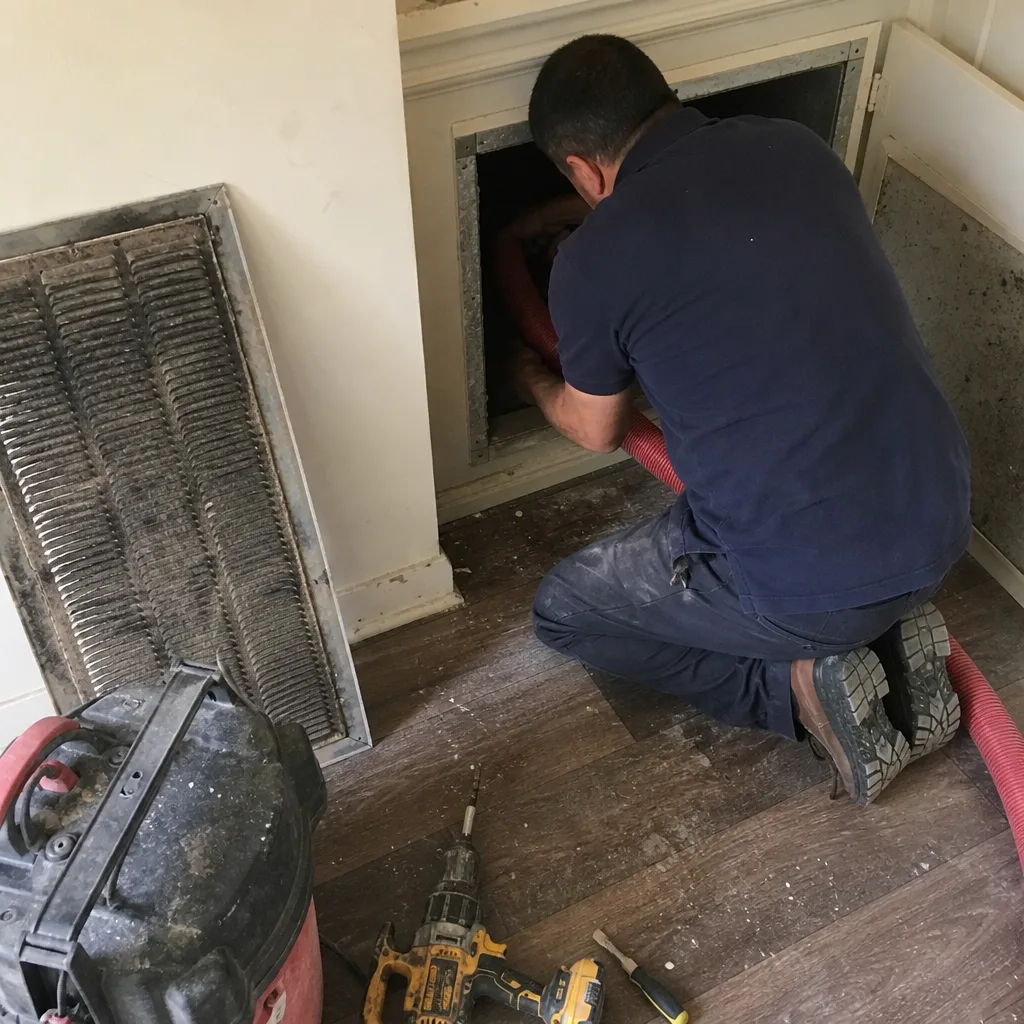 Before
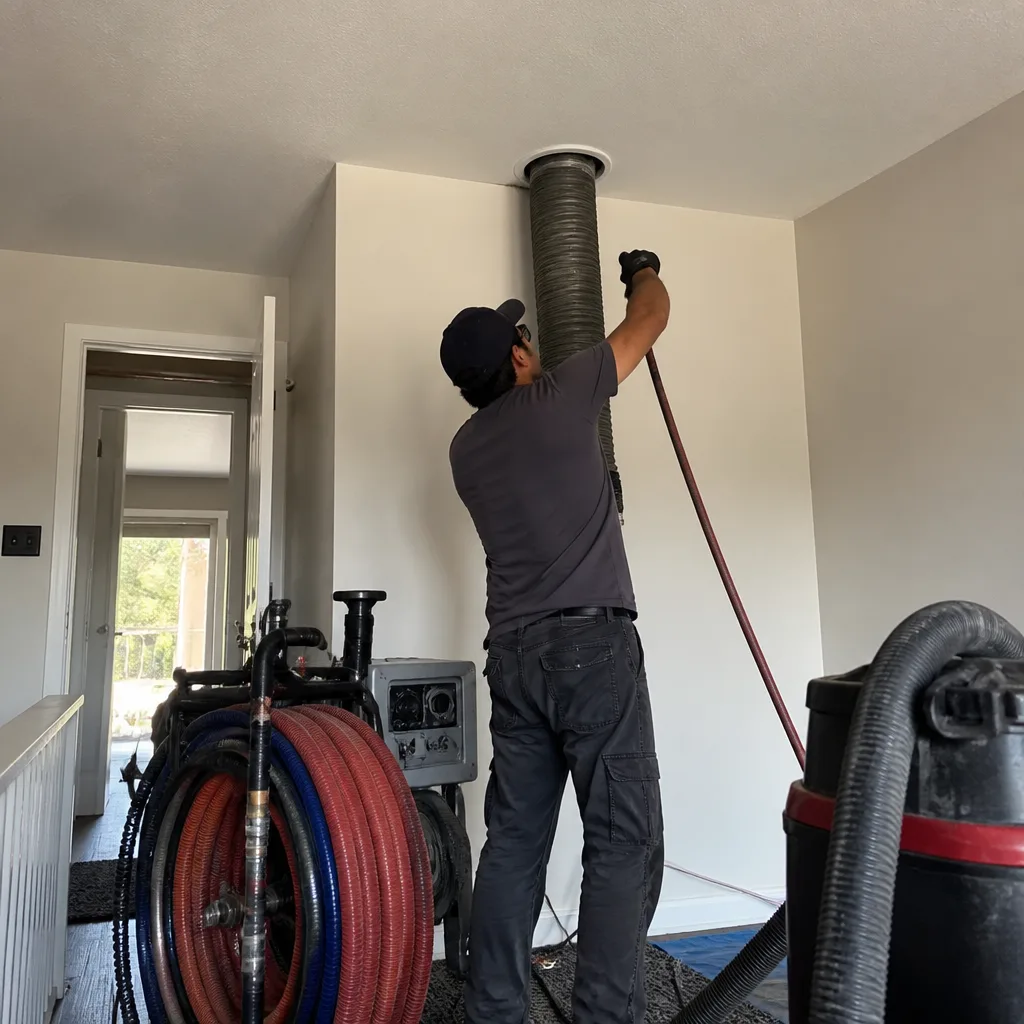 After
After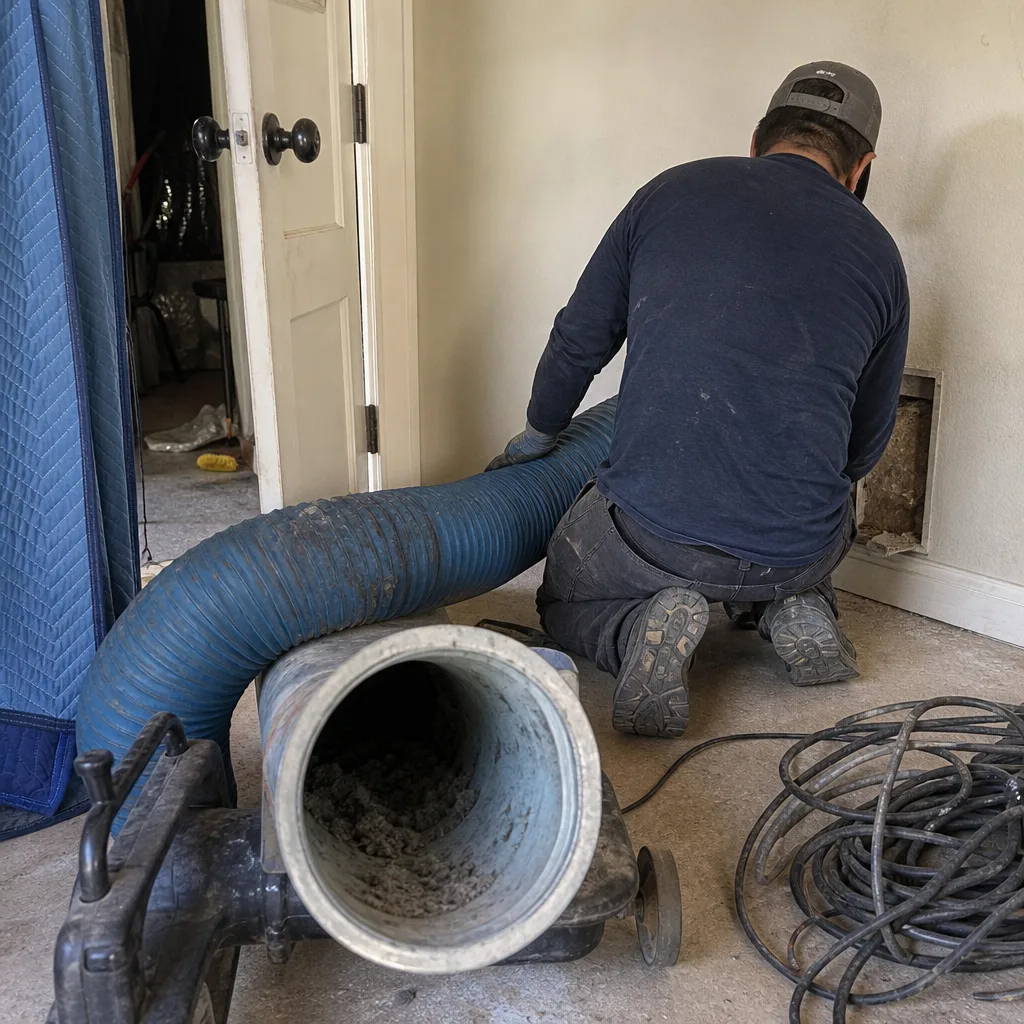 Before
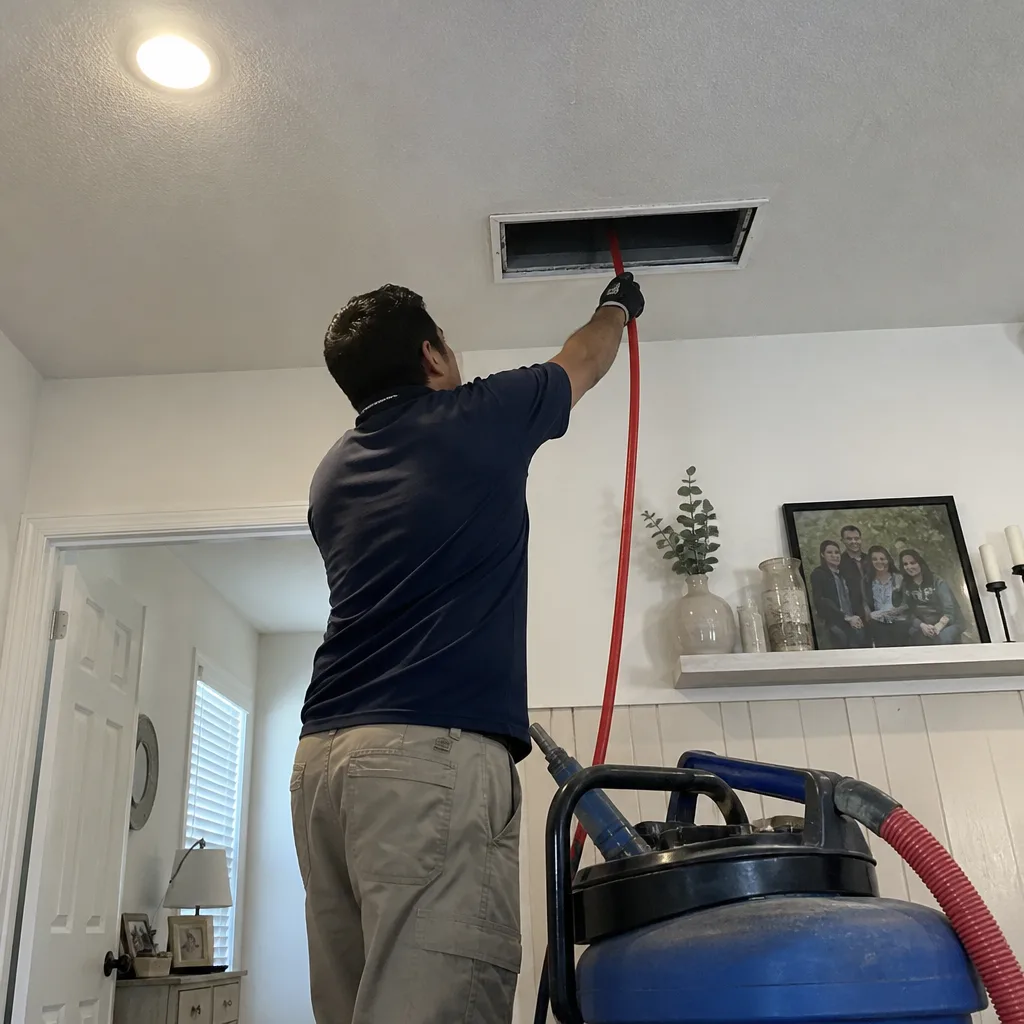 After
After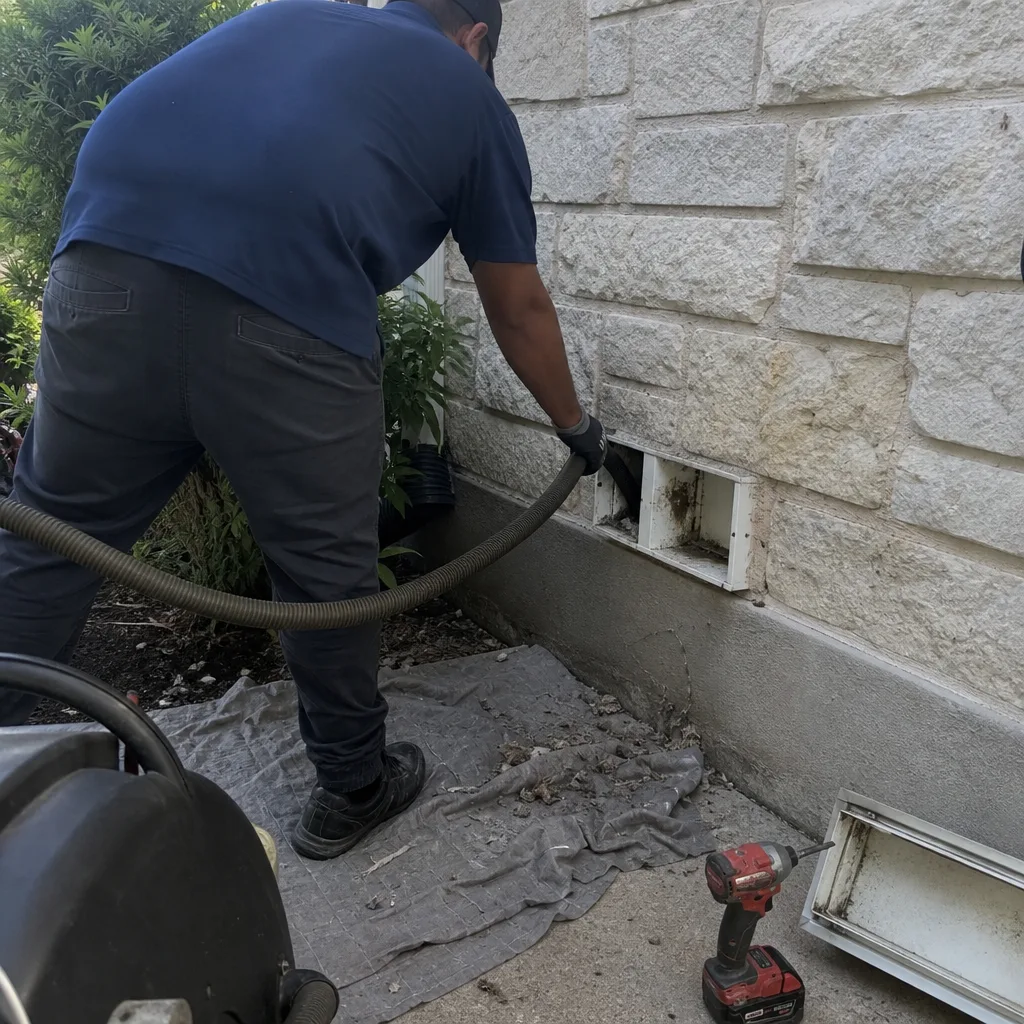 Before
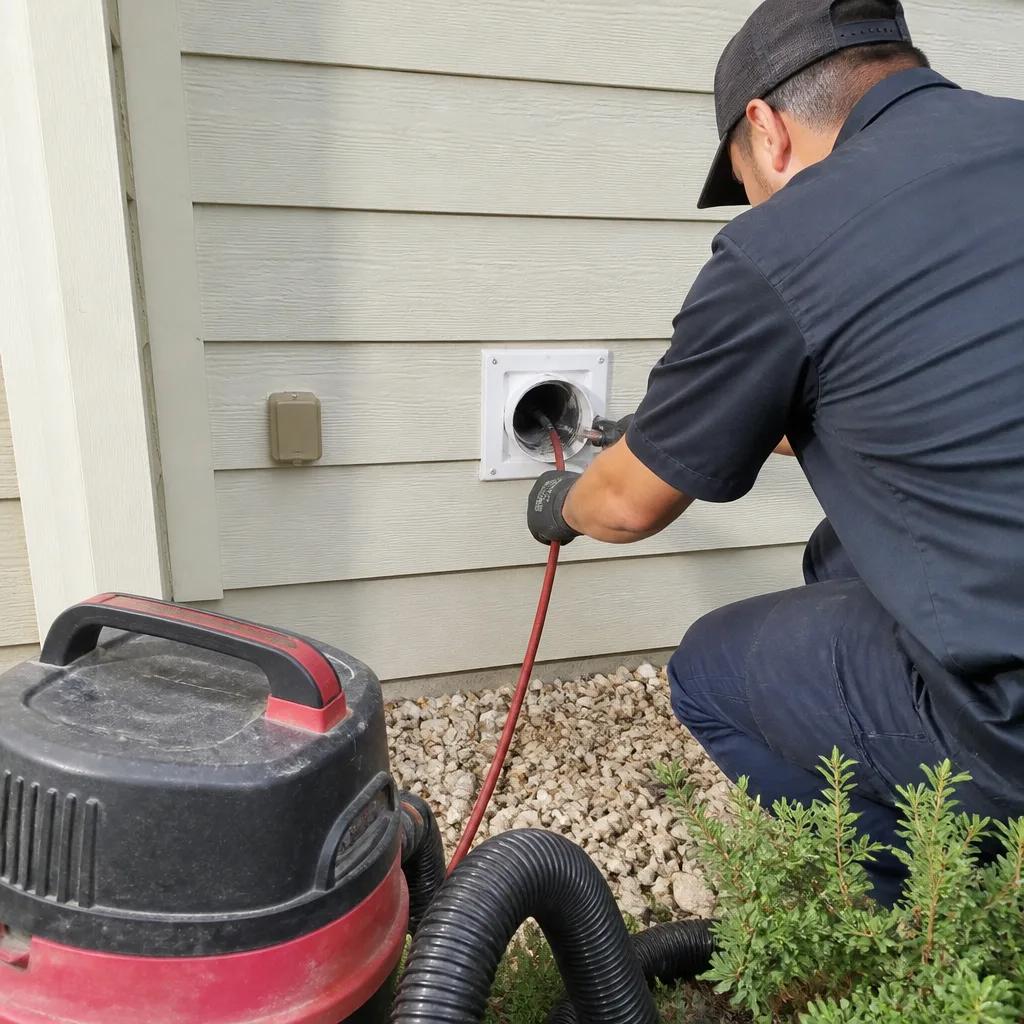 After
AfterReplacement Cost & What’s Included
For most residential Rotobrush systems in Austin, you’re looking at $45 to $145 installed depending on which piece has failed and whether we’re replacing just the tip, the cartridge assembly, or the full pickup tube and valve set. The price is a single figure: parts, labor, and testing included, quoted in writing before we open a panel. That written price is the standing Kingswell Guarantee, not a promotional offer.
Here’s the breakdown:
- Atomizing tip and o-ring: $45 – $70 installed
- Cartridge assembly with seals: $80 – $120 installed
- Pickup tube, check valve, and port gasket: $110 – $145 installed
Every replacement gets tested on the bench before we call it done, and the work is covered under the 365-Day Done Right Promise. If the sanitizing function fails within the guarantee period, we return and make it right at no charge.
DIY or Call Us?
The Rotobrush sanitizing delivery components are not high-tension or electrical, so a careful owner can inspect the cartridge seat and o-ring without special tools. You can look for a wobble, check for residue pooling, and visually confirm whether the tip is obstructed. Where DIY goes wrong is the pickup tube and check valve replacement: seating the valve on the wrong side of the tube run will damage the draw sensor, and the sensor is significantly more expensive than the part you were trying to fix.
If the cartridge simply won’t seat or you see the wobble, that’s a five-minute fix from our truck stock. If you’re hearing the hiss or getting the low-flow chirp, call us at (254) 848-6913 before you start pulling tubing. One flat price, written before we touch anything, and we leave the machine tested and ready for the next job.
FAQs
In our experience servicing Austin homes, the atomizing tip and o-ring typically last 12 to 18 months of regular residential use before performance degrades, while the cartridge assembly itself often runs 2 to 3 years. Austin’s fine dust and heat cycling shorten the o-ring life more than anything else. Call (254) 848-6913 and we’ll assess your specific machine.
The o-ring and tip are replaceable wear items and that is the repair in most cases; the pickup tube and check valve are not serviceable and get replaced as a unit. We’ll always show you the worn part before we swap it. Call (254) 848-6913 for a straight answer on your symptom.
A tip and o-ring replacement takes about 15 minutes including testing; a full pickup tube and valve job runs 30 to 45 minutes. We carry the common Rotobrush-compatible parts on the truck, along with parts for Lennox, Trane, and Carrier systems. Call (254) 848-6913 to schedule a time that works.
Yes, we keep the common Rotobrush-compatible tips, o-rings, cartridges, and pickup tube sets stocked on our Austin service trucks, so most replacements are completed on the first visit. If a specific OEM part is not on hand, we’ll tell you the exact lead time before you commit. Call (254) 848-6913 and we’ll confirm stock before we roll.
Clean ducts move air. Everything else is just noise.
Written by Dale Whitmore, Owner, Kestrel Air Duct Austin at Kestrel Air Duct Austin, serving Austin and nearby areas.