

Last updated October 15, 2026
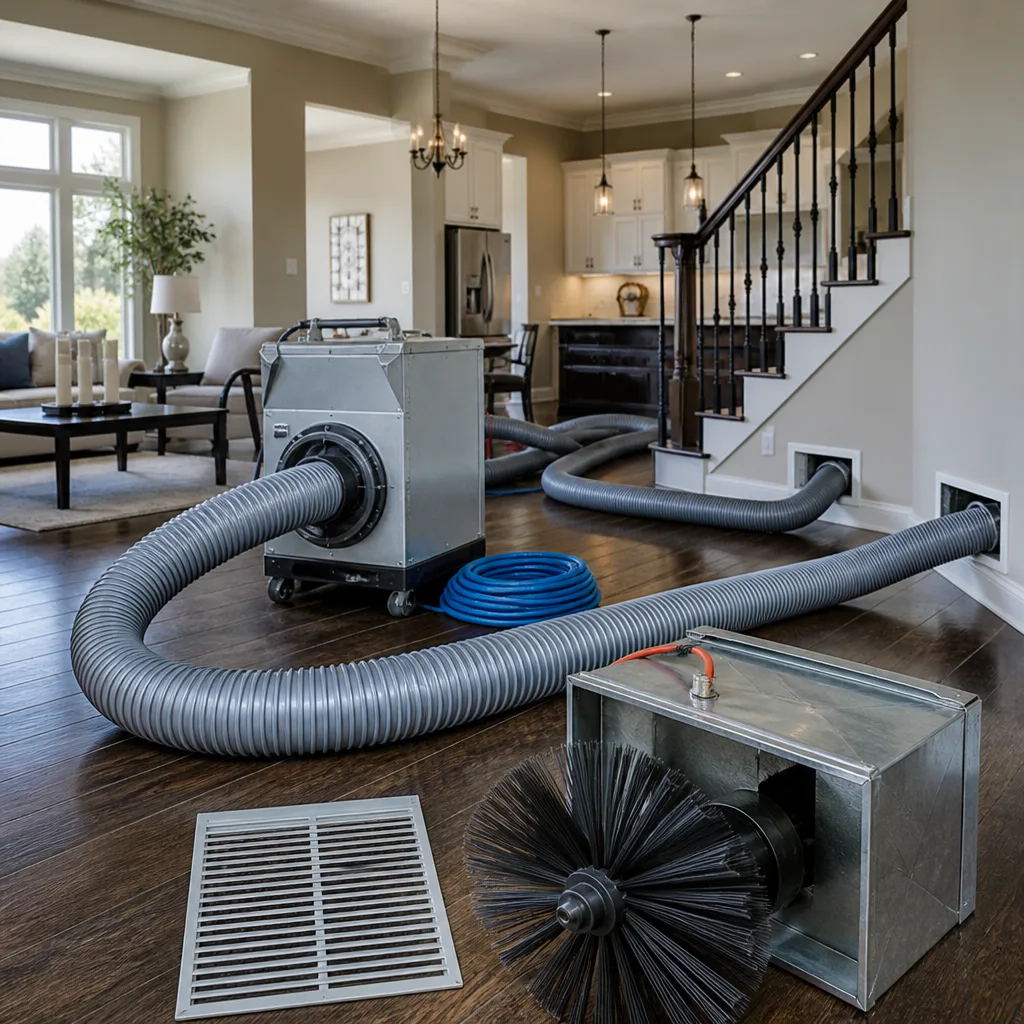 Whole-home duct cleaning
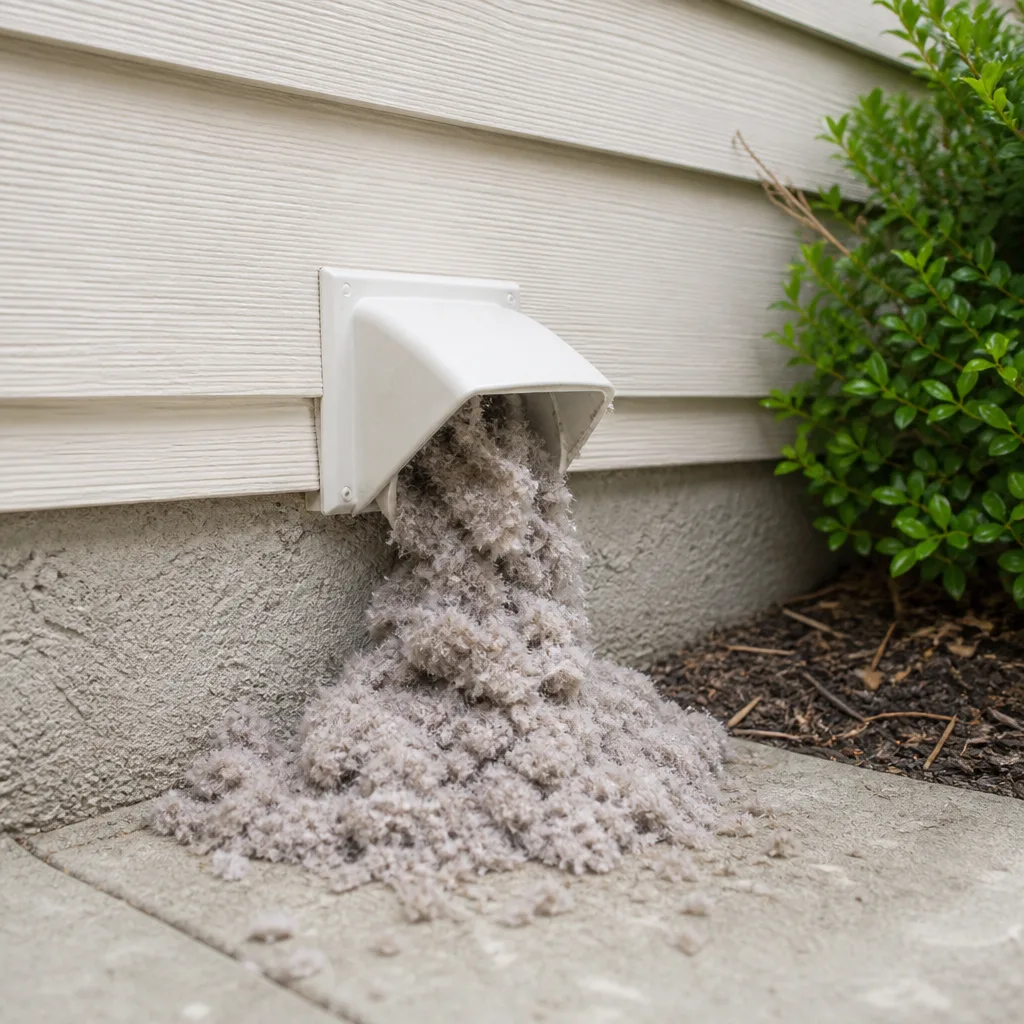 Dryer vent cleaning
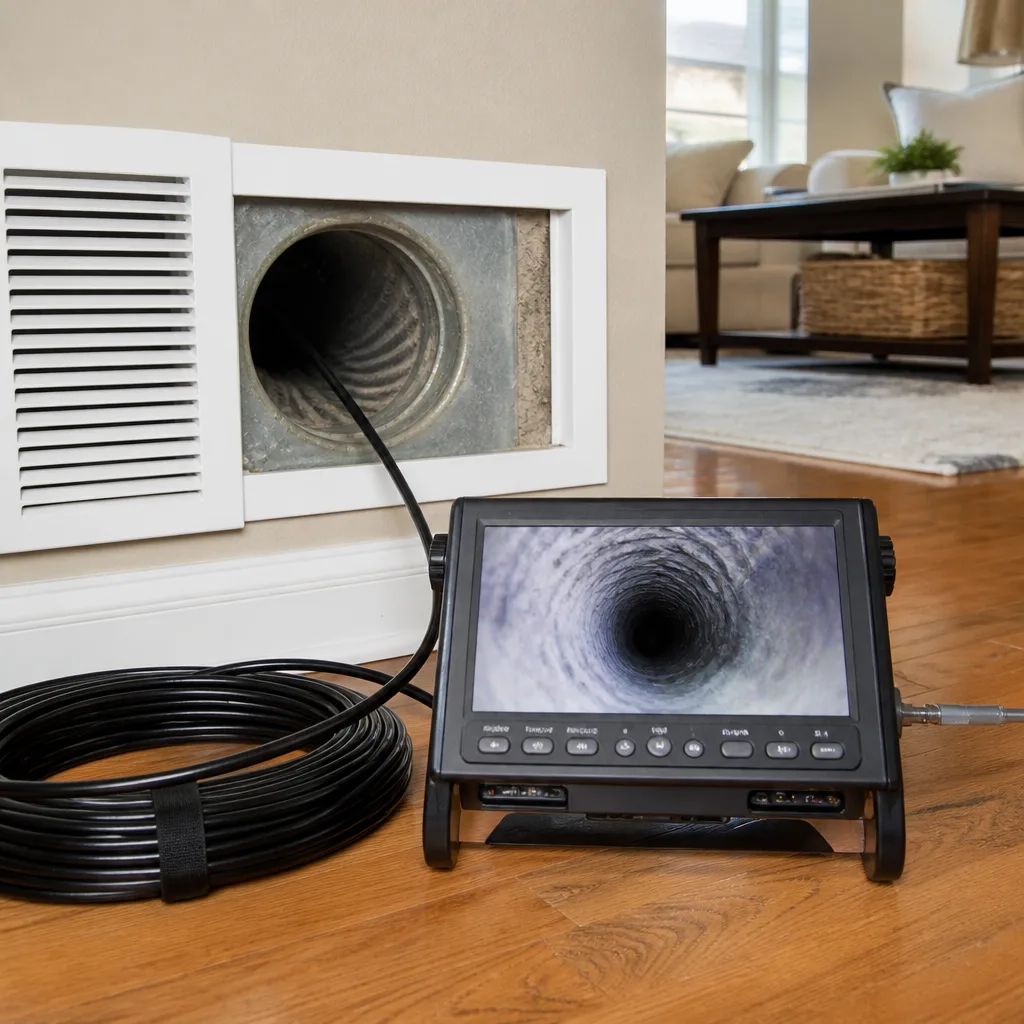 Camera inspection
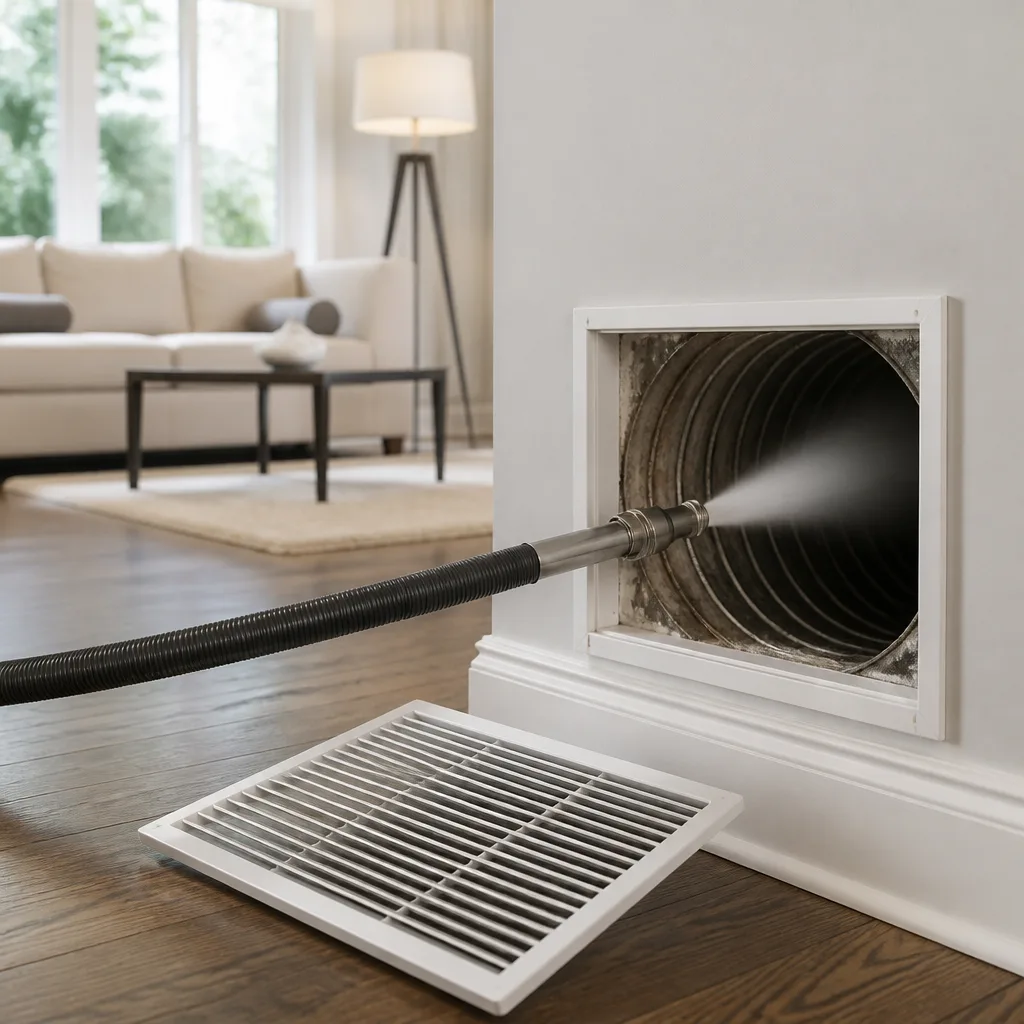 Sanitizing & deodorizing
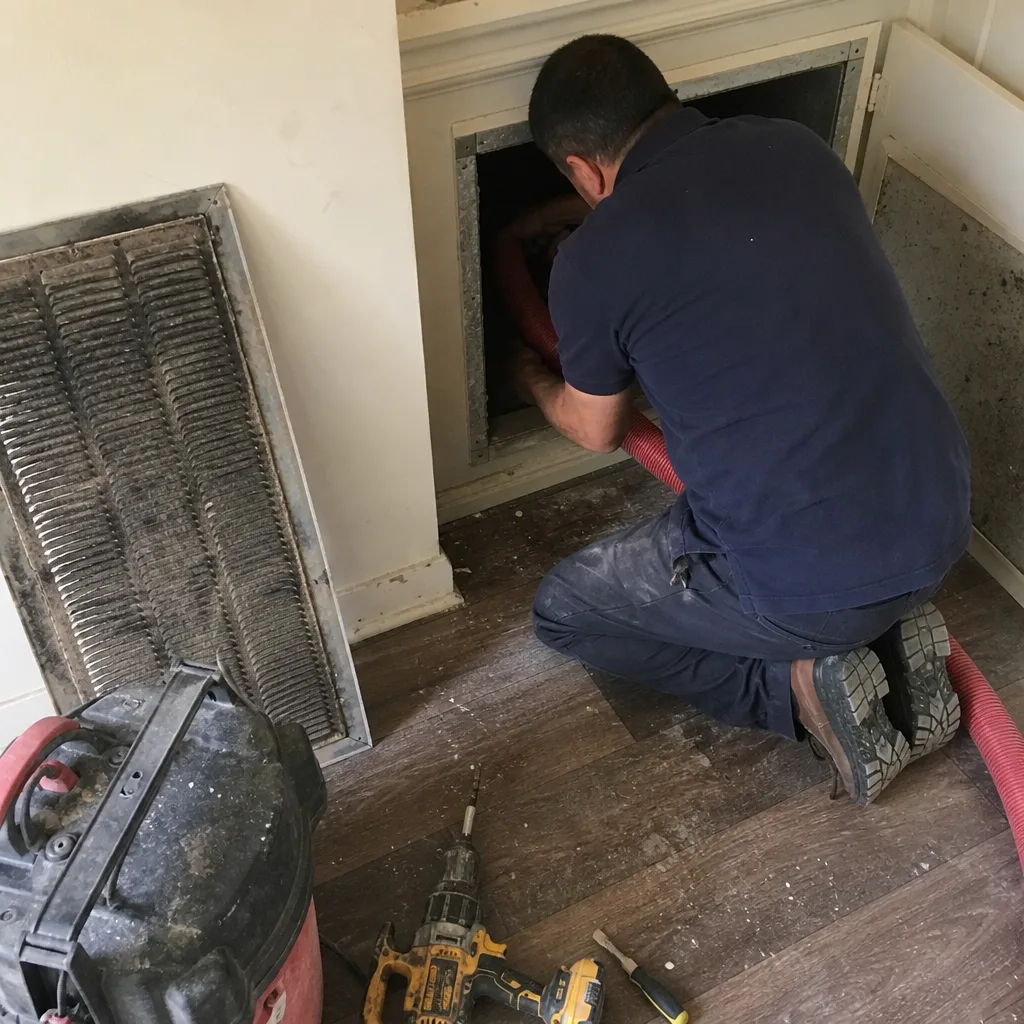
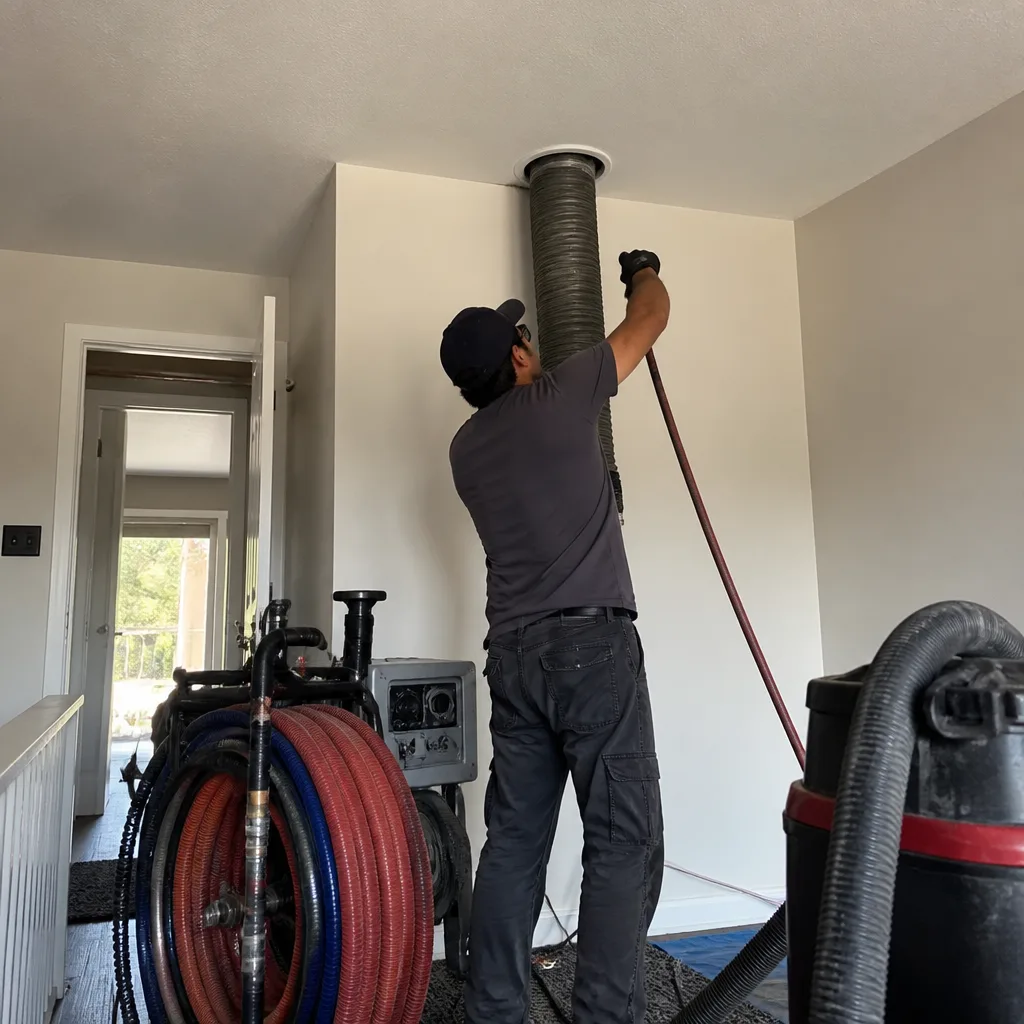
Whole-system duct and dryer vent check with before-and-after photos - you see exactly what came out of your vents
That "$99 whole-house special" is a bait ad - the real number appears once they are in your hallway, or the "clean" is a shop-vac at the register. We photograph the inside of your ducts before and after instead.
Air Duct Cleaning Cost Breakdown: The Austin Homeowner’s Reference for 2026
The $89 whole-house duct cleaning coupon costs the average Austin homeowner roughly $340 by the time the crew pulls out of the driveway. That’s the number nobody prints on the flyer. This guide breaks down exactly why, line item by line item, with the dollar ranges attached to each step of the upsell sequence, the legitimate cost drivers you should expect to pay for, and the specific language a written quote needs to contain before you let anyone touch a vent. If you’re planning to have your air ducts cleaned in Austin this year, you’ll finish this page knowing more about the pricing than most of the people who sell the service.
Quick Answer
Air duct cleaning in Austin typically costs between $350 and $750 for a whole-house cleaning of a 1,500 to 2,500 square foot home in 2026, with smaller jobs starting around $250 and large or heavily contaminated systems reaching $1,200 or more. The price depends on home size, number of vents, duct material, access difficulty, and whether the company is quoting an honest flat rate or setting you up for a bait-and-switch. For a deeper look at what to expect, see our Air Duct Cleaning Maintenance Checklist for Austin Homeowners. Kestrel Air Duct Austin has done this work since 2004 under the Kingswell Guarantee, and our written price is in your hands before a single vent is touched.
Styles & brands we work with
Table of Contents
- The Real Cost Drivers: What Actually Moves the Price
- The Anatomy of a $89 Bait-and-Switch: How It Becomes $400
- How Austin Homes, Climate, and Foundations Affect Duct Cleaning Cost
- What a Written Pre-Job Quote Must Lock In
- When Bundling Makes Sense: Standalone vs. Dryer Vent vs. HVAC Tune-Up
- What the Equipment Actually Does: Rotobrush, Nikro, and Negative Air
- How Often Do Austin Ducts Really Need Cleaning?
- Common Mistakes to Avoid
- When to Call a Professional
- Frequently Asked Questions
The Real Cost Drivers: What Actually Moves the Price
Duct cleaning is not a one-price service, and any company quoting a single number before knowing your home’s layout is guessing. Legitimate pricing is built from four or five measurable factors. Here is what each one costs in the Austin market in 2026, in plain dollars.
Per-Vent Pricing: $8 to $15 per Vent
Many Austin companies structure pricing around the number of vents in your home. A supply vent is the opening that blows conditioned air into a room. A return vent is the larger grille that pulls air back to the HVAC unit. Most homes have 8 to 14 supply vents and 2 to 4 return vents. At $10 per vent for a 12-vent home, that’s $120. At $15 per vent, $180. Some companies count only supply vents. Others count both supply and return. A written quote should state exactly how the vent count was determined and whether return vents are included in that number.
Trunk Line Footage: $2 to $4 per Linear Foot
The trunk line is the main rectangular duct running through your attic, crawlspace, or between floors, feeding all the branch lines that connect to individual vents. In a 2,000 square foot Austin home, a main trunk line typically runs 40 to 80 feet. At $3 per foot, that’s $120 to $240 for the trunk alone. Branch lines, the smaller flexible ducts running from the trunk to each vent, are usually included in the per-vent price. Make sure the quote says so.
Access Panel Fees: $35 to $110 per Opening
Duct systems are not designed to be opened. Technicians need to cut an access hole into the trunk line, typically 8 to 10 inches in diameter, to insert cleaning equipment. After cleaning, the hole is sealed with a metal patch. Some companies charge this per access point. A standard single-system home needs one or two access points. A two-story with two separate HVAC systems may need three or four. This is a legitimate charge, but it should be itemized. If a company bundles it into the flat rate, that’s better for you.
Sanitizer and Deodorizer Add-Ons: $85 to $250
After physical cleaning, many firms offer a fogging treatment that mists an antimicrobial agent into the ducts. In Austin’s humid climate, this can reduce microbial growth in ducts that have seen condensation. It is optional. It is also one of the most heavily marked-up items in the industry. The chemical itself costs $10 to $30 per application. The labor is ten minutes. If you want it, ask what specific product is used and what it does. If the technician cannot name the product or explains it in terms of “killing all the bad stuff,” decline it.
Home Size: The Baseline Multiplier
| Home Size | Typical Vent Count | Expected Cost Range (Austin, 2026) |
|---|---|---|
| Under 1,200 sq ft | 6 – 10 vents | $250 – $400 |
| 1,200 – 2,000 sq ft | 10 – 14 vents | $350 – $600 |
| 2,000 – 3,000 sq ft | 14 – 20 vents | $450 – $800 |
| Over 3,000 sq ft or two systems | 20+ vents | $700 – $1,200 |
These are the honest ranges for a proper cleaning using negative-air extraction and brush agitation, not a box-store shop vac waved at a few registers. If a quote falls dramatically below this table, the next section explains what’s about to happen.
The Anatomy of a $89 Bait-and-Switch: How It Becomes $400
The low-price Austin duct cleaning coupon follows a script. It is rehearsed, and it works often enough that it keeps being printed. Here is the step-by-step sequence, with the typical dollar amount attached to each step.
- The $89 hook. The coupon promises whole-house duct cleaning for a flat rate that cannot cover fuel, labor, equipment, and insurance for any legitimate company. The goal is simply to get a body in your driveway.
- The “inspection” discovery. Within ten minutes of arrival, the technician pulls out a camera or simply flips a flashlight into a vent and announces a problem. Black dust. Mold growth. “Your system’s worse than most.” The diagnosis is designed to sound urgent and visual.
- The mold upsell, $150 – $400. This is the most profitable line item in the script. Austin’s humidity makes the claim plausible. The technician recommends a full sanitizer fog, now at triple the normal price because it’s “urgent.” A $35 chemical application becomes a $300 “anti-microbial treatment.”
- The “extra vents” correction, $50 – $150. The base coupon assumed eight vents. Your home has fourteen. That’s six more at $15 – $25 each, presented as though the discrepancy is somehow your fault.
- The access fee, $45 – $110. The original quote didn’t mention cutting access panels. Now the technician explains that your main trunk line requires an additional opening to be cleaned properly. This is a real cost, but a legitimate company itemizes it up front, not after the duct is open.
- The final total: $334 – $750. You wanted the $89 deal. You’re now signing for four to eight times that, in your own driveway, while a technician in uniform waits. Many homeowners pay simply to end the discomfort.
Dale Whitmore has watched this play out across the Austin metro for two decades. The Kingswell Way was written specifically to stop it. The price Kestrel Air Duct Austin quotes is the price on the invoice. No discoveries, no corrections, no door-step revisions. The written quote is the contract.
How Austin Homes, Climate, and Foundations Affect Duct Cleaning Cost
Austin is not a generic market. The city’s housing stock, geology, and weather create specific conditions that influence what a duct cleaning should cost and why skimping on it has consequences.
Flex Duct vs. Hard Pipe: What’s in Your Attic
Most Austin homes built after 1980 use flexible ductwork for branch lines, the silver accordion-style tubes running from the main trunk to each vent. Flex duct is cheaper to install, but it collects dust differently than rigid metal pipe. Its interior ridges trap particulate matter, and the material itself can sag or kink over time, creating low spots where debris accumulates. Cleaning flex duct requires gentler brush agitation than rigid pipe. A too-aggressive rotary brush can tear the inner liner. This is one reason the technician’s equipment and experience matter. Rotobrush systems, which we run at Kestrel Air Duct Austin, are designed to clean flex duct without damaging it. A shop vac and a hardware store brush are not.
Slab Foundation vs. Pier-and-Beam: Access Changes Everything
Austin’s older neighborhoods, such as Hyde Park, Bouldin, and parts of East Austin, contain many pier-and-beam homes where ductwork runs through the crawlspace. Slab foundation homes built in the suburbs, where most of the city’s post-1980 housing stock sits, typically route ductwork through the attic. Crawlspace access is generally easier for a cleaning crew, but it comes with its own costs: tighter clearance, potential moisture issues, and sometimes pest debris. Attic work in an Austin August means temperatures above 120 degrees in the attic space. That affects the pace a technician can sustain and, on very hot days, should affect how much you respect the crew doing the work. Access difficulty is a legitimate pricing factor. It should not be a surprise surcharge.
Austin’s Humidity and the Condensation Problem
Central Texas air carries significant moisture from the Gulf, and the air conditioning season runs from March through October. That means cold air moves through ducts sitting in hot, humid attics for most of the year. Condensation forms on the outside of poorly insulated ducts, particularly where they run against the attic floor or through a hot chase wall. That moisture attracts dust and creates a sticky film on the inside of the duct. Over time, the film hardens and bonds particulate matter to the duct wall. This is why Austin duct work often needs physical brush agitation, not just vacuum suction, to actually come clean. A negative-air machine can pull loose debris, but it cannot remove what humidity has essentially glued in place.
What a Written Pre-Job Quote Must Lock In
The single most important document in your duct cleaning transaction is the one you read before the work starts. Here is the language that protects you, line by line.
- Total price in dollars, not a range. “$475” not “between $400 and $600.” A range is an invitation for the invoice to land at the top end.
- Vent count and type. The quote should list exactly how many supply and return vents are included, and state whether the count was based on a physical walkthrough or an estimate from the previous owner’s floor plan.
- Access panel language. Either the quote includes all access panel cuts and sealing, or it lists the exact price per panel and the maximum number of panels needed. No open-ended “as required.”
- Equipment method. The quote should name the method: negative-air extraction, source removal, or rotary brush agitation. If it just says “professional cleaning,” ask what that means physically.
- Guarantee terms in writing. What qualifies for a re-clean? How long is the window? Who do you call? The 365-Day Done Right Promise from Kestrel Air Duct Austin is printed on the quote itself, with a specific number to call if the work falls short. If a company’s guarantee is verbal, it does not exist.
- No surprise line items. The quote should state that no additional labor, chemical, or access fees will be added without a separate written change order signed by you, before the extra work begins.
If any of these elements is missing, you are not looking at a quote. You are looking at an estimate with a pressure sale attached. The Kingswell Guarantee has required all four of its core promises in writing on every job since 2004: the price, the arrival window, the clean job site, and the written guarantee.
When Bundling Makes Sense: Standalone vs. Dryer Vent vs. HVAC Tune-Up
Duct cleaning is sometimes sold as part of a bundle. Here is when the math actually works in Austin, and when you are better off keeping the services separate.
Standalone Duct Cleaning: $350 – $750
This is the right choice when you have never had the ducts cleaned, you have visible dust at the registers, or you moved into a home where the previous owner had pets, did renovations, or ran the system for years without regular filter changes. One flat price, one service, one guarantee. If you only need one thing done, pay for one thing.
Duct Cleaning + Dryer Vent Cleaning: $80 – $160 More
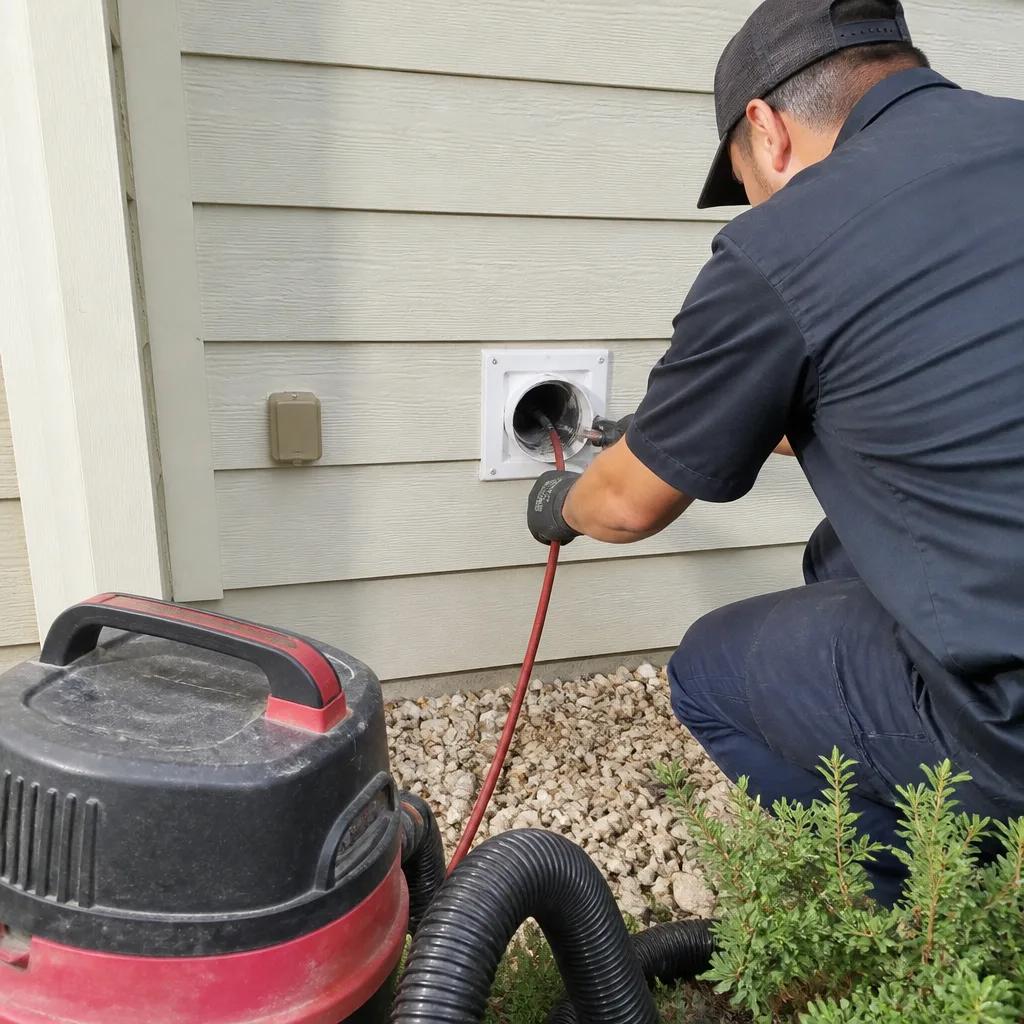
A dryer vent cleaning is a separate service from air duct cleaning. It involves a different duct system entirely, the one that carries lint and hot exhaust from your dryer to the outside. Lint is flammable. The Austin Fire Department responds to dryer fires every year, and most of them trace back to a clogged vent. Adding a dryer vent cleaning in Austin to your duct cleaning visit makes sense when you cannot remember the last time the dryer vent was cleared, when clothes take two cycles to dry, or when the vent flap outside barely moves during a dry cycle. The incremental cost is modest because the technician is already at your home with equipment running.
Duct Cleaning + HVAC Tune-Up: Questionable Bundle
Some HVAC companies offer “whole system packages” that include a coil cleaning, filter change, and duct cleaning for one price. The value depends on who is doing the duct portion. An HVAC technician is not necessarily a duct cleaning specialist, and the equipment involved is different. A tune-up addresses the mechanical unit. Duct cleaning addresses the air distribution system. They overlap but they are not the same trade. If you want both, ask who is actually performing the duct cleaning and what equipment they use. If the answer is “our techs, we have the tools in the truck,” you are likely getting a partial cleaning bundled to make the total package look competitive. The better sequence is often: full air duct cleaning in Austin first, then the tune-up. Clean ducts mean cleaner coils and a cleaner blower wheel for the HVAC technician to work with.
What the Equipment Actually Does: Rotobrush, Nikro, and Negative Air
The equipment used on your ducts is not a marketing detail. It determines whether the cleaning actually removes debris from the duct walls or simply loosens some dust and vacuums the registers. Here is what each piece does in plain English.
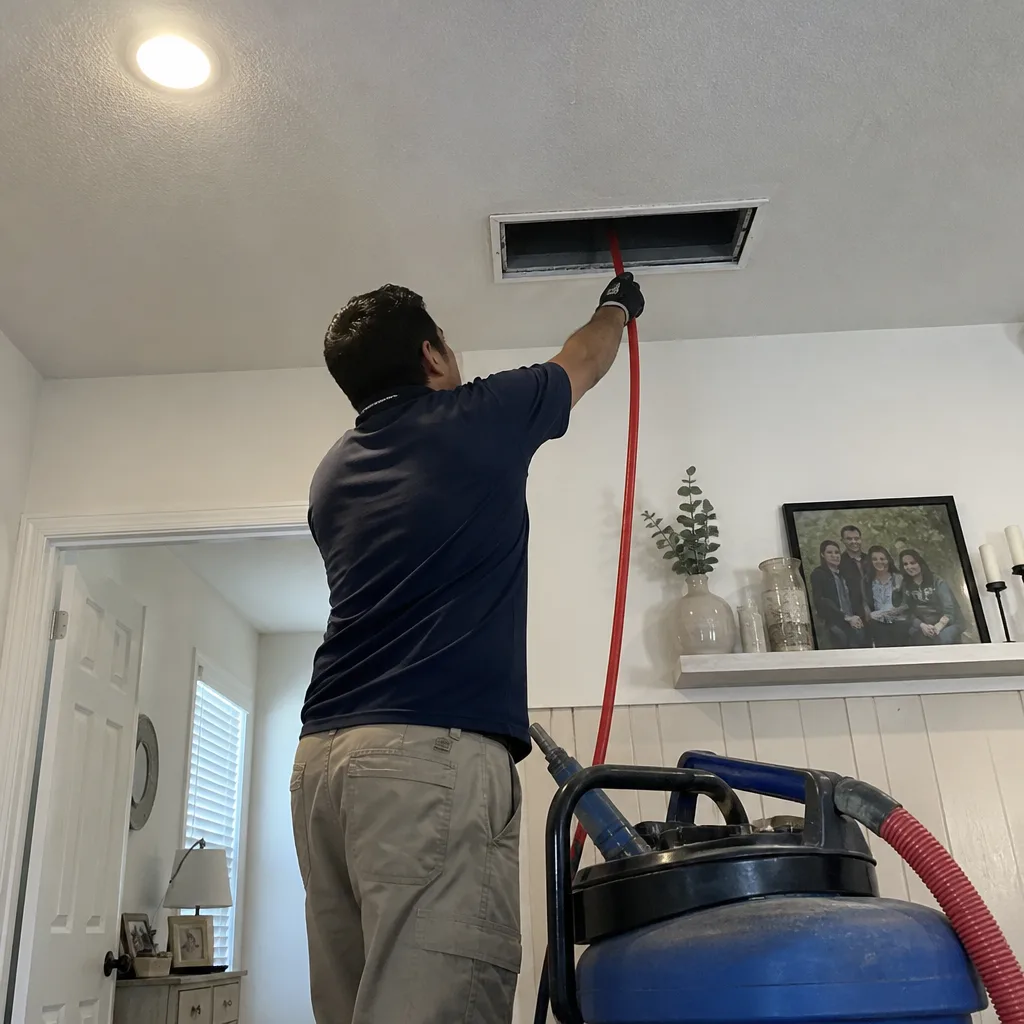
Rotobrush rotary brush systems are exactly what they sound like: a spinning brush head on a flexible shaft, inserted into the duct, that physically scours the duct walls to dislodge caked-on dust, pet hair, and the kind of biofilm that Austin humidity leaves behind. The brush rotates at high speed while the technician pushes and pulls it through the duct. It is not a gentle dusting. It is mechanical agitation, and it is the step that separates real cleaning from a visual touch-up.
Nikro negative-pressure units are large vacuum systems, typically truck-mounted or large portable units, connected to the duct system by a large-diameter hose. Negative pressure means the machine is pulling air out of the duct system, creating a slight vacuum inside the ducts. This does two things: it pulls the loosened debris out of the ductwork, and it prevents that debris from blowing back into your living space. The entire system is under negative pressure while the cleaning is happening. Any leak in the system sucks air inward, not dust outward.
Abatement Technologies HEPA filtration is the filter stage on the vacuum side. HEPA stands for high-efficiency particulate air, and a true HEPA filter catches 99.97% of particles down to 0.3 microns. The practical point: the dust pulled out of your ducts does not get exhausted back into your home. The machine captures it and it leaves the property in a sealed container. This is a core difference between professional equipment and a hardware store vacuum with a coupon attached.
All three pieces working together is what Kestrel Air Duct Austin sends to every job. The brush breaks the debris loose. The negative pressure pulls it out. The HEPA filter keeps it out of your air. When your quote lists a cleaning method, this is what it should be describing.
How Often Do Austin Ducts Really Need Cleaning?
The honest answer for most Austin homes is every three to five years, with several conditions that move the schedule sooner. Here is the practical framework.
- Every 3 years if: you have indoor pets that shed, anyone in the home has allergies or asthma, you run your AC more than eight months a year (which is most of Austin), or you have ever done a major renovation without sealing off the vents.
- Every 5 years if: the home is newer, you change your HVAC filter every 30 to 60 days, you have no pets, and you live in a neighborhood with relatively low dust, such as a newer subdivision with established landscaping rather than active construction around you.
- Every year if: someone in the home smokes indoors, you burn candles frequently, you have multiple long-haired pets, or your home sits near active construction, which is a near-permanent condition in high-growth areas of Austin such as the eastern corridor and parts of south Austin where new development is constant.
Duct cleaning is not an annual maintenance item for most homes, regardless of what a coupon flyer might suggest. Clean ducts do not stay pristine forever, but the dust accumulation rate is not fast enough to justify a yearly cleaning in a home with good filtration habits. If you run a quality filter such as the Honeywell, Aprilaire, or Guardsman products available through us, and you change it on schedule, you are already doing more for your indoor air than the average Austin household.
Common Mistakes to Avoid
- Booking on price alone. The cheapest Austin duct cleaning quote is cheap for a reason you will discover in the driveway. If the price cannot cover labor, fuel, insurance, and functioning equipment, the company is making money somewhere else, and that somewhere is you.
- Accepting a quote over the phone without a home walkthrough. A serious company asks about square footage, number of systems, foundation type, and vent count before pricing. A phone quote of “$199 for any home” is a fishing line.
- Paying for a sanitizer fog without asking what it is. If the technician cannot tell you the product name and active ingredient, it is water and scented alcohol being sold at a 500% markup. Ask the question. Watch the answer.
- Not verifying the guarantee is in writing. Verbal promises are a pressuring tactic, not a protection. If the company will not write the guarantee terms on the quote, assume there are no terms.
- Confusing dryer vent cleaning with duct cleaning. They are different systems, different services, different equipment. A $79 “duct cleaning” that takes 45 minutes to complete probably only cleaned the dryer vent and called the job done.
- Skipping the filter change afterward. A clean duct system with a dirty filter is a system that re-contaminates itself within weeks. Change the filter after cleaning, and keep changing it on schedule. This is the single highest-leverage habit for maintaining the work.
When to Call a Professional
You should bring in a professional duct cleaning company when you see visible dust accumulating around your supply registers within days of cleaning, when you find yourself dusting more frequently than usual, when the home has a persistent musty odor that returns even after changing the filter, or when you have just completed a renovation that generated drywall dust, sawdust, or paint overspray. Pet owners who have never had their ducts cleaned, new homeowners who cannot verify when the previous owner last cleaned, and allergy sufferers who wake up congested despite a clean bedroom should all put duct cleaning on a short list. Kestrel Air Duct Austin offers free estimates in Austin – call (254) 848-6913 and a real person will answer, day or night.
Frequently Asked Questions
Most Austin homes run between $350 and $750 for a full system cleaning in 2026, with the final number set by home size, vent count, foundation type, and access difficulty. A 2,000 square foot slab-foundation home with 14 vents typically falls in the $450 to $600 range. Call (254) 848-6913 for a free quote on your specific home – the price you get is the price you pay.
The low quotes are designed to get a technician into your home, where the “inspection” will discover problems that require add-on services. The $89 coupon becomes $400 when mold fogging, extra vents, and access fees are added as urgent, necessary corrections. A legitimate company cannot clean ducts with professional equipment at that price point.
Ask for documentation: before-and-after photos of the inside of the main trunk line, taken from the access panel opening. A legitimate company will show you the difference. You should also notice reduced dust settling on furniture within two to three weeks, and the registers should look clean where visible. If you have doubts, a company with a real guarantee will return to make it right.
Every three to five years for most Austin homes. The humidity here creates condensation inside attic ductwork that binds dust to the duct walls faster than in drier climates, but not fast enough to justify annual cleaning unless you have pets, smokers, or active construction nearby. Call us at (254) 848-6913 if you’re not sure where your home falls – we’ll help you figure it out without a sales pitch.
Filter changes help, but they only catch the particles passing through the return air. They do not remove the accumulation already bonded to the duct walls, and they do not address the dust that settles in the trunk line and branch runs. Regular filter changes extend the time between cleanings, but they do not replace cleaning entirely.
The $700 cleaning generally includes full brush agitation of every duct run, negative-air extraction with HEPA filtration, and access panel work in a larger or harder-to-access system. The $300 cleaning often skips the brush agitation on branch lines, uses a less powerful vacuum, and cleans only the trunk line and registers. The difference is whether your ducts are actually clean throughout, or just vacuumed at the openings.
The Bottom Line
Air duct cleaning in Austin costs what it costs for reasons you can now identify and verify: home size, vent count, duct material, access difficulty, and equipment quality. A legitimate whole-home cleaning runs $350 to $750 for most homes. Anything dramatically cheaper is hiding its cost in a driveway upsell. Demand a written quote that itemizes the vent count, includes access panel fees, names the equipment method, and carries the guarantee in writing. Not sure what codes apply? Read our guide to Air Duct Cleaning Permits, Codes & Inspections in TX: What You Need to Know. The Kingswell Guarantee has applied those standards on every job Kestrel Air Duct Austin has done since 2004. For an honest price on your Austin home, call (254) 848-6913. A real person answers, and the price you hear is the price you’ll pay.
Written by Dale Whitmore, Owner at Kestrel Air Duct Austin, serving Austin since 2004. Explore more guides & resources on keeping your home’s air clean.
See the difference
 Before
 After
After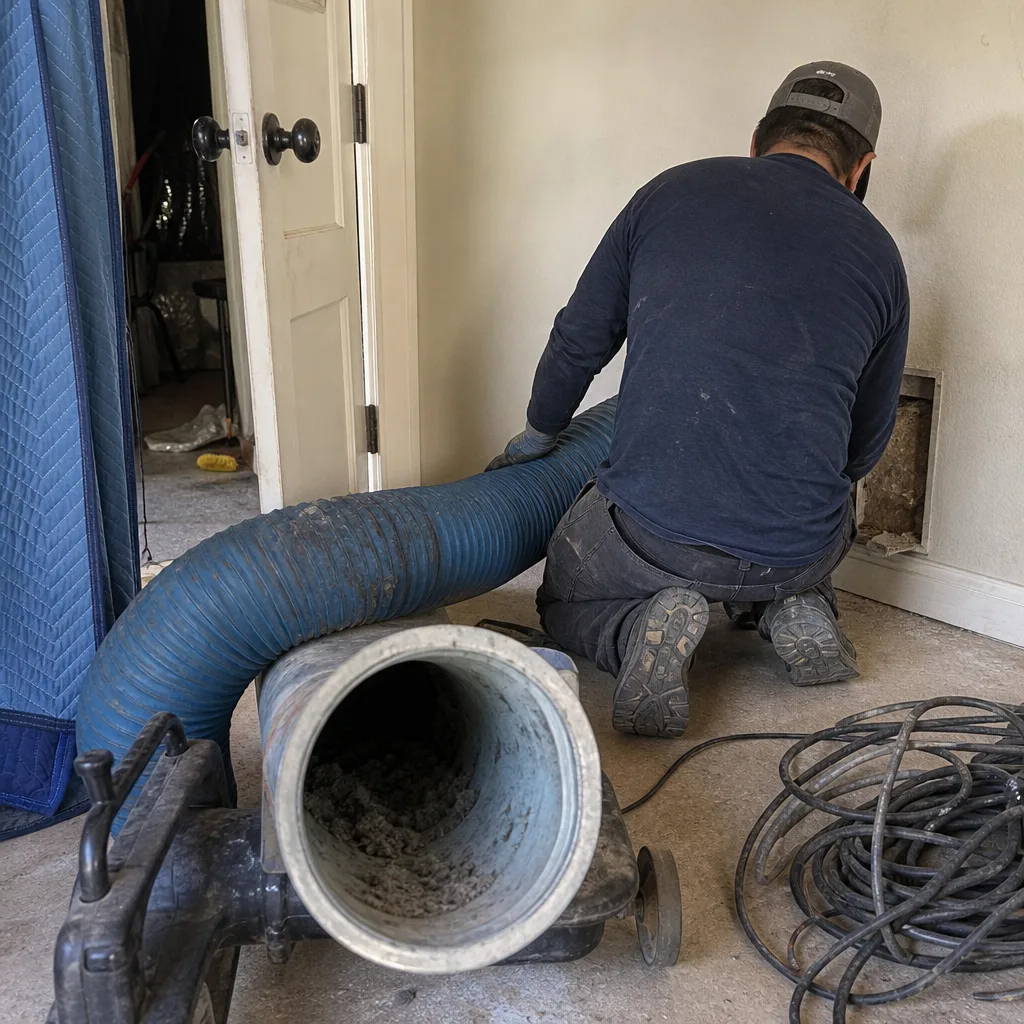 Before
 After
After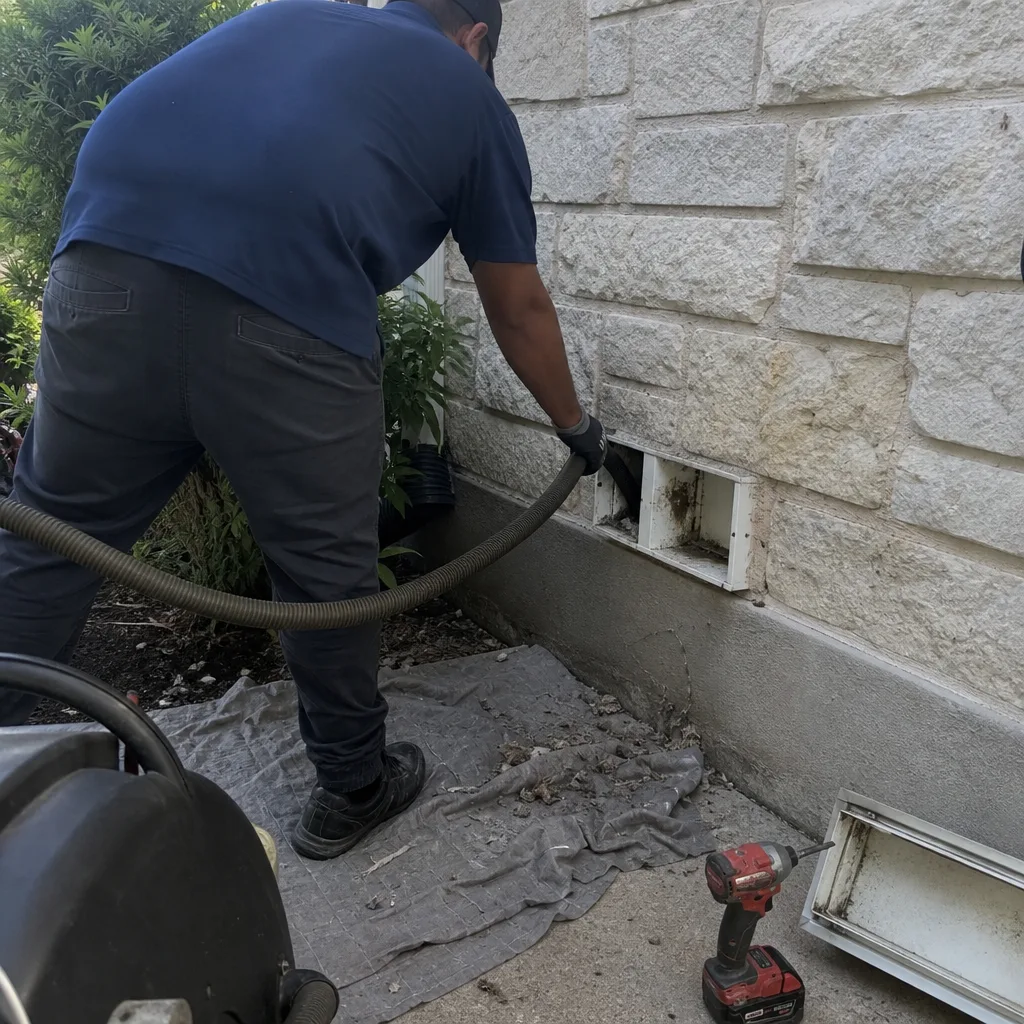 Before
 After
After